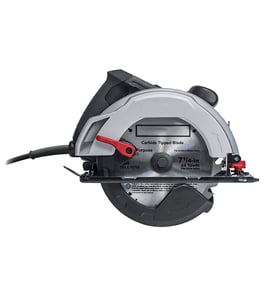

How deep can an 8 1/4 circular saw cut?
Most 8-1/4 inch circular saws cut about 2-7/8 inches at 90° and about 2-1/16 inches at 45° when the blade is set to full depth. For your Skil 825 (TYPE 11) circular saw, the exact maximum depth depends on the saw’s base-to-blade geometry and blade type.
Typical max cut depth for an 8-1/4 inch blade
These are the common ranges we see across many 8-1/4 inch sidewinder-style saws:
- 90° (straight cut): ~2-3/4 to 2-7/8 inches
- 45° (bevel cut): ~2 to 2-1/8 inches
- Real-world depth can be slightly less with thick-kerf blades, wobble, or a worn arbor/bearing
- Thin-kerf blades can help reduce load but do not increase max depth
How to measure your saw’s actual max depth (fast and accurate)
Use this method to confirm the true depth on your Skil 825:
- Unplug the saw (or remove the battery if applicable).
- Set bevel to 0° and depth to maximum.
- Place the shoe flat on a scrap board.
- Measure from the bottom of the shoe to the lowest tooth tip.
- Repeat at 45° bevel.
Quick reference table
| Blade size | Typical max depth at 90° | Typical max depth at 45° |
|---|---|---|
| 8-1/4 in. | ~2-3/4 to 2-7/8 in. | ~2 to 2-1/8 in. |
Why it matters
Knowing the true max depth helps you choose the right cutting approach (single pass vs. flip cut), avoid binding and kickback, and match the blade to the material (2x lumber, 4x posts, sheet goods).
For safe DIY checks and electrical testing while troubleshooting a corded saw, we recommend are diy appliance repairs safe and how to use a multimeter to test electrical parts video.
Last updated: February 2026
What is the generic name for a Skil saw?
In the U.S., many people use “Skilsaw” as a generic name for a handheld circular saw, even when the tool is not made by Skil. For your Skil model 825 circular saw, the correct generic tool name is simply a circular saw.
What people mean by “Skilsaw”
“Skilsaw” is commonly used in everyday speech to describe a standard, handheld circular saw used for wood cutting, framing, and sheet goods.
Common ways the term is used
- “Skilsaw” = handheld circular saw (general use)
- “Circular saw” = the correct generic tool category
- “Worm drive saw” or “sidewinder” = drive style (not the same as the brand name)
- “Framing saw” = common jobsite use (still a circular saw)
Why it matters when buying blades or parts
Using the correct generic name helps you match the right blade size, arbor (center hole) size, and rotation direction. It also helps you search by the exact model number (825) when you need Skil circular saw parts.
Quick terminology guide
| Term you hear | What it usually refers to | What to check before buying |
|---|---|---|
| Skilsaw | A circular saw (generic usage) | Blade diameter and arbor size |
| Circular saw | The tool type | Blade type for wood, metal, or masonry |
| Sidewinder | Direct-drive circular saw | Blade-left vs blade-right orientation |
| Worm drive | Gear-driven circular saw | Heavier tool, different feel and torque |
Helpful tip for accurate part matching
For the best match, use the full model identifier shown on the saw’s data plate (model 825, type 11) when searching our diagrams and listings on Sears PartsDirect.
Last updated: February 2026
What is the highest rated circular saw?
There is no single “highest rated” circular saw for everyone; the best choice depends on whether you need cordless convenience, corded runtime, or pro-grade torque. For Skil model 825 (TYPE 11), we recommend matching the saw style to your typical cuts (2x lumber, plywood, bevels) and jobsite needs.
Quick picks by use case
- Best overall cordless (pro performance): 7-1/4 inch brushless sidewinder platform
- Best lightweight cordless: 6-1/2 inch class saw for overhead and one-handed control
- Best corded value: 15-amp 7-1/4 inch sidewinder for steady power and low cost
- Best for framing torque: worm drive or worm drive-style saw
- Best for clean plywood cuts: saw with a quality blade, rigid shoe, and good dust control
What to compare (the specs that actually matter)
Use this checklist when you are comparing “top rated” models:
- Blade size: 6-1/2 inch vs 7-1/4 inch (capacity and blade availability)
- Motor type: brushless (cordless efficiency) vs brushed
- Cut capacity: depth at 90 degrees and 45 degrees (bevel work)
- Shoe and guards: rigid base plate, smooth lower guard action
- Ergonomics: handle angle, balance, visibility of the cut line
- Support and parts availability: how easy it is to maintain switches, cords, brushes, and guards
Cordless vs corded: which tends to rate higher?
| If you prioritize | Cordless circular saw | Corded circular saw |
|---|---|---|
| Portability | Best | Good (needs outlet) |
| All-day runtime | Needs extra batteries | Best |
| Peak torque for framing | Very good (high-end) | Excellent |
| Cost to get started | Higher | Lower |
Why it matters
“Highest rated” usually reflects a mix of power, accuracy, and reliability. If your Skil 825 TYPE 11 is still a good fit, keeping it safe and dependable often comes down to basics like solid wiring, a smooth guard, and the right blade for the material.
Helpful DIY resource
For safe electrical troubleshooting steps that apply to many corded saws, use our how to use a multimeter to test electrical parts video.
Last updated: February 2026
Which type of circular saw blade stays sharp the longest?
Carbide-tipped circular saw blades stay sharp the longest for a Skil 825 circular saw because carbide teeth resist heat and abrasion far better than plain steel teeth, especially when cutting plywood, OSB, and framing lumber.
Best blade types for long edge life
- Carbide-tipped (TCT): longest-lasting edge for most wood-cutting jobs
- Cermet or specialty carbide: longer life in abrasive materials (fiber cement, composites) when the blade is rated for that use
- High-speed steel (HSS) or carbon steel: sharp initially but dulls quickly; best for light, occasional use
- Diamond grit: longest life in masonry products, but only when the saw and blade are designed for that material
What to look for when buying a long-lasting blade
A “longest lasting” blade is usually a combination of tooth material and the right blade design for the cut.
- Match the blade to the material (wood, laminate, non-ferrous metal, masonry)
- Choose a quality carbide grade and thicker carbide tips when available
- Use the right tooth count (more teeth for cleaner cuts, fewer teeth for faster ripping)
- Look for anti-kickback shoulders and expansion slots to reduce heat buildup
- Keep the blade clean; pitch and resin make blades run hot and dull faster
Quick comparison
| Blade type | Typical sharpness life | Best for | Notes |
|---|---|---|---|
| Carbide-tipped | Long | Most wood and sheet goods | Best all-around choice |
| Steel teeth (HSS/carbon) | Short | Light-duty wood cutting | Dulls quickly with heat |
| Diamond grit | Very long (in masonry) | Concrete, tile, stone | Not for wood; specialty use |
Why it matters
A blade that stays sharp longer cuts cooler and straighter, reduces motor strain, and lowers the chance of binding and kickback. That protects your Skil 825 and improves cut quality.
For safe DIY practices while changing blades and checking the saw’s condition, use our guide: are diy appliance repairs safe.
Last updated: February 2026
