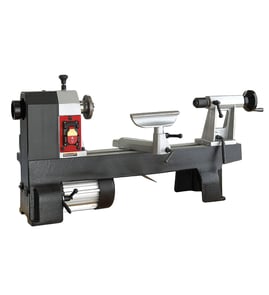

How big is the EMCO MAXIMAT?
For the Emco MAXIMAT lathe model MAXIMAT, the most commonly referenced “size” is the machine’s swing and distance between centers. Many MAXIMAT V10 and V10-P machines are described as about 5 in. swing with roughly 25 in. between centers; confirm your exact configuration before ordering parts.
What “big” usually means on a lathe
When people ask how big an Emco MAXIMAT is, they typically mean one (or more) of these specs:
- Swing over bed (maximum turning diameter)
- Distance between centers (maximum work length between centers)
- Overall footprint (bench/stand space needed)
- Spindle bore (max bar stock through the spindle)
- Weight (important for benches, stands, and moving)
Quick reference: common MAXIMAT size terms
| Spec you’re looking for | What it tells you | Why you care |
|---|---|---|
| Swing over bed | Max diameter you can turn | Determines project diameter limits |
| Distance between centers | Max length you can turn | Determines shaft and rod length limits |
| Footprint | Space the lathe occupies | Helps plan bench and shop layout |
| Weight | How heavy the machine is | Impacts moving, mounting, vibration |
How to confirm the exact size of your MAXIMAT
Because “MAXIMAT” can refer to multiple variants and setups (bench mount, stand, milling attachment, power feed options), we recommend verifying your machine’s actual measurements:
- Measure swing: center of spindle to bed, then double it.
- Measure between centers: install centers and measure usable length.
- Note any attachments (milling head, stand, guards) that change footprint.
- Match your identification plate and casting marks to the correct parts listing.
- Use our model search on Sears PartsDirect to pull up the closest match if your tag includes additional identifiers.
Why it matters
Lathe size affects tool selection (toolpost, chuck size, centers), workholding limits, and which replacement parts fit correctly, especially on assemblies like the carriage, cross slide, and leadscrew.
Last updated: February 2026
Which is the best lathe machine?
The “best” lathe depends on what you need to make: for small, high-precision production parts, a Swiss-type lathe is often the top choice; for general turning, facing, and threading, a quality engine lathe like the Emco MAXIMAT can be an excellent fit when it matches your work size and accuracy needs.
Quick way to choose the right “best” lathe
Use these factors to match the machine to your work, not the other way around:
- Part size and length-to-diameter ratio: long, slender parts favor a Swiss-type setup
- Tolerance and finish requirements: tighter tolerances push you toward more rigid, precise machines
- Material: aluminum and plastics are forgiving; stainless and tool steel demand rigidity and horsepower
- Production volume: one-offs and prototypes differ from repeat production
- Tooling and features: quick-change toolpost, threading capability, power feed, and collet support
Common lathe types and what they are best at
| Lathe type | Best for | Typical tradeoff |
|---|---|---|
| Swiss-type lathe | Small, ultra-precise parts; long L/D work | Higher cost; specialized setup |
| Engine (manual) lathe | General-purpose turning, threading, repair work | Slower for high-volume production |
| Toolroom lathe | Precision manual work; fine feeds and controls | Costlier than basic engine lathes |
| CNC lathe | Repeatability and production efficiency | Programming, higher upfront cost |
Why Swiss-type lathes are often called “the best” for precision parts
Swiss-type lathes support the bar close to the cut with a guide bushing, which reduces deflection. That support is a big advantage when you are turning small diameters or long, thin parts where chatter and taper are common problems.
Why it matters
Choosing the right lathe protects accuracy, surface finish, and tool life. A machine that is “best” for micro-precision production can be a poor fit for larger repair work, and vice versa.
Parts and support for your Emco lathe
For Emco MAXIMAT (model MAXIMAT) parts and diagrams, start with the parts list for your machine; for broader parts searching by model number and category, use Sears PartsDirect.
Last updated: February 2026
What is the difference between a lathe and a milling machine?
A lathe (like the Emco MAXIMAT lathe) spins the workpiece while the cutting tool shapes it, so it is best for round parts such as shafts, bushings, and threads. A milling machine typically spins the cutting tool and moves the workpiece to create flats, slots, pockets, and complex shapes.
How each machine “moves” to cut
- Lathe: the workpiece rotates in the chuck or between centers; the tool feeds along or across the spinning part.
- Mill: the cutter rotates in the spindle; the table (or head) moves to position the work under the cutter.
- Lathe strength: concentric accuracy on cylindrical work.
- Mill strength: versatility for non-round geometry.
Common jobs: lathe vs. mill
| Task | Lathe | Milling machine |
|---|---|---|
| Turn a diameter on a shaft | Best choice | Possible with fixtures, not typical |
| Cut external or internal threads | Common | Possible with thread milling or tapping |
| Face a part square | Common | Common |
| Cut a keyway or slot | Possible with attachments | Best choice |
| Make a flat surface on a block | Not typical | Best choice |
What to consider for your shop
- Part shape: mostly round parts point to a lathe; mostly prismatic parts point to a mill.
- Tooling needs: chucks, centers, and toolholders for lathes; vises, collets, and end mills for mills.
- Setup time: mills often need more fixturing; lathes often center faster for round stock.
- Space and power: both can be heavy and require stable mounting and proper electrical supply.
- Safety: both require eye protection, chip control, and avoiding loose clothing near rotating parts.
Why it matters
Choosing the right machine reduces setup time, improves accuracy, and helps you avoid forcing a tool to do a job it is not designed for. That typically means better finishes, fewer broken cutters, and more consistent results.
For model-specific parts lookup and diagrams for your Emco MAXIMAT, start with the parts list for this model; for broader searching by model number, use Sears PartsDirect.
Last updated: February 2026