Owner’s manual
 View engine



How to find Craftsman model number?
On a Craftsman walk-behind mower like model 917377890, the model and serial numbers are printed on a decal on the rear of the lawn mower housing. Once you have the model number, use it to match the correct parts list and owner information in the owner's manual.
Where to look on model 917377890
Check these common spots in this order:
- Rear of the mower deck or rear housing area (look for a decal)
- Near the discharge chute opening on the deck
- On the handle support area close to the deck
- Under heavy grass buildup (wipe the area clean and dry)
What the model number looks like
For this Craftsman rotary lawn mower, the model number is formatted like:
- 917.377890 (manual format)
- 917377890 (parts lookup format)
Quick reference
| What you need | Example for this mower | Why you need it |
|---|---|---|
| Model number | 917377890 | Ensures correct diagrams and parts |
| Serial number | Varies | Helps identify production run details |
| Date of purchase | Your receipt date | Useful for maintenance records |
Why it matters
Craftsman walk-behind mowers often share similar deck sizes and features (21-inch multi-cut, power-propelled), but small differences change which blade, drive parts, or hardware fit. Using the exact model number prevents ordering the wrong wheel, pulley, or control parts.
Tip if the decal is hard to read
If the decal is faded:
- Clean the rear housing with mild soap and water, then dry it
- Use a flashlight at an angle to make embossed or worn print easier to see
- Take a close-up photo and zoom in to read the digits
Last updated: February 2026
How to find Craftsman mower parts?
To find the right parts for your Craftsman rotary lawn mower model 917377890, match the model number from the ID label on the mower to the parts list and diagrams, then confirm the part name and reference number in the 917377890 owner's manual before ordering.
Where to find the model number on the mower
On this Craftsman walk-behind mower, the model/serial label is typically on the rear frame between the wheels. Once you have 917377890, you can use it to pull the correct illustrated parts breakdown.
- Check the rear frame crossmember between the back wheels
- Wipe off grass and dirt so the label is readable
- Write down the full model number exactly as shown (917377890)
- If the label is damaged, use the parts diagrams in the manual to identify assemblies
How we recommend matching the correct part
Use the parts diagram reference number (key number) to avoid ordering the wrong item with a similar name.
- Open the parts list for model 917377890
- Find the mower section that matches your issue (handle, wheels, drive, deck)
- Match the key number in the diagram to the part description in the list
- Confirm the part is for the correct location (front vs rear, left vs right)
- Order by the Sears PartsDirect part ID when available
Example parts commonly replaced on this model
| What you are fixing | Part to look up | Example from this model |
|---|---|---|
| Poor cut, vibration, damaged blade | Blade | Lawn mower blade 532180459 |
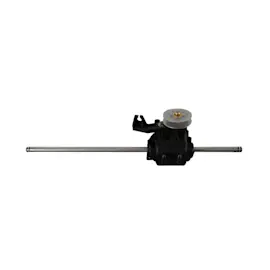
| Mower will not self-propel or drive feels inconsistent | Drive components (belt, pulley, gearcase) | Pulley.1.pie 532194128 or husqvarna lawn mower idler pulley 532166043 |
| Wheel wear, wobble, or missing cap | Wheel/tire, dust cover, retaining hardware | Lawn mower wheel dust cover 581840401 |
Why it matters
Craftsman walk-behind mowers often use similar-looking hardware across multiple models. Using the exact model number 917377890 plus the diagram key number helps ensure the replacement part fits your deck, drive system, and handle assembly correctly.
Last updated: February 2026
Is it cheaper to repair or replace a lawnmower?
If your Craftsman rotary lawn mower model 917377890 needs a repair that costs more than about 50% of the price of a comparable new mower, replacement is usually the better value. For smaller issues (blade, wheel hardware, springs, cables), repairing is typically cheaper and extends the mower’s life.
A practical way to decide
Use this quick checklist before you spend money:
- Estimate total repair cost: parts, labor, pickup/delivery, and any tune-up items
- Compare to replacement cost: price of a similar walk-behind mower (same deck size and drive type)
- Consider the failure type: engine compression issues and major drive problems are high-cost
- Factor in age and condition: rusted deck, worn wheels, and loose handle hardware add up
- Check what’s actually worn: many “big problems” are simple maintenance items
Common repairs that are usually worth it
These are typically low-to-moderate cost fixes on a walk-behind mower:
- Dull or bent blade replacement (for this model, see lawn mower blade 532180459)
- Wheel and drive wheel cleanup (grass packed under the dust cover can stop wheels from turning freely)
- Replacing small hardware like clips, nuts, washers, and springs
- Handle height adjustments and tightening fasteners
- Seasonal maintenance: spark plug, air filter, oil change, deck cleaning
Repairs that often push you toward replacement
These problems commonly exceed the value threshold:
- Major engine damage (low compression, internal knocking)
- Repeated no-start issues after fuel system and ignition basics are confirmed
- Drive system failures that require extensive teardown and multiple parts
Cost comparison guide
| Situation | Typical recommendation | Why |
|---|---|---|
| Repair is under ~25% of mower value | Repair | Best return on cost |
| Repair is ~25% to 50% | Decide based on condition | Deck, wheels, and engine health matter |
| Repair is over ~50% | Replace | Cost approaches a new mower |
Why it matters
A mower like the Craftsman 917377890 can run for years when it’s maintained and tuned up as outlined in the owner's manual. Spending wisely on wear items (blade, wheel parts, springs) prevents bigger failures and keeps cutting performance and safety where it should be.
Last updated: February 2026
What is the life expectancy of a gas-powered lawn mower?
Most gas-powered walk-behind lawn mowers have a life expectancy of 8 to 10 years with normal homeowner use. For your Craftsman 917377890, consistent tune-ups, cleaning, and proper storage are what most directly extend engine life and keep the drive system and blade working safely.
What affects mower lifespan the most
- Maintenance schedule: oil changes, air filter service, and blade care done on time
- Cleaning habits: keeping grass and debris from building up under covers and around the engine
- Storage: dry storage and fuel management during off-season
- Operating conditions: sandy soil, wet grass, steep slopes, and heavy weekly use shorten life
- Wear items: blades, belts, air cleaners, and spark plugs wear out during normal use
Maintenance habits that add years
Your owner documentation calls out that a dirty, clogged engine runs hotter and can shorten engine life. Use these habits as your baseline:
- Clean the engine area often so debris does not accumulate
- Avoid spraying the mower with a garden hose unless sensitive components are protected
- Clean under the drive cover at least twice per season (scrape grass buildup)
- Stop the engine and disconnect the spark plug wire before service
- Replace worn cutting parts instead of running them past their useful life
For model-specific intervals and procedures, follow the owner's manual.
Typical lifespan by use (quick guide)
| Use pattern | Typical life expectancy | What usually fails first |
|---|---|---|
| Light (small yard, weekly) | 10 years | Blade, wheels, cables |
| Average homeowner | 8 to 10 years | Engine tune-up items, drive wear |
| Heavy (large yard, tough conditions) | 5 to 8 years | Drive components, engine wear |
Why it matters
A mower that is past its typical service life can still run well, but neglected maintenance increases overheating, poor cutting quality, and safety risks from worn moving parts. Replacing wear items on time is usually cheaper than repairing secondary damage.
Last updated: February 2026