Error Codes




How to tell if a gas oven igniter is bad?
A bad gas oven igniter on your GE JGSS66EEL3ES usually shows up as an oven that will not heat, heats very slowly, or never lights the burner even though the control is calling for heat. The most reliable check is an electrical continuity test; an igniter with no continuity is failed.
- Oven set to Bake or Broil but the burner never lights
- You do not see the igniter glow at all
- The igniter glows, but the burner still does not light (often a weak igniter)
- You smell gas briefly with no ignition (turn the oven off and ventilate)
- Heat is delayed and takes much longer than normal to start
- Turn off power to the range at the breaker (igniters are powered electrically).
- Shut off the gas supply valve as an added safety step.
- Access the igniter and disconnect its wire connector.
- Use a multimeter set to resistance (ohms) to test across the igniter leads.
- If the meter shows open/no continuity, the igniter is bad and should be replaced.
If the igniter has continuity but the oven still will not light, the igniter can still be weak. In that case, we typically check wiring connections and consider replacing the igniter if symptoms match.
For this model, these parts are common matches depending on whether Bake or Broil is failing:
| What is not working | Most likely part to check | What it does |
|---|---|---|
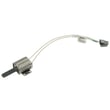
| Bake will not light | Range oven burner igniter WB13X40206 | Ignites the bake burner gas |
| Broil will not light | Range broil igniter WB13X40207 | Ignites the broil burner gas |
| Temperature is erratic | Range oven temperature sensor WB24X25557 | Reports oven temperature to the control |
A properly working igniter draws enough current to open the gas safety valve and light the burner. When it fails open (no continuity) or becomes weak, the burner may not light, which prevents safe, consistent heating.
Last updated: February 2026
Why does my GE stove smell like gas?
If your GE JGSS66EEL3ES gas range smells like gas, the usual causes are delayed ignition (gas flows before it lights), a cooktop burner that is not lighting evenly, or a leak at a valve, regulator, or connection. Treat any strong or persistent odor as urgent and stop using the range until it’s corrected.
- Turn all burner knobs to OFF.
- Ventilate the room (open windows).
- Avoid flames, sparks, and switching electrical devices on and off.
- If the odor is strong or continues with everything off, shut off the gas supply valve to the range.
- Delayed oven ignition: A weak igniter can glow but not open the gas valve quickly, so gas builds briefly before lighting. For bake issues, check the range oven burner igniter WB13X40206. For broil issues, check the range broil igniter WB13X40207.
- Cooktop burner lighting problems: A mis-seated or dirty cap can cause uneven flame and a gas odor. Reseat and clean the cap; replace it if damaged using the range surface burner cap WB28K10222.
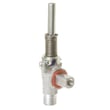
- Valve or regulator concerns: If you smell gas when no burner is being lit, a valve or regulator problem is likely. A key gas-path component is the range gas valve and regulator assembly WB21X33225.
| What you notice | Most likely cause | What to check/replace |
|---|---|---|
| Oven smells like gas before it lights | Delayed ignition | Bake or broil igniter |
| One cooktop burner smells like gas | Cap misaligned or clogged ports | Clean/reseat cap, replace cap |
| Smell persists with all knobs off | Leak at valve/regulator or connection | Shut off gas; have it inspected |
Gas odor signals unburned gas. Fixing delayed ignition helps the burner light cleanly; correcting leaks prevents unsafe gas accumulation.
Last updated: February 2026
Why is my GE gas stove not igniting?
If your GE JGSS66EEL3ES gas range is not igniting, the most common causes are a dirty or wet igniter area, a burner cap that is out of position, or an ignition system issue (spark module, switch, or wiring). Start with cleaning and correct burner assembly before replacing parts.
- Make sure the burner cap is seated flat and centered; a misaligned cap can prevent ignition.
- Clean food spills from the burner head, cap, and igniter tip; let everything dry fully.
- Listen for clicking when you turn the knob; no clicking often points to an ignition circuit issue.
- If it clicks but will not light, check for clogged burner ports or a weak spark.
- Try a different burner; if only one fails, the issue is usually localized to that burner.
If cleaning and reseating do not help, these model-compatible parts are common fixes:
| Symptom | Likely cause | Part to consider |
|---|---|---|
| No clicking on any burner | Failed spark module or power feed issue | Range spark module WB13X24741 |
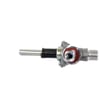
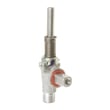
| One burner will not light, others OK | Worn valve or burner-specific issue | Range surface burner valve WB21X20612 or range surface burner valve WB21X20471 |
| Burner lights with a match but not by spark | Cap not seated, dirty ports, weak spark | Range surface burner cap WB28K10222 |
A burner that does not ignite can allow gas to flow without lighting, which creates a safety risk and can also lead to delayed ignition (a “whoosh” when it finally lights). Fixing ignition problems quickly helps keep cooking consistent and safe.
- If you smell gas, turn all knobs off and ventilate the area.
- Do not keep trying to ignite repeatedly; wait a few minutes between attempts.
- If you suspect a gas supply or regulator problem, stop and have the range checked.
Last updated: February 2026