Owner’s manual
 View engine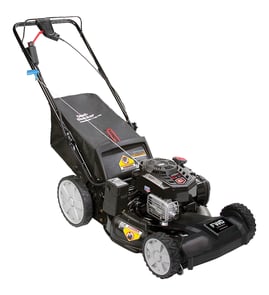



What year is Craftsman Model 917377991?
The Craftsman walk-behind mower model 917377991 does not have a single built-in “model year.” The year is tied to the date of purchase and the serial number on the mower’s rear housing decal; we use those to determine when your specific unit was made. See the owner's manual for where to find the model and serial decal.
Look for the identification decal on the rear of the lawn mower housing (the manual calls this out in the product specifications section). Then record:
- Model number: 917377991
- Serial number (from the decal)
- Date of purchase (from your receipt or records)
- Any additional code numbers printed on the decal
For many Craftsman mowers, the serial number or a date code on the decal is what points to the build timeframe. The exact format can vary by production run, so the most reliable approach is to match the decal information to the identification guidance in the manual.
| What you have | What it tells you | Where to find it |
|---|---|---|
| Model number (917377991) | Identifies the mower design and parts list | Manual cover and mower decal |
| Serial number/date code | Identifies your unit’s build timeframe | Rear housing decal |
| Date of purchase | Establishes warranty start date | Receipt/records |
Knowing the correct build timeframe helps us match the right parts and specs for your exact mower, especially for wear items like the blade, blade adapter, and drive components.
- Blade and blade hardware
- Drive belt and drive control parts
- Wheels and height adjuster components
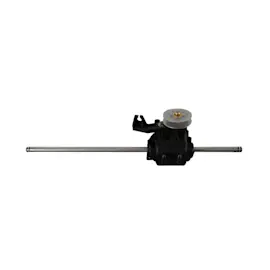
- Gear case and drive gears
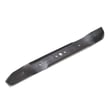
If you are replacing cutting parts, match by model and configuration; for example, this model uses a 22-inch mulching blade option such as the lawn mower mulching blade 532406713 when it matches your deck setup.
Last updated: February 2026
How to look up Craftsman model number?
For a Craftsman walk-behind mower like model 917377991, the model number is printed on the mower’s ID label, typically on the deck housing or frame near the rear wheels or handle brackets. Use that exact number to match the correct parts list and owner's manual.
Check these common label locations first:
- Top of the mower deck, near the engine or discharge chute
- Rear of the deck, above the back wheels
- Side of the deck, near the height adjuster area
- Frame area where the handle mounts to the deck
- Under the grass bag door or near the bag frame mounting points
We recommend recording the full ID information from the label:
- Model number (example: 917377991)
- Product number (if shown)
- Serial number (helps confirm production run)
- Engine model (often listed separately; this mower’s manual references engine model 143.996704)
These are different identifiers and both can be useful.
| What you’re looking at | Example | What it’s used for |
|---|---|---|
| Mower model number | 917377991 | Matching the correct Craftsman mower parts and diagrams |
| Engine model number | 143.996704 | Matching engine-specific parts (carburetor, spark plug, gaskets) |
Using the exact model number prevents ordering the wrong blade, belt, or drive parts. For example, once you confirm the model, you can confidently match items like the lawn mower mulching blade 532406713 or belt 532157769 to your mower’s configuration.
Last updated: February 2026
What is the life expectancy of a gas-powered lawn mower?
Most gas-powered walk-behind lawn mowers last 8 to 10 years with normal homeowner use. For your Craftsman 917377991, consistent tune-ups, cleaning, and replacing wear items (blade, belt, air filter, spark plug) on schedule is what keeps it running strong year after year.
- Maintenance frequency: annual tune-ups and regular inspections extend engine life.
- Operating conditions: dusty mowing requires more frequent air filter changes.
- Cleaning habits: built-up grass and debris make the engine run hotter and wear faster.
- Impact damage: hitting rocks, roots, or metal can bend parts and cause vibration.
- Storage practices: proper off-season storage prevents fuel and corrosion problems.
Your Craftsman manual calls out several items that wear during normal use and should be replaced as needed. Use the owner's manual to follow the correct intervals and procedures.
| Item | Typical interval | Why it matters |
|---|---|---|
| Air filter | Yearly (more often in dust) | Protects the engine from dirt ingestion |
| Spark plug | Yearly | Helps starting and smooth running |
| Blade and blade hardware | As needed | Reduces vibration and improves cut quality |
| Underside deck cleaning | After each use | Prevents buildup that strains the engine |
- Hard starting even after a tune-up
- Excessive vibration (especially after striking an object)
- Loss of drive or inconsistent self-propelled movement (often belt or drive wear)
- Persistent overheating from heavy debris buildup
- Repeated repairs needed in the same season
A mower that is maintained, kept clean underneath, and not run with abnormal vibration typically reaches the full 8 to 10 year lifespan. Skipping cleaning and running with clogged airflow makes the engine run hotter, which shortens engine life.
Last updated: February 2026
Is it cheaper to repair or replace a lawnmower?
Repairing your Craftsman walk-behind mower model 917377991 is cheaper when the fix is a normal wear item (blade, belt, wheel parts) and you do the work yourself; replacement is usually cheaper when the engine or crankshaft is damaged or when labor costs stack up. Use the owner's manual to match symptoms to the right repair.
- Repair when the mower starts and runs, but has a performance issue (cut quality, drive, vibration).
- Repair when the problem is a common wear part you can replace in under an hour.
- Replace when the engine crankshaft is bent (often shows up as severe vibration).
- Replace when multiple major systems are failing (drive + deck + engine) and parts add up.
- Replace when you would pay for several hours of shop labor.
These are typical “high impact, reasonable cost” fixes for a gas walk-behind mower:
- Replace a worn blade: lawn mower mulching blade 532406713
- Replace a worn blade adapter: lawn mower blade adapter 581547901
- Restore self-propel drive when it slips or stops: belt 532157769
- Fix wheel/drive hardware wear (common on self-propel units): lawn mower drive pinion gear 532137054
| Symptom | Most common cause | Typical decision |
|---|---|---|
| Excessive vibration | Bent/loose blade, broken blade adapter, bent crankshaft | Repair first; replace if crankshaft is bent |
| Loss of drive | Belt off/broken, drive control/cable issue | Repair |
| Hard to push | Cutting height too low, grass buildup, bag full | Repair/maintenance |
| Poor cut | Dull/bent blade, uneven wheel height, deck buildup | Repair/maintenance |
A mower like the Craftsman 917377991 is designed for routine maintenance and wear-part replacement. Fixing the deck and drive system early prevents secondary damage (for example, a loose blade adapter can lead to vibration and bigger failures).
Last updated: February 2026
What are the common problems with Craftsman lawn mowers?
Common problems on the Craftsman 917377991 gas walk-behind mower are no-start conditions (stale fuel, dirty air filter, bad spark plug, disconnected plug wire), loss of power (heavy grass load, deck buildup, dirty filter, too much oil), and poor or uneven cutting (worn or loose blade, uneven wheel height, debris under the deck). For model-specific checks and adjustments, use the owner's manual.
- Won’t start: dirty air filter, out of fuel, stale fuel, water in fuel, spark plug wire off, bad spark plug, control bar released/defective
- Loses power: heavy grass drag, cutting too much at once, deck packed with clippings, dirty air filter, oil overfilled, walking speed too fast
- Cuts unevenly: worn/bent blade, blade loose, wheel heights uneven, debris buildup under the mower
- Drain old gas and refill with fresh fuel if it has been sitting.
- Inspect and clean or replace the air filter.
- Confirm the spark plug wire is firmly connected; replace the spark plug if fouled.
- Verify the operator presence control (control bar) is held against the handle during starting.
- Tip the mower only as directed in the manual before checking the blade area or underside.
If you’re seeing vibration, poor cut quality, or the mower does not self-propel correctly, these are frequent wear items for this model:
| Problem | Likely cause | Typical fix |
|---|---|---|
| Won’t start | stale fuel, dirty filter, bad plug | refresh fuel, service filter, replace plug |
| Loss of power | deck packed, heavy grass, oil overfill | clean deck, raise cut height, correct oil level |
| Uneven cut | worn/loose blade, uneven wheels | tighten/replace blade, set wheel heights |
Running with stale fuel, a clogged deck, or a loose blade can cause hard starting, poor performance, and extra wear on the engine and blade adapter. Keeping the blade sharp and the underside clean improves cut quality and reduces strain.
Last updated: February 2026