


How to tell the tonnage of a carrier AC unit?
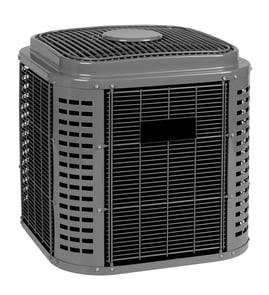
For your Carrier model 25HBA342A0030010 (heat pump/central air conditioner), we tell tonnage by reading the unit’s rating plate and converting capacity (BTU/hr) to tons: 1 ton = 12,000 BTU/hr. Many Carrier model numbers also embed capacity as a two-digit code.
Fast ways to find tonnage
- Check the outdoor unit rating plate for Cooling capacity or BTU/hr; divide by 12,000.
- Look for a two-digit size code in the model number that represents thousands of BTU/hr (common examples: 24, 30, 36, 42, 48, 60).
- If you see kBTU (like 36k), that is 36,000 BTU/hr.
- If the label lists kW instead of BTU, convert: kW × 3412 = BTU/hr, then divide by 12,000.
- If the label is missing or unreadable, use the parts list to confirm the exact model and then match capacity by the full model number.
Quick conversion table
| Cooling capacity | Calculation | Nominal tonnage |
|---|---|---|
| 24,000 BTU/hr | 24,000 ÷ 12,000 | 2.0 tons |
| 30,000 BTU/hr | 30,000 ÷ 12,000 | 2.5 tons |
| 36,000 BTU/hr | 36,000 ÷ 12,000 | 3.0 tons |
| 42,000 BTU/hr | 42,000 ÷ 12,000 | 3.5 tons |
| 48,000 BTU/hr | 48,000 ÷ 12,000 | 4.0 tons |
| 60,000 BTU/hr | 60,000 ÷ 12,000 | 5.0 tons |
Where to look on the unit
Most Carrier outdoor units place the data plate on the cabinet side panel near the service access area. Look for terms like Cooling capacity, BTUH, BTU/hr, or Capacity.
Why it matters
Correct tonnage helps you choose compatible replacement parts (like a capacitor, contactor, or condenser fan blade) and prevents mismatches that can cause hard starting, poor cooling, or compressor stress.
If you’re troubleshooting electrical issues while checking the label and wiring, use our guide how to use a multimeter to test electrical parts video.
Last updated: February 2026
Is it hard to get Carrier parts?
No. Getting replacement parts for your Carrier 25HBA342A0030010 heat pump is usually straightforward when you match the model number and the exact part identifier; common service parts like a contactor, capacitor, or control board are available to order from our parts list.
What makes Carrier parts easy (or hard) to source
Parts availability mostly comes down to correct identification and whether the part is a common wear item.
- Use the full model number 25HBA342A0030010 when searching
- Match the part by part name and part ID/part number, not by appearance alone
- Electrical parts (contactor, capacitor, control board) are commonly replaced and typically easier to find
- Refrigerant-circuit parts (like an accumulator) are more specialized and often replaced during sealed-system service
- Some parts require HVAC-level tools and electrical testing to diagnose correctly
Parts we commonly see replaced on this model
Here are examples of parts available for Carrier 25HBA342A0030010 that customers often need during troubleshooting:
| Symptom | Common part category | Example part on this model |
|---|---|---|
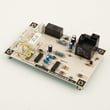
| Outdoor unit will not start | Switching/control | Cntrl baord HK32EA001 |
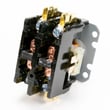
| Clicking or buzzing, intermittent start | Power switching | Contactor (HN51KC024) |
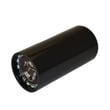
| Hums but fan or compressor struggles to start | Start/run component | Capacitor (P281-1766) |
| Loud vibration or poor airflow at outdoor unit | Fan air-moving | Central air conditioner condenser fan blade LA01RA327 |
Why it matters
Ordering the wrong HVAC part can waste time and can create electrical or refrigerant-system risks. Matching by model number and the exact part ID/part number helps ensure proper fit, correct electrical ratings, and reliable operation.
Helpful DIY tip for confirming the right part
If you are diagnosing an electrical issue, testing first helps you avoid replacing good parts.
- Shut off power at the disconnect and breaker before opening the unit
- Take a clear photo of wire locations before removing anything
- Check for burned terminals, loose spade connectors, or damaged insulation
- Use a meter to confirm voltage is present where expected
- Replace any heat-damaged connectors along with the failed component
For basic electrical testing guidance, use our how to use a multimeter to test electrical parts video.
Last updated: February 2026
How many square feet does a 36000 BTU air conditioner cool?
A 36,000 BTU (3-ton) central air conditioner or heat pump like Carrier model 25HBA342A0030010 typically cools about 1,500 to 2,500 square feet. The best match depends on insulation, ceiling height, sun exposure, duct condition, and your local design temperature.
Quick sizing range (practical starting point)
- Mild climate, tight and well-insulated home: ~2,000 to 2,500 sq ft
- Average insulation and mixed climate: ~1,700 to 2,100 sq ft
- Hot climate, older or leaky home: ~1,500 to 1,900 sq ft
- 9 ft+ ceilings or lots of open volume: reduce coverage by ~10% to 20%
- Many large, west-facing windows: reduce coverage further
A better way to estimate (without guessing)
We size cooling by heat load, not just square footage. Use these checks before committing to a 3-ton system:
- Confirm insulation and air sealing (attic is the biggest win)
- Verify duct leakage and airflow (poor airflow can mimic undersizing)
- Consider shade, window type, and orientation
- Account for occupancy and heat-producing appliances
Oversized vs undersized: what you will notice
| Sizing outcome | Common symptom | Why it matters |
|---|---|---|
| Oversized | Short cycling, clammy air | Poor humidity control and more wear on electrical parts |
| Undersized | Runs constantly, struggles on hot days | Higher energy use and uneven comfort |
Parts that often take a hit when a system short cycles
Frequent cycling stresses switching and airflow components first. For this model, examples include:
- Central air conditioner condenser fan blade LA01RA327 (moves air across the outdoor coil)
- Cntrl baord HK32EA001 (controls system operation)
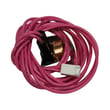
- Switch tmp HH18HA279 (temperature-related safety/control switching)
Why it matters
A close sizing match improves comfort and efficiency, and it reduces cycling that can shorten the life of the compressor, capacitor, contactor, and fan components.
Last updated: February 2026
What is the lifespan of a 2.5-ton AC?
A 2.5-ton central AC or heat pump like the Carrier 25HBA342A0030010 typically lasts 10 to 15 years with normal use and consistent maintenance. Systems in hot, humid, or dusty conditions land closer to 10 years; well-maintained systems reach 15 years.
Typical lifespan and what changes it
These factors most directly affect compressor wear, efficiency, and reliability:
- Keep coils clean and the outdoor unit clear of leaves and debris
- Replace or clean indoor air filters on schedule to maintain airflow
- Maintain proper refrigerant charge to prevent compressor strain
- Tight, corrosion-free electrical connections reduce overheating and nuisance shutdowns
- Correct airflow across the outdoor coil prevents high head pressure and short cycling
Quick “repair vs. replace” guide
Use age plus the type of failure to decide your next step.
| System age | Best next step | Why |
|---|---|---|
| Under 10 years | Repair first | Most repairs restore full function cost-effectively |
| 10 to 15 years | Compare repair cost vs. efficiency | Wear increases and efficiency typically drops |
| Over 15 years | Plan replacement if major failures occur | Big repairs often do not pay back |
Parts that commonly affect reliability on this model
Many “no cool” calls come from electrical switching or outdoor airflow issues. For the Carrier 25HBA342A0030010, examples of commonly replaced parts include:
- Accumator KH71KN161 (helps protect the compressor by managing refrigerant return)
- Central air conditioner condenser fan blade LA01RA327 (damaged blade reduces airflow and can overheat the system)
- Switch tmp HH18HA279 (temperature safety control that can open if overheating occurs)
Why it matters
Once a system reaches the 10 to 15 year range, efficiency loss and normal wear make breakdowns more frequent. Staying ahead of airflow and electrical issues helps you reach the full expected lifespan.
Last updated: February 2026
What is the average cost of a new central air conditioning unit?
Most homeowners pay about $5,000 to $12,000 installed for a new central air conditioning system; higher-efficiency equipment, ductwork changes, and electrical upgrades push the total higher. For a Carrier system like model 25HBA342A0030010, the installed price depends mainly on size (tons), efficiency (SEER2), and installation complexity.
Typical installed cost ranges
These are common U.S. price bands for a central AC or heat pump replacement.
- Budget install: $4,000 to $7,000 (basic equipment swap, minimal changes)
- Mid-range (most common): $7,000 to $12,000 (matched system, standard labor)
- Premium: $12,000 to $20,000+ (high efficiency, zoning, ductwork, major electrical work)
| Cost driver | Usually lowers cost | Usually raises cost |
|---|---|---|
| System size (tons) | Smaller home, lower load | Larger home, higher load |
| Efficiency (SEER2/HSPF2) | Standard efficiency | High efficiency |
| Ductwork | Existing ducts in good shape | New ducts, sealing, resizing |
| Electrical | Existing disconnect and wiring OK | Panel/disconnect/wiring upgrades |
| Add-ons | No extras | Thermostat upgrade, zoning, air quality add-ons |
What to check before you price a replacement
- Confirm whether you are replacing AC only or a heat pump plus indoor air handler/furnace.
- Ask for a load calculation (not just “same size as before”).
- Verify the quote includes permit, refrigerant work, and startup testing.
- Compare warranty terms and what labor coverage is included.
- If ducts are old, budget for duct sealing or repairs.
Why it matters
An “average cost” number helps with budgeting, but the biggest price swings come from installation details (ductwork, electrical, and sizing). Getting the system sized correctly protects comfort, efficiency, and compressor life.
Parts vs. full replacement (when repair is the better first step)
If your Carrier 25HBA342A0030010 will not start or cool, a repair is often far less expensive than replacement. Common service parts for no-cool or no-start symptoms include a failed run capacitor and a damaged condenser fan blade; for this model, a matching example is the central air conditioner condenser fan blade LA01RA327.
Last updated: February 2026