
What must not be worn near lathes?
Do not wear gloves, loose clothing, dangling jewelry, or anything that can catch and pull into rotating parts when using the Craftsman 113228165 12" wood lathe. Tie back long hair and secure sleeves so nothing can wrap around the spindle or workpiece.
Anything that can snag is a serious entanglement hazard around a spinning workpiece, faceplate, chuck, or drive belt.
- Gloves (they can grab and pull your hand in)
- Loose sleeves, hood strings, scarves, or baggy jackets
- Necklaces, bracelets, watches, rings, and lanyards
- Long hair left down (secure it above shoulder level)
- Earbuds with dangling cords
Use protective gear that stays fitted and does not create snag points.
- Safety glasses or a face shield (especially for turning bowls)
- Hearing protection (earmuffs or low-profile plugs)
- A fitted shop apron or close-fitting clothing
- Non-slip footwear
- Dust mask or respirator when sanding wood
- Remove jewelry and roll sleeves above the elbow
- Tie back hair and remove hoodie drawstrings
- Confirm the tool rest is locked and properly positioned
- Stand slightly to the side at startup (out of the “line of fire”)
- Keep rags, cords, and sandpaper away from the rotating work
A lathe can pull in soft materials instantly. Preventing entanglement is one of the most important safety steps you can take before any turning, sanding, or polishing.
| Task | Do | Do not |
|---|---|---|
| Sanding | Use abrasive held on a sanding block or backed pad | Wrap sandpaper/cloth around your hand or fingers |
| Cleaning | Stop the lathe before wiping | Hold a rag against a spinning workpiece |
| Adjustments | Power off before measuring/adjusting | Reach over rotating parts |
For general DIY safety basics that apply to power tools, follow the guidance in are diy appliance repairs safe.
Last updated: February 2026
How to determine the size of a lathe machine?
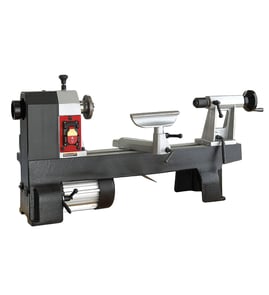
Lathe “size” is determined by the machine’s working capacity, not its overall footprint. For a Craftsman 113228165 12-inch wood lathe, the key measurements are swing (maximum turning diameter) and distance between centers (maximum work length), plus a few spindle-related specs that affect what stock and accessories fit.
Use these measurements to compare lathes and confirm what your lathe can handle:
- Swing over bed: Maximum diameter you can turn over the bed (often what “12-inch lathe” refers to).
- Distance between centers: Maximum length of stock supported between the headstock and tailstock centers.
- Swing over tool rest or cross-slide (more common on metal lathes): Clearance over the carriage area; on wood lathes, think of this as practical clearance with the tool rest banjo positioned.
- Spindle bore diameter: The hole through the spindle; determines the largest stock you can pass through the headstock.
- Center height: Distance from the spindle centerline to the bed; swing is typically about 2 times the center height.
| Spec | What it tells you | Why you care |
|---|---|---|
| Swing over bed | Max bowl or blank diameter | Prevents bed contact while turning |
| Distance between centers | Max spindle length | Determines table leg and spindle capacity |
| Spindle bore | Max through-spindle stock | Helps with long stock and some setups |
| Center height | Spindle-to-bed distance | Confirms swing and tool clearance |
| Swing over carriage area | Clearance near tool rest | Avoids tool rest/banjo interference |
- Swing over bed: Measure from the bed surface up to the spindle centerline; multiply by 2.
- Distance between centers: Measure from the point of the headstock center to the point of the tailstock center with the tailstock fully retracted.
- Spindle bore: Measure the inside diameter of the spindle hole (calipers help).
These specs determine whether a turning blank will clear the bed, whether a spindle project will fit between centers, and whether common accessories (centers, chucks, faceplates) will match your spindle setup.
For safe DIY checks on electrical components (switch, cord, motor circuit), use a meter and follow basic test practices in our how to use a multimeter to test electrical parts video.
Last updated: February 2026
What is the best RPM for a wood lathe?
For a Craftsman 113228165 12-inch wood lathe, the best RPM depends on the workpiece diameter and balance; a reliable safety target is keeping diameter (inches) × RPM in the 6,000 to 9,000 range, then adjusting slower for rough or out-of-round blanks.
Use these as starting speeds, then increase only after the blank runs smooth with minimal vibration.
| Workpiece diameter | Typical starting RPM | Notes |
|---|---|---|
| 2 in spindle | 2,000 to 3,000 | Only if straight, balanced, and securely mounted |
| 4 in spindle | 1,500 to 2,250 | Common for spindle turning |
| 6 in bowl blank | 1,000 to 1,500 | Start lower if green wood or bark edges |
| 8 in bowl blank | 750 to 1,125 | Increase gradually as it rounds |
| 10 in bowl blank | 600 to 900 | Keep conservative until fully balanced |
| 12 in blank | 500 to 750 | Start at the low end; vibration control matters most |
- Start at the lowest speed your lathe allows for the setup.
- Stand out of the “line of fire” at startup (off to the side), then power on.
- Increase RPM in small steps only after the blank is round and stable.
- Slow down immediately if you feel vibration, tool chatter, or see the blank wobble.
- Re-check mounting (faceplate, chuck, centers) before increasing speed.
- Rough-sawn, out-of-round, or cracked blanks
- Large diameter bowls and platters
- Green (wet) wood or pieces with bark inclusions
- Long, thin spindles that flex
- Any time the lathe “walks,” vibrates, or the tool rest chatters
Correct RPM reduces vibration and kickback risk, improves surface finish, and helps your tools cut cleanly instead of bouncing. On a 12-inch wood lathe like the Craftsman 113228165, stability and secure mounting matter more than chasing a high speed.
For general DIY safety habits that apply to power tools and repairs, see are diy appliance repairs safe.
Last updated: February 2026
Can you teach yourself to use a lathe?
Yes. You can teach yourself to use a lathe, and many owners do, but you need a structured approach and strict safety habits. For the Craftsman 113228165 12-inch wood lathe, start with basic spindle turning, practice on scrap wood, and increase speed, tool complexity, and project difficulty gradually.
- Read the lathe’s safety labels and set up solid lighting, stable footing, and dust collection.
- Start with spindle turning between centers (not bowls) to learn tool control.
- Practice 15 to 30 minutes at a time; stop when you feel rushed or fatigued.
- Learn one tool at a time (roughing gouge, spindle gouge, skew, parting tool).
- Keep a simple log: wood species, speed used, tool used, what went wrong.
- Confirm the workpiece is sound (no cracks, loose knots, or embedded metal).
- Tighten the headstock and tailstock locks; verify the drive center and live center are seated.
- Set the tool rest close to the work (about 1/8 to 1/4 inch) and slightly below centerline.
- Rotate the workpiece by hand to ensure it clears the tool rest.
- Start at the lowest speed; increase only after the blank runs true.
| Mistake | What it causes | What to do instead |
|---|---|---|
| Starting too fast | Vibration, catches | Start slow; increase speed in small steps |
| Tool rest too far away | Loss of control | Keep the rest close and re-adjust often |
| Dull tools | Tear-out, grabbing | Sharpen frequently; light cuts only |
| Standing in the “line of fire” | Injury risk if a blank fails | Stand slightly to the side at startup |
A wood lathe rewards repetition. The same fundamentals (secure mounting, correct speed, sharp tools, and controlled cuts) prevent catches, reduce vibration, and help you get clean finishes faster.
For general DIY safety habits that apply to power tools like a wood lathe, review are diy appliance repairs safe.
Last updated: February 2026
Which is the best lathe machine?
The “best” lathe depends on what you’re making and how you’ll use it. For most home woodturning, a stable 12-inch wood lathe like the Craftsman 113228165 is a strong choice for bowls, spindles, and general shop projects; for precision metal parts, a metalworking lathe (including Swiss-style CNC) is the better fit.
- Wood lathe (like Craftsman 113228165): best for bowls, pens, spindles, and furniture parts
- Benchtop metal lathe: best for bushings, shafts, and small metal parts with tighter tolerances
- Engine lathe (metal): best for larger metal work, threading, and heavier cuts
- Swiss-style CNC lathe: best for high-volume, ultra-precise small parts with long length-to-diameter ratios
| If you care most about... | Prioritize | Why it matters |
|---|---|---|
| Smooth turning and fewer vibrations | Heavier bed, solid stand, good bearings | Vibration shows up as chatter and rough finishes |
| Range of projects | Swing over bed, distance between centers | These set your max bowl diameter and spindle length |
| Ease of use | Simple belt changes, clear speed chart | Faster setup means safer, more consistent results |
| Safety and control | Reliable tool rest, tailstock lock, emergency shutoff | Better control reduces catches and kickback risk |
- Match the swing and between-centers capacity to your biggest planned project.
- Use the lowest speed for rough blanks; increase speed only after the piece is balanced.
- Keep the tool rest close to the work and re-adjust often.
- Inspect the drive belt and pulleys for glazing, cracks, or wobble.
- Confirm the lathe is bolted down or firmly mounted to reduce vibration.
Choosing the right lathe type prevents frustration and wasted money. A wood lathe excels at shaping wood safely and efficiently, while metal lathes (especially Swiss-style CNC) are built for precision, rigidity, and repeatability on metal stock.
For help identifying the exact model number on your machine before ordering parts, use how to find your appliance model number (and what it means for parts).
Last updated: February 2026