Owner’s manual
 Error Codes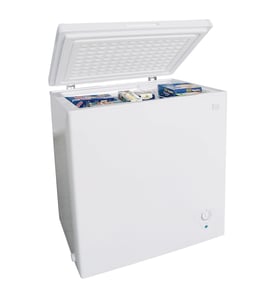




How do I know if my chest freezer is going bad?
If your Kenmore 25312112411 chest freezer is going bad, you will typically see warming or thawing food, heavy frost buildup, or longer run times with unusual noises (humming, clicking, buzzing). These symptoms point to unstable temperatures, airflow issues, or a failing sealed-system component.
- Food feels soft, ice cream is consistently “scoopable,” or items refreeze with ice crystals
- Frost builds up quickly on the interior walls or around the lid opening
- The freezer runs almost constantly, or cycles on and off more than normal
- New or louder sounds: repeated clicking, buzzing, or a louder-than-usual hum
- Condensation, sweating, or visible gaps around the lid gasket area
- A “dead” control feel (temperature changes do not seem to affect cooling)
- Keep the lid closed for a few hours and re-check temperature; opening the lid frequently can mimic a cooling problem.
- Inspect the lid seal for rips, hard spots, or areas that do not compress evenly.
- Look for heavy frost; if present, plan a manual defrost and cleaning routine using the steps in the owner's manual.
- Confirm the control setting; if the knob is cracked or slipping, the setting may not match what you selected.
- After a power outage, remember frozen foods can stay frozen for at least 24 hours if the freezer stays closed; warming after that window is a strong red flag.
| Symptom | Likely area | Example part for this model |
|---|---|---|
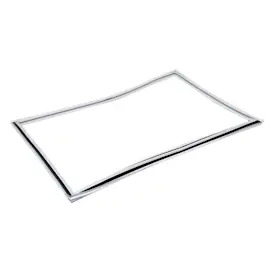
| Lid not sealing, frost near rim | Lid seal and liner fastening | Freezer gasket and liner fastener kit 5304406520 |
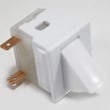
| Interior light or switch issues (if equipped) | Door/lid switch | Freezer door switch 216822900 |
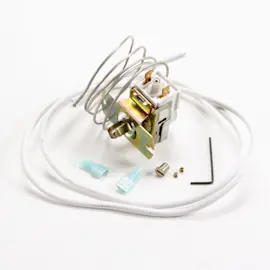
| Temperature changes do not “take” | Temperature control components | Temperature control 297216043 or freezer temperature control knob 216707200 |
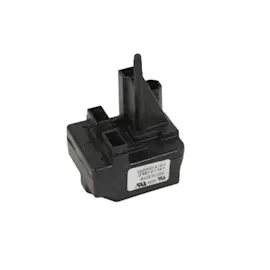
| Clicking with poor cooling | Compressor start components or compressor | Gibson refrigerator run capacitor 297286803 or compressor 5304507765 |
A freezer that cannot hold a stable temperature causes freezer burn, ice crystals, and food safety risk. Catching seal, frost, or control problems early often prevents longer run times and stress on the compressor.
Last updated: February 2026
What can cause a chest freezer to stop working?
A Kenmore 25312112411 chest freezer usually stops working because it is not getting power, the temperature control is set to OFF, or a household circuit issue (tripped breaker, blown fuse, outage) is cutting power. Start with the basic electrical checks in the owner's manual.
- Confirm the power cord is fully seated in the outlet.
- Check the home breaker or fuse for the freezer circuit.
- If the outlet is on a GFCI, reset it (or try a different outlet temporarily).
- Make sure the temperature control is not set to OFF.
- Avoid opening the lid repeatedly during a suspected power failure.
| What you notice | Most common cause | What to do next |
|---|---|---|
| No lights, no sound | No power to freezer | Verify outlet power, breaker/fuse, GFCI |
| Runs sometimes, then stops | Unstable power or control setting | Recheck control setting; confirm dedicated circuit |
| Power is on but cooling is weak | Air leaks or heavy frost | Inspect lid seal; defrost if frost buildup is heavy |
| Stopped after moving | Plug not seated or unit not level/upright | Confirm plug; ensure freezer is upright and stable |
When the freezer is off, keeping the lid closed helps food stay frozen longer. If the outage continues, use dry ice as described in the owner's manual and handle it with gloves.
If you have confirmed good power and correct settings, a failed component can still prevent operation. Common examples include:
- Start components (such as a run capacitor)
- Temperature control components
- Wiring connections
For this model, a commonly replaced start component is the gibson refrigerator run capacitor 297286803.
A “no run” condition is often a simple power or control setting issue. Checking those first prevents unnecessary parts replacement and helps you act quickly to protect frozen food.
Last updated: February 2026
What is the life expectancy of a chest freezer?
A chest freezer typically lasts 10 to 20 years, and many run about 15 to 16 years with normal household use. For your Kenmore 25312112411 chest freezer, regular cleaning, proper temperature control, and keeping the lid seal tight are the biggest factors that help it reach the high end of that range.
- Heat and ventilation: Hot garages and tight clearances make the compressor work harder.
- Frost buildup: Heavy frost acts like insulation and reduces efficiency; defrost when needed.
- Lid gasket condition: Air leaks cause longer run times and temperature swings.
- Power quality: Frequent outages or low voltage can stress the compressor and start components.
- Cleaning habits: Keeping the interior clean and dry helps prevent odors and corrosion.
We recommend following the care steps in the owner's manual. Key habits include:
- Defrost and clean the interior after defrosting using a baking soda and warm water solution.
- Keep water out of electrical/control areas when wiping down.
- Avoid abrasive cleaners and metallic scouring pads.
- If your unit has a defrost drain, make sure drain plugs are reinstalled after defrosting so warm air does not enter.
- During long storage, clean and dry thoroughly and leave the lid slightly open to prevent odor and mold.
| What you notice | What it usually means | Typical next step |
|---|---|---|
| Runs constantly, warm temps | Air leak, control issue, heavy frost | Check gasket, defrost, verify control setting |
| Clicking, won’t start | Start components or compressor issue | Diagnose start circuit, then compressor |
| Frost returns very fast | Lid not sealing, frequent openings | Inspect gasket/hinges, reduce openings |
| Water/ice around drain area | Drain plug not seated | Reseat drain plugs after defrost |
A chest freezer can keep food safely frozen for years, but efficiency and temperature stability drop fast when frost builds up or the lid seal leaks. Staying on top of defrosting and cleaning reduces compressor strain and helps the freezer reach its full expected service life.
Last updated: February 2026
Where is the model number on a Kenmore chest freezer?
On a Kenmore chest freezer like model 25312112411, the model and serial number label is typically on the inside wall of the cabinet (often near the upper rim). If you do not see it inside, check an exterior side panel or the back of the unit; confirm the exact label location in the owner's manual.
- Inside the freezer cabinet on a side wall (near the top opening)
- Inside near the lid opening or rim area
- Exterior side panel of the cabinet
- Back of the freezer near the compressor area
- Near the hinge side of the lid (less common)
- Unplug the freezer if you need to move it to view the back label.
- Use a flashlight and look for a white or silver sticker with MODEL and SERIAL.
- Wipe frost or condensation off the inside wall so the print is readable.
- Write the numbers down exactly; model numbers are often followed by additional digits or letters.
| Label item | What it helps with | Example use |
|---|---|---|
| Model number | Matching parts to your exact freezer | Ordering a correct temperature control |
| Serial number | Identifying production details | Confirming the correct version of a part |
The model number is the key to getting the right Kenmore freezer parts and the right repair instructions. Even small model variations can use different controls, door hardware, or electrical components.
Last updated: February 2026