Owner’s manual
 Error Codes


Where is the model number on a Kenmore upright freezer?
On Kenmore upright freezer model 25326062103, the model and serial number label is typically on the upper left wall inside the freezer compartment. This is the primary location to check before looking elsewhere on the cabinet.
Where to look first (fastest)
- Open the freezer door and look on the upper left interior wall
- Check for a serial plate/label with both the model and serial number
- Use a flashlight; the label can be easier to read at an angle
For the exact wording and location notes for upright models, use the owner's manual.
Other common label locations (if you do not see it inside)
If the interior label is missing, painted over, or damaged, these are the next most common places to check on upright freezers:
- Along an inside side wall (mid-height)
- On the cabinet frame near the door opening
- Behind the lower kick plate/toe grille
- On the back exterior panel
What the label looks like
Most Kenmore freezer ID labels include:
- Model number (often starts with 253. on Kenmore-built units)
- Serial number
- Electrical rating information (volts/amps)
| What you need | Why you need it |
|---|---|
| Model number | Ensures diagrams and parts match your exact freezer |
| Serial number | Helps confirm production details when parts vary by run |
Why it matters
Using the correct model number prevents ordering the wrong parts (for example, a freezer door gasket or door switch) and helps you follow the right troubleshooting steps for your temperature control and defrost system.
Last updated: February 2026
How long do Kenmore upright freezers last?
Most Kenmore upright freezers, including model 25326062103, last 10 to 15 years with normal household use. Consistent temperatures, good door sealing, and routine cleaning help you reach the upper end of that range; heavy use and poor airflow shorten lifespan.
What affects freezer lifespan the most
- Door gasket condition: air leaks force longer run times and faster wear
- Condenser cleanliness: dust buildup increases heat and compressor workload
- Frost and airflow: heavy frost reduces efficiency and stresses the cooling system
- Temperature stability: frequent warm-ups from door openings increase run time
- Room conditions: hot, humid spaces make the freezer work harder
Maintenance that helps you get 10 to 15 years
We recommend these habits for Kenmore upright freezers:
- Keep the door closed as much as possible; organize food to reduce search time
- Let hot foods cool before loading to avoid long compressor run cycles
- Wrap food well and keep containers dry to reduce frost buildup
- Remove frost with a plastic scraper (never metal)
- Defrost and clean when frost reaches about 1/4 to 1/2 inch
For model-specific operating and care steps (including temperature control guidance and defrost drain instructions), follow the owner's manual.
Quick guide: when a repair makes sense vs replacement
| Situation | What it usually means | Typical next step |
|---|---|---|
| Door won’t seal, frost builds fast | Air leak at gasket | Replace the freezer door gasket 5304507199 |
| Loud humming, warm temps | Fan or airflow issue | Check evaporator fan motor and airflow paths |
| Heavy frost, poor cooling | Defrost system problem | Inspect defrost heater and thermostat |
| Runs constantly, still warm | Sealed system or control issue | Diagnose before buying major parts |
Why it matters
A freezer that runs longer than necessary uses more electricity and puts extra wear on the compressor and fans. Simple upkeep, especially sealing and defrosting, directly extends service life and protects frozen food quality.
Last updated: February 2026
Is there a reset button on a Kenmore upright freezer?
Kenmore upright freezers like model 25326062103 typically do not have a single dedicated “reset” button. Most reset-type actions are done by cycling power (unplugging briefly and plugging back in) or by using the temperature control and alarm controls described in the 25326062103 owner's manual.
What you can reset (and how)
Here are the most common “reset” actions customers mean on an upright freezer:
- Control reset (basic power reset): Unplug the freezer for 2 to 5 minutes, then plug it back in.
- Temperature setting reset: Use the control inside the freezer; on electronic controls, use UP for warmer and DOWN for colder, then allow several hours to stabilize.
- Alarm silence/reset: On models with an alarm, press ALARM OFF to silence the buzzer; the indicator can keep blinking until safe temperature returns.
- Cooling recovery after outage: After power is restored, allow up to 4 hours for the freezer to cool down completely.
Where the controls are located on this model type
The manual for Kenmore upright models places the temperature control inside the freezer. Depending on the control style, you may see:
| Control style | What it looks like | What “reset” usually means |
|---|---|---|
| Electromechanical | A dial/knob | Turn from OFF to a colder setting, then wait several hours |
| Standard electronic | UP and DOWN buttons | Re-set temperature using buttons; power cycle if unresponsive |
| Deluxe electronic | Panel with alarm features | Use ALARM OFF to silence; indicator clears after temperature recovers |
If it still will not cool after a reset
These checks solve most “needs a reset” complaints:
- Confirm the temperature control is not set to OFF.
- Make sure the plug is fully seated and the circuit breaker is not tripped.
- Check that the door is closing tightly; a worn seal can cause warm air leaks.
- Avoid frequent door openings; warm air forces longer run times.
- If you see frost buildup or warm temperatures persist, defrost-system parts may be involved (for example, a freezer defrost heater 216730700 or chest freezer defrost thermostat 297216600).
Why it matters
A “reset” is usually a way to clear a temporary control glitch or recover after a power interruption. If the freezer cannot pull down to a safe temperature afterward, the issue is typically power, airflow, door sealing, or a cooling/defrost component.
Last updated: February 2026
Who makes Kenmore 25326062103?
Kenmore is a brand name, and the Kenmore 25326062103 upright freezer was manufactured for Kenmore by another appliance maker (Kenmore does not operate its own freezer factories). For model-specific identification details, we recommend checking the product information section in the owner's manual.
How to identify the actual manufacturer for this model
The most reliable way is to use the model and serial tag on the freezer, then match it to the model number format.
- Find the model/serial label inside the cabinet (often on a side wall or near the door opening)
- Confirm the full model number is 25326062103 (match all digits)
- Look for a manufacturer code or prefix on the tag (sometimes shown near the serial)
- Compare the format to the identification notes in the owner's manual
- Use the confirmed model number when ordering parts to ensure fit
Why this matters when buying parts
Different manufacturers can use different designs for the same Kenmore-branded freezer family. Using the exact model number ensures you get the correct components for the sealed system, defrost system, and door sealing parts.
Here are examples of model-matched parts commonly used on this freezer:
| System area | Example part for 25326062103 | What it affects |
|---|---|---|
| Door sealing | Freezer door gasket 5304507199 | Prevents warm air leaks and frost buildup |
| Defrost | Freezer defrost heater 216730700 | Clears frost from the evaporator |
| Air circulation | Motor 297309000 | Moves cold air through the cabinet |
Quick tip: use parts to confirm you are on the right model
If your freezer symptoms point to a specific system, matching the part list to what you see in the cabinet helps confirm you are working from the correct model information.
- Heavy frost on the back wall: check defrost heater and defrost thermostat
- Door hard to close or frost around the perimeter: check the door gasket
- Warm temperatures but compressor runs: check evaporator fan motor and airflow paths
Last updated: February 2026
What causes an upright freezer to stop freezing?
An upright freezer like Kenmore model 25326062103 usually stops freezing because cold air is not circulating correctly, the temperature control is set too warm, the door is leaking warm air, or the defrost system is iced up. Use the checks in the 25326062103 owner's manual to confirm settings and symptoms.
Quick checks we recommend first
- Confirm the temperature control is set cold enough; allow several hours for temperatures to stabilize after any adjustment.
- Make sure the door closes fully and is not being held open by packages.
- Look for heavy frost on the back interior panel (a common sign of a defrost problem).
- Avoid overloading; overloading forces longer run times and can slow freezing.
- Let hot food cool to room temperature before loading.
- Do not line shelves with foil, wax paper, or paper towels; liners block airflow.
Most common causes (and what you will notice)
| What’s happening | Likely cause | What you’ll typically see |
|---|---|---|
| Freezer runs a lot but stays warm | Door air leak or airflow blockage | Frost buildup, warm spots, longer run times |
| Freezer warms after being unplugged | Normal cool-down time | Needs about 4 hours to cool fully |
| Frost builds up quickly | Door gasket not sealing or frequent door openings | Frost near top/around door, moisture |
| Back wall is packed with frost | Defrost system issue | Fan noise changes, weak airflow |
Parts that commonly fix “not freezing” symptoms
If your checks point to a specific failure, these model-compatible parts are common solutions:
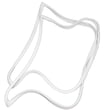
- Door not sealing, frost around the door: freezer door gasket 5304507199
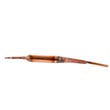
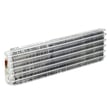
- Heavy frost on evaporator cover, poor airflow: freezer defrost heater 216730700 and chest freezer defrost thermostat 297216600
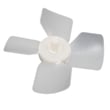
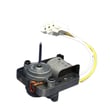
- No/weak airflow inside freezer: motor 297309000 and blade 5308000010
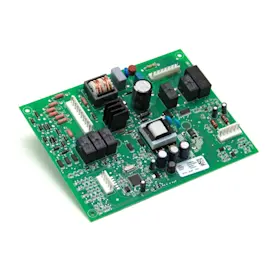
- Temperature swings or control issues: electronic c 297282800
Why it matters
When warm air leaks in or airflow is restricted, the freezer has to run longer to maintain temperature. That leads to frost buildup, inconsistent temperatures, and food quality problems.
Last updated: February 2026