
Are rear discharge mowers any good?
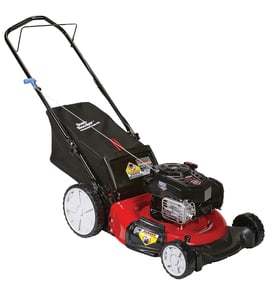
Yes, rear discharge mowers are a solid choice for many lawns because they drop clippings behind the mower, which helps keep debris from blowing into flowerbeds, fences, and walkways. On a Craftsman rotary power mower like model 14375250, rear discharge also tends to leave clippings more evenly in the cut path.
When rear discharge is a good fit
Rear discharge works especially well when you want cleaner edging and less side spray.
- You mow near fences, walls, patios, or landscaping and want fewer clippings thrown sideways
- You prefer clippings to fall more uniformly behind the rear wheels
- You mow in tighter areas where controlling discharge direction matters
- You want a simple, reliable deck style with fewer “aiming” concerns than side discharge
Trade-offs to know before you choose
Rear discharge is not automatically better for every yard; it depends on grass type, height, and how often you mow.
| Feature | Rear discharge | Side discharge |
|---|---|---|
| Clipping control near landscaping | Better | More blowout to the side |
| Performance in very tall, wet grass | Can clump if you mow too fast | Often clears faster |
| Cleanup on sidewalks/driveways | Usually less mess | Often more mess |
| Bagging compatibility (varies by mower) | Often compatible | Often compatible |
Tips to get the best results (any discharge style)
These steps improve cut quality and reduce clumping on most walk-behind mowers.
- Mow when grass is dry
- Raise the cutting height if the lawn is overgrown, then lower on a second pass
- Slow down in thick grass so the blade can lift and cut cleanly
- Keep the blade sharp and the underside of the deck clean
- Overlap passes slightly for a more even finish
Why it matters
Discharge direction affects where clippings land, how clean the edges look, and how much time you spend blowing off hard surfaces. Rear discharge is often the easiest way to keep clippings contained without changing your mowing pattern.
For help confirming you have the correct mower identification before buying accessories or parts, use how to find your appliance model number (and what it means for parts).
Last updated: January 2026
How many acres can a 72 inch mower cut in an hour?
A 72-inch mower can typically cut about 3 to 5 acres per hour in real-world conditions. Actual productivity depends on ground speed, turning time, overlap, terrain, and grass height; a Craftsman rotary power mower like model 14375250 is usually far smaller than 72 inches.
Quick way to estimate acres per hour
Use this field estimate:
- Acres/hour = (deck width in inches × mph × efficiency) ÷ 99
- Typical efficiency ranges from 0.70 to 0.85 (more obstacles and trimming time means lower efficiency).
Example ranges for a 72-inch deck
- 6 mph at 75% efficiency: about 3.3 acres/hour
- 8 mph at 80% efficiency: about 4.7 acres/hour
- 10 mph at 85% efficiency: about 6.2 acres/hour
What changes the number the most
- Ground speed (mph): faster mowing increases acres/hour until cut quality drops
- Efficiency losses: trees, beds, gates, and tight turns reduce output
- Overlap: mowing with 2 to 6 inches of overlap lowers effective width
- Grass conditions: tall, wet, or dense grass forces slower speed and more passes
- Terrain: slopes and rough ground reduce safe speed
Typical productivity table (real-world)
| Deck width | Typical speed | Typical efficiency | Typical acres/hour |
|---|---|---|---|
| 60 in | 6 to 8 mph | 0.70 to 0.85 | 2.5 to 4.1 |
| 72 in | 6 to 10 mph | 0.70 to 0.85 | 3.0 to 6.2 |
Why it matters
Estimating acres per hour helps us size the right mower for your property and plan mowing time. If you are shopping parts for Craftsman 14375250, confirm your actual cutting width first so you do not overestimate productivity.
For help confirming the correct model number before ordering parts, use how to find your appliance model number (and what it means for parts).
Last updated: January 2026
What happens if you push a hydrostatic mower?
Pushing a hydrostatic-drive mower with the drive engaged forces the transmission to turn without proper fluid flow, which can quickly overheat and damage internal components. On a Craftsman rotary power mower model 14375250, always put the drive in freewheel (bypass) before moving it by hand.
What you should do before pushing it
- Stop the engine and remove the spark plug wire so the blade cannot start accidentally.
- Set the drive control to the disengaged position (if equipped).
- Use the hydrostatic bypass or freewheel control (often a lever, pin, or valve) so the wheels roll freely.
- Push slowly on flat ground; avoid slopes where the mower can roll away.
- If it will not roll easily, stop and re-check that the bypass is fully engaged.
What can go wrong if you push it without bypassing
| Situation | What happens | Likely result |
|---|---|---|
| Short push with drive engaged | Pump and motor are back-driven | Heat buildup, accelerated wear |
| Longer push or uphill push | Higher internal pressure and friction | Transmission damage, loss of drive |
| Forcing locked wheels | Skidding and stress on axles | Tire flat-spotting, linkage damage |
Quick checks if it was already pushed
- Test drive operation: does it move smoothly forward and reverse?
- Listen for new whining or grinding from the transaxle area.
- Check for fluid leaks around the hydrostatic unit (if serviceable).
- If performance changed, stop using it and have the drive system inspected.
Why it matters
A hydrostatic transmission relies on hydraulic fluid circulation for lubrication and cooling. When you push the mower with the system engaged, you can back-drive the pump and motor without the normal operating conditions, which is why using the bypass/freewheel control protects the transmission.
For general DIY safety practices while troubleshooting mechanical and electrical issues, we recommend reviewing are diy appliance repairs safe.
Last updated: January 2026