Installation guide
 Owner’s manual
 Error Codes


What is the average lifespan of a KitchenAid dishwasher?
A KitchenAid dishwasher typically lasts 10 to 14 years with normal household use. For your KitchenAid KDFE104DWH5, consistent maintenance (cleaning, correct detergent, and rinse aid use) and proper installation help you reach the high end of that range; hard water and heavy daily use shorten it.
What affects lifespan the most
- Water quality: hard water speeds up mineral buildup and wear
- Detergent choice and amount: using the right dishwasher detergent helps prevent suds and performance issues
- Rinse aid use: this model is designed to use rinse aid for better drying and to reduce hard-water deposits
- Cycle length and usage: energy-efficient models often run longer cycles (commonly 2 to 5 hours per load)
- Installation quality: correct leveling, secure mounting, and proper drain routing reduce leaks and strain
Quick maintenance checklist (best ROI)
- Clean the filter area and sump regularly; remove debris that can restrict wash and drain flow.
- Use fresh automatic dishwasher detergent; avoid hand soap or laundry detergent.
- Keep rinse aid filled and the cap installed.
- Run hot water at the sink before starting so incoming water is hot (many dishwashers perform best around 120°F).
- Inspect racks and rollers for damage so the racks glide smoothly and don’t stress the tub.
Typical lifespan expectations
| Usage pattern | Typical lifespan | What you’ll notice first |
|---|---|---|
| Light (few loads/week) | 12 to 14 years | Minor rack wear, occasional clogs |
| Average (1 load/day) | 10 to 12 years | Drain or wash performance declines |
| Heavy (2+ loads/day) | 8 to 10 years | Pump, heater, or control issues |
Why it matters
Knowing the expected lifespan helps you decide when to invest in repairs versus planning a replacement. If performance drops early, it is often maintenance-related (detergent, rinse aid, buildup) rather than an immediate major failure.
For model-specific operating and care guidance, follow the KDFE104DWH5 owner’s manual.
Last updated: January 2026
Is it worth fixing a KitchenAid dishwasher?
Yes, it’s usually worth fixing a KitchenAid dishwasher like model KDFE104DWH5 when the unit is under about 10 years old and the repair is a common wear item (latch, valve, drain pump, rack parts) rather than repeated major electronic or motor failures. Use the KDFE104DWH5 owner’s manual to confirm symptoms and operating checks before buying parts.
Quick decision guide (repair vs. replace)
- Repair when the dishwasher is generally reliable and the issue is isolated (won’t drain, won’t fill, door won’t latch, rack won’t roll).
- Repair when the estimate is under ~50% of the cost of a comparable new dishwasher.
- Replace when you have multiple major failures in a short time (controls plus motor plus leaks).
- Replace when the tub is damaged or corrosion is severe (structural issues are rarely cost-effective).
- Repair when you can address performance with maintenance (detergent, rinse aid, water temperature).
Common “worth fixing” repairs on KDFE104DWH5
These are typical, targeted fixes that often restore normal operation:
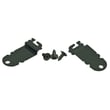
- Door won’t close or start: check the dishwasher door latch WPW10653840
- Not filling: check the dishwasher water inlet valve W11175771
- Not draining: check the dishwasher drain pump W10876537
- Poor drying or long cycles: verify heater operation and settings (heating issues can involve the element)
- Rack problems: wheels/adjusters are straightforward mechanical repairs
Cost and complexity comparison
| Repair type | Typical difficulty | Typical value outcome |
|---|---|---|
| Door latch, rack wheels/adjusters | Low | High (quick restore) |
| Water inlet valve, drain pump | Medium | High (fixes core function) |
| Console/control issues | Medium to high | Mixed (parts can be costly) |
| Sump and motor assembly | High | Mixed to low (bigger investment) |
Why it matters
A dishwasher that’s loading correctly and running with proper water temperature and detergent can avoid repeat problems. KitchenAid guidance calls for incoming water at at least 120°F (49°C) and using the correct detergent to prevent suds and fill or wash issues. Those basics can turn a “replace it” situation into a simple, lasting repair.
Last updated: January 2026
What is the most common problem with a KitchenAid dishwasher?
On the KitchenAid KDFE104DWH5 dishwasher, the most common issue we see is poor cleaning (dishes come out dirty) caused by restricted water flow from a clogged filter area, blocked spray arms, or wash system problems. Drain and leak complaints are also frequent.
Most common symptoms and what they usually point to
- Food left on dishes: spray arm holes blocked, filter area dirty, or low water temperature
- Cloudy glassware: hard water, too much detergent, or not enough rinse aid
- Standing water: drain path restriction or a weak drain pump
- Wet dishes: rinse aid not used, plastics loaded incorrectly, or heat-dry option not selected
- Suds/foam: wrong detergent type or too much detergent (can affect filling and washing)
Quick checks we recommend first (no parts needed)
Use these steps before replacing anything; they solve a large share of “not cleaning” calls.
- Confirm incoming hot water is at least 120°F (49°C)
- Use fresh automatic dishwasher detergent (not hand soap or laundry detergent)
- Check for suds; excessive foam can prevent proper operation
- Make sure the water supply valve is fully on
- Verify the overfill protection float moves freely up and down
For model-specific operating tips and cycle options, follow the KDFE104DWH5 owner’s manual.
When a part is commonly involved
If the dishwasher is filling and running but performance is still poor, these parts are often involved depending on the symptom.
| Symptom | Commonly involved area | Example part for KDFE104DWH5 |
|---|---|---|
| Not draining well | Drain system | Dishwasher drain pump W10876537 |
| Not filling or fills slowly | Water supply/fill | Dishwasher water inlet valve W11175771 |
| Not drying well | Heating/drying system | Element assembly W10703867 |
Why it matters
Poor cleaning is usually a water flow, temperature, or detergent issue. Fixing the root cause helps prevent repeat problems like odor, redepositing soil, and long cycle times.
For fault lights and diagnostic-style symptoms, use the KitchenAid microclean he dishwasher error codes guide.
Last updated: January 2026