Owner’s manual
 Error Codes


What is the most common problem with Samsung refrigerators?
The most common issues we see with Samsung refrigerators like model RF20HFENBWW are cooling problems (warm fridge or freezer) and ice maker or water system troubles. Many of these start with restricted airflow, dirty condenser areas, or a failing fan, sensor, or control.
Most common symptoms and what they usually point to
- Fridge warm, freezer OK: fresh food evaporator fan/airflow issue, iced-up evaporator cover, or a temperature sensor problem
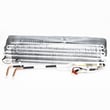
- Freezer warm, fridge OK: freezer evaporator fan/airflow issue or frost buildup from a defrost problem
- No ice or slow ice: water supply restriction, inlet valve issue, or ice maker module problem
- Water leaks or puddles: drain system restriction (often a clogged drain tube)
- Intermittent cooling or no cooling: condenser fan, electronic control, or compressor protection device issues
Quick checks we recommend first (safe, no parts swapping)
- Confirm vents are not blocked by food packages; blocked vents can cause overcooling or poor cooling. See the airflow guidance in the RF20HFENBWW owner's manual.
- Power reset correctly: if you unplug the refrigerator, wait at least 5 minutes before plugging it back in.
- Listen for fans: you should typically hear a fan running at times; unusual grinding or silence can indicate a fan problem.
- Check door sealing: look for gaps, torn gasket areas, or doors not closing fully.
- Look for frost patterns: heavy frost on the back wall inside often signals airflow or defrost trouble.
Parts that commonly solve these problems on RF20HFENBWW
| Symptom | Common suspect part | What it does |
|---|---|---|
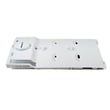
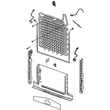
| Fridge section warm | Refrigerator fresh food evaporator cover and fan assembly DA97-11823A | Moves cold air through the fresh food compartment |
| Poor ice or no water flow | Refrigerator water inlet valve DA62-01477A | Controls water flow to the ice maker/dispenser |
| Temperature swings | Refrigerator temperature sensor DA32-00024W | Feeds temperature data to the control |
| Intermittent cooling | Refrigerator electronic control board DA92-00202A | Manages cooling and defrost functions |
Why it matters
Cooling and ice maker complaints often share the same root causes: airflow restrictions, fan failures, or water supply issues. Fixing the underlying cause protects food quality and helps the refrigerator run efficiently.
Related DIY help
For ice maker-specific troubleshooting steps, use why your Samsung fridge stopped making ice and how to fix it.
Last updated: January 2026
What's the lifespan of a bottom freezer fridge?
Most bottom-freezer (bottom-mount) refrigerators last about 12 to 15 years with normal use and basic maintenance. For your Samsung RF20HFENBWW, keeping airflow clear, maintaining proper temperatures, and fixing small issues early helps you reach the high end of that range; see the RF20HFENBWW owner's manual for care and operating guidance.
Typical lifespan and what affects it
A refrigerator’s life is mostly driven by compressor run time, airflow, and how well the doors seal.
- Door gasket condition (air leaks make the compressor run longer)
- Condenser airflow (dust and restricted airflow raise operating temps)
- Evaporator fan performance (poor circulation causes warm spots and icing)
- Temperature settings (too cold can increase run time and frost issues)
- Usage habits (frequent door openings, overpacking, hot food loads)
Quick maintenance that extends life
We recommend these habits for Samsung bottom-mount units like the RF20HFENBWW:
- Keep food away from rear vents so air can circulate (a common performance issue).
- Set and verify temps: 33°F to 36°F fresh food; 0°F to 2°F freezer.
- Clean dust from the condenser area and confirm the condenser fan runs smoothly.
- Check doors close squarely and the gasket seals all the way around.
- If you see icing or hear fan noise, inspect the evaporator area and address it early.
Repair vs. replace: a simple guide
| Refrigerator age | Common approach | Why |
|---|---|---|
| 0 to 5 years | Repair | Parts typically restore full performance |
| 6 to 10 years | Repair if cooling is strong | Good value if sealed system is healthy |
| 11 to 15 years | Case-by-case | Multiple failures can add up |
| 16+ years | Replace | Efficiency and reliability usually drop |
Why it matters
A bottom freezer fridge can look “fine” while slowly losing efficiency. Small problems like restricted vents, a weak fan, or a leaking door seal increase compressor run time, which is the fastest way to shorten overall lifespan.
Last updated: January 2026
How do I find the model number on my RF20HFENBWW?
Your Samsung refrigerator’s model number is printed on the appliance ID label (rating plate). On RF20-series French door units like RF20HFENBWW, the label is typically inside the fresh food compartment on a side wall near the crisper area. Use the RF20HFENBWW owner's manual to confirm the exact label location for your configuration.
Where to look first (fast checks)
- Open the fresh food (upper) doors and scan the left and right interior walls
- Check near the crisper drawers and the lower hinge-side areas
- Look along the ceiling of the fresh food compartment near the lights
- If you do not see it, check the freezer drawer opening around the frame edges
What the label looks like and what to copy
The ID label usually includes several identifiers. For parts lookup, we recommend copying these exactly:
- Model number (example: RF20HFENBWW)
- Version or revision code (often shown after a slash, such as “/US-00”)
- Serial number
Why the “/US-00” matters for parts
Many Samsung refrigerators share a base model number, but the version code can change the exact fit of parts like a door gasket, control board, or ice maker.
| What you see on the label | What it affects | What to do |
|---|---|---|
| RF20HFENBWW | Model family | Use it to find the correct parts diagrams |
| /US-00 (or similar) | Exact production version | Match it when ordering parts |
| Serial number | Build date tracking | Keep it for service history |
Why it matters
Using the full model identification helps us match the correct Samsung refrigerator parts the first time, especially for fit-critical items such as door seals and electronic controls.
Last updated: March 2026