Installation guide
 Owner’s manual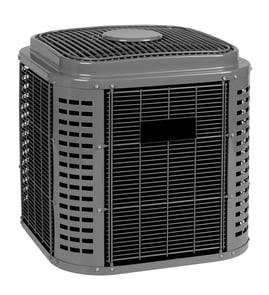



What seer AC for a 2000 sq ft house?
For a 2,000 sq ft home, we typically see a 3 to 4 ton central AC or heat pump as a starting point, and a 16 to 18 SEER (or SEER2 equivalent) is a strong efficiency target for most budgets. The right choice depends on your climate, insulation, and ductwork; confirm sizing details in the 38YXA036 owner's manual.
Recommended SEER (and why)
A higher SEER generally means lower cooling cost, but it can increase upfront price and may require compatible indoor equipment.
- Minimum baseline: choose at least the current federal minimum efficiency for your region
- Good value range: 16 to 18 SEER for many homeowners
- Higher efficiency: 19+ SEER when you plan to stay long-term and want maximum savings
- Comfort note: proper sizing often improves comfort more than chasing the highest SEER
Size first, then SEER
SEER does not determine tonnage. For a 2,000 sq ft home, tonnage is driven by heat gain and airflow.
- Get a load calculation (Manual J) to avoid oversizing
- Check duct sizing and return air; restricted airflow hurts efficiency
- Match the outdoor unit to a factory-approved indoor coil/air handler
- Consider humidity control; oversized systems can short-cycle
Quick guide (typical starting points)
| Home size (sq ft) | Typical capacity range | Notes |
|---|---|---|
| 1,600 to 2,100 | 3.0 to 3.5 tons | Common range for average insulation |
| 2,000 to 2,400 | 3.5 to 4.0 tons | Often needed in hotter climates |
Why it matters
Choosing the right SEER and correct tonnage helps your system run longer, steadier cycles for better comfort, fewer starts, and lower operating cost. For Carrier model 38YXA036, installation details like approved matches and line-set practices in the 38YXA036 installation guide help protect performance.
Last updated: January 2026
What is the tonnage of Carrier 38YXA036?
The Carrier 38YXA036 is a 3-ton system; “036” indicates about 36,000 BTU/hr of cooling capacity (12,000 BTU/hr per ton). For model-specific installation and sizing notes, use the 38YXA036 installation guide.
How we determine tonnage from the model number
Most central air conditioners and heat pumps use the last three digits to indicate nominal capacity:
- 024 = about 24,000 BTU/hr (2 tons)
- 030 = about 30,000 BTU/hr (2.5 tons)
- 036 = about 36,000 BTU/hr (3 tons)
- 048 = about 48,000 BTU/hr (4 tons)
- 060 = about 60,000 BTU/hr (5 tons)
Quick conversion table
| Model capacity code | Approx. BTU/hr | Nominal tons |
|---|---|---|
| 024 | 24,000 | 2 |
| 030 | 30,000 | 2.5 |
| 036 | 36,000 | 3 |
| 048 | 48,000 | 4 |
| 060 | 60,000 | 5 |
Why it matters
Correct tonnage helps match the outdoor unit to the indoor coil/air handler and ductwork. An oversized or undersized system can cause comfort issues, higher energy use, and more wear on the compressor and condenser fan motor.
Related installation notes for this Carrier heat pump
From the installation guidance for the 38YXA series, good setup practices that support proper performance include:
- Use refrigerant line sizes appropriate to the unit capacity
- Route tubing with minimal bends and avoid rigid contact with framing
- Seal wall penetrations to reduce vibration and noise transfer
- Use service equipment rated for Puron (R-410A) pressures
Last updated: January 2026
Is it cheaper to replace the AC unit or the compressor?
For a Carrier 38YXA036 heat pump, replacing only the compressor is usually cheaper upfront than replacing the entire outdoor unit, but a full unit replacement often delivers better long-term value when the system is older or has multiple issues (efficiency, refrigerant leaks, electrical problems). Use the 38YXA036 owner’s manual to confirm operating modes and basic care that can prevent compressor strain.
How we decide which option makes more sense
Replace the compressor when:
- The system is relatively newer and the rest of the outdoor unit is in good condition
- The indoor coil/air handler and refrigerant circuit are clean and leak-free
- The failure is isolated (for example, a hard-start issue or a single electrical component)
- You can confirm proper airflow and filter maintenance (dirty filters can overheat and shut down components)
Replace the outdoor unit (or system) when:
- The unit has repeated breakdowns (fan motor, contactor, defrost control, wiring)
- Efficiency is a priority and your current unit is costly to run
- There is evidence of refrigerant system contamination after a compressor failure
- You want a fresh warranty baseline across major components
Model-specific notes that affect cost and risk
The 38YXA036 installation guidance calls out items that protect the compressor and influence reliability, such as doing a final wiring check, maintaining proper grounding, and not operating the unit in a vacuum or at negative pressure. It also notes that a defrost control board can have a 5-minute lockout after power interruption, which can look like a “no start” complaint.
Quick comparison
| Option | Typical upfront cost | Typical downtime | Best when |
|---|---|---|---|
| Replace compressor only | Lower | Medium to high | Unit is in good shape overall |
| Replace outdoor unit/system | Higher | Medium | Multiple issues or older equipment |
Parts that are commonly involved in “bad compressor” symptoms
Before committing to a compressor, we often see starting or control issues tied to these parts:
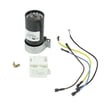
- Central air conditioner compressor hard start kit KSAHS1501AAA (helps a struggling compressor start)
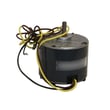
- Central air conditioner condenser fan motor HC37GE210 (failed fan can overheat the system)
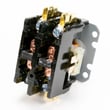
- Contactor (pitted contacts can prevent the compressor from energizing)
Why it matters
A compressor replacement that doesn’t address airflow, wiring, grounding, or charge issues can lead to repeat failures. Simple maintenance like checking filters every 3 to 4 weeks reduces strain on the compressor and blower motor and helps avoid overheating shutdowns.
Last updated: January 2026
How much does a 3 ton Carrier AC cost?
A 3-ton Carrier central air conditioner or heat pump (36,000 BTU class, like Carrier model 38YXA036) typically runs $6,000 to $12,000 installed. Your final price is driven less by the outdoor unit and more by efficiency level, required electrical work, refrigerant line work, and local labor rates.
What drives the installed price
- Efficiency and system match: higher SEER equipment and a properly matched indoor coil or air handler cost more.
- Ductwork condition: repairs, sealing, or resizing adds labor and materials.
- Refrigerant line set work: replacing, rerouting, or extending the line set increases cost.
- Electrical upgrades: disconnect, breaker, wiring, or panel capacity changes.
- Pad, placement, and access: tight clearances or difficult access increases labor.
- Permits and start-up: evacuation, charging, and commissioning time.
38YXA036 installation details that can affect labor
Carrier’s installation instructions for the 38YXA series include clearance and operating limits that can change where the unit can be placed and how long the job takes. Use the 38YXA036 installation guide to confirm requirements before getting quotes.
| Item | Requirement called out for this series | Why it can change cost |
|---|---|---|
| Service clearance | 30 in. at service end; 48 in. above | May require pad relocation or site modifications |
| Side clearances | 6 in. on one side; 12 in. on remaining sides | Tight installs can require moving fencing, shrubs, or lines |
| Cooling outdoor ambient | 55°F to 125°F | Low-ambient needs can add accessories and labor |
How we recommend budgeting (fast checklist)
- Confirm you are pricing a 3-ton (036) outdoor unit and a matched indoor coil or air handler in the 38YXA036 owner’s manual.
- Get at least 2 to 3 itemized quotes (equipment, labor, electrical, line set, permits).
- Ask whether the quote includes line set replacement and refrigerant recovery/charging.
- Verify the installer will meet the clearance requirements and level the unit.
Why it matters
Two “3-ton Carrier” installs can price very differently because the job site (ductwork, electrical, line set routing, and access) often costs as much as, or more than, the equipment.
Last updated: January 2026