Error Codes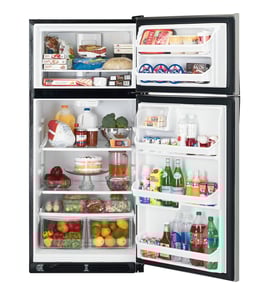




What is a fridge with freezer on top called?
A fridge with the freezer on top is called a top-freezer refrigerator, also commonly called a top-mount refrigerator. Your Amana ART318FFDW10 is this style, with the freezer compartment above the fresh-food compartment.
A top-freezer refrigerator has two separate compartments stacked vertically:
- Freezer on top for frozen food storage
- Refrigerator on bottom for fresh food storage
- Two swing doors (one for each compartment) that open from the side
- Shared cooling system that circulates cold air between sections
| Style name | Freezer location | Typical door layout | Common benefit |
|---|---|---|---|
| Top-freezer (top-mount) | Top | Two swing doors | Classic layout, efficient use of space |
| Bottom-freezer | Bottom | Upper swing door + lower drawer | Fresh foods at eye level |
| Side-by-side | Left side | Two tall swing doors | Narrow door swing, easy freezer access |
| French door | Bottom | Two upper doors + lower drawer | Wide fresh-food shelves |
Knowing the style helps when you’re shopping for parts, organizing airflow, or troubleshooting cooling issues. For example, top-freezer models like the ART318FFDW10 rely heavily on the evaporator fan to move cold air from the freezer into the refrigerator section.
- If the refrigerator section is warm but the freezer is cold, airflow is often the issue.
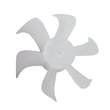
- If you hear squealing or rattling from the freezer area, the fan motor or blade can be involved.
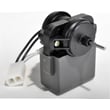
If you’re diagnosing airflow problems, we recommend starting with how to fix your evaporator cooling fan and checking the refrigerator evaporator fan motor WP2315539 if the fan is not running.
Last updated: January 2026
Which is better, top mount or bottom mount refrigerator?
A “better” choice depends on how you use your kitchen. For an Amana top-mount like model ART318FFDW10, top-mount designs typically cost less to buy and run, while bottom-mount designs usually put fresh food at eye level and can feel easier to organize day to day.
| Feature | Top-mount (freezer on top) | Bottom-mount (freezer on bottom) |
|---|---|---|
| Fresh-food access | Lower shelves require more bending | Fresh food is at eye/waist level |
| Freezer access | Easy to reach | Often a pull-out drawer |
| Typical price | Lower | Higher |
| Energy use | Often slightly lower | Often slightly higher |
| Storage feel | Simple, straightforward | Often more “organized” layouts |
We recommend a top-mount refrigerator when you want reliable, efficient cooling with fewer “extras” to maintain.
- You want a budget-friendly replacement
- You use the freezer often and want it at chest height
- You prefer a simpler layout with fewer drawers and mechanisms
- You want a design that is typically easier to service
- You have a tighter kitchen space and want a straightforward door swing
A bottom-mount is usually the better choice when fresh-food convenience matters most.
- You cook frequently and access the refrigerator section many times per day
- You want less bending for produce, dairy, and leftovers
- You like wide shelves and crisper organization
- You store bulky frozen items and prefer a deep pull-out drawer
The “best” refrigerator is the one that matches your habits. If you open the refrigerator section far more than the freezer, bottom-mount convenience can outweigh the higher cost. If you want value and efficiency, a top-mount like ART318FFDW10 is often the smarter pick.
If you ever notice warm temperatures or weak airflow in the fresh-food section, the evaporator fan system is a common place to check. The refrigerator evaporator fan motor WP2315539 is one of the key parts that drives cold-air circulation.
Last updated: January 2026
Why is my Amana refrigerator freezer not freezing?
If your Amana ART318FFDW10 top-mount refrigerator freezer is not freezing, the most common causes are restricted airflow from frost buildup, a failed evaporator fan, dirty condenser coils, or a temperature-sensing/control issue. Start with airflow and frost checks, then test the fan and sensors.
- Confirm the freezer temperature control is set colder and the door is closing tightly.
- Look for heavy frost on the freezer back wall (a strong sign of a defrost problem).
- Listen for the evaporator fan running when the compressor is on (door switch held in).
- Check that vents between freezer and fresh food are not blocked by packages.
- Clean dust from the condenser coil area and verify the condenser fan (if equipped) runs.
| What you notice | Most likely cause | What to do next |
|---|---|---|
| Frost blanket on freezer back wall | Defrost system not clearing ice | Defrost manually to restore airflow, then diagnose heater/thermostat/timer/control |
| Freezer warm, fridge also warm | Airflow or sealed system issue | Check fan operation and coil cleanliness; if compressor runs but no cooling, service is needed |
| Freezer warm, fan noisy or not spinning | Evaporator fan problem | Inspect blade for ice/rubbing; replace motor or blade if damaged |
| Temps swing, food soft then refreezes | Sensor/control issue | Check thermistor placement and wiring; replace sensor if out of range |
- Refrigerator evaporator fan motor WP2315539: moves cold air across the evaporator and through the freezer; failure causes weak or no airflow.
- Thermistor, refrigerator W11438736: reports temperature to the control; a bad reading can prevent proper run time.
- Condenser coil cleaning (maintenance item): restores heat removal so the compressor can cool effectively.
A freezer that is not freezing is usually an airflow problem first; when airflow is blocked by ice or a fan failure, the evaporator cannot circulate cold air, so temperatures rise quickly and food safety becomes a concern.
- Use how to fix your evaporator cooling fan to diagnose fan noise, no-spin conditions, and airflow symptoms.
Last updated: January 2026