Owner’s manual
 Error Codes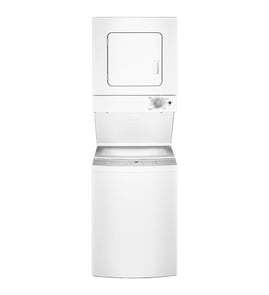





How to do laundry on a Speed Queen?
To do laundry on your Speed Queen STGNCASP115TW01, load clothes loosely, add the correct detergent to the dispenser (HE detergent is recommended), close the door fully, choose your cycle and options, then press START and unload when the cycle finishes. See the STGNCASP115TW01 owner's manual for cycle details.
Step-by-step: washing a load
- Remove sharp objects (coins, screws, pins) to prevent fabric tears.
- Load items loosely; do not pack the drum.
- Keep the load within the washer’s maximum dry load (21 lb / 9.5 kg).
- Add supplies in the dispenser drawer: main wash detergent, bleach (if used), fabric softener (if used), and pre-wash detergent (if used).
- Close the dispenser drawer and the loading door tightly (the washer will not run with the door open).
- Select the cycle, temperature, and any options; press START.
Detergent and additives: what to use
This model is designed for low-sudsing washing. Using the right product and amount helps prevent oversudsing and poor rinsing.
| What you are using | Where it goes | Important note |
|---|---|---|
| HE liquid or powder detergent | Dispenser drawer (main wash) | Use the amount recommended for HE machines |
| Non-HE detergent | Dispenser drawer (main wash) | Use about half the detergent maker’s recommended amount |
| Single-load detergent packets or 3-in-1 laundry sheets | In the drum with clothes | Do not put these in the dispenser drawer |
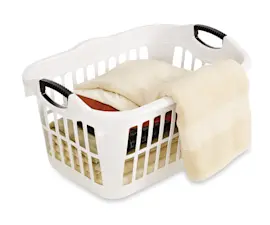
Tips for bulky items (blankets, comforters)
- Use the Delicates/Bulky cycle for bulky loads.
- Load one bulky item at a time when possible.
- If the washer pauses during spin, let it rebalance; pauses can be normal.
Why it matters
Correct loading and detergent use helps your Speed Queen laundry center clean better, spin out more water, and reduce wear on fabrics and components such as the door latch and drive system.
Last updated: February 2026
What are the common problems with Speed Queen washers?
Common problems we see with Speed Queen washers (including the washer section of the Speed Queen STGNCASP115TW01 laundry center) are vibration from leveling or load balance, loads that finish too wet, wrong water temperature from hose hookups, and normal-but-concerning noises during door locking and agitation. For model-specific operating checks, use the STGNCASP115TW01 manual.
Most common symptoms and what usually causes them
- Vibrates or moves: washer not level, weak floor, missing rubber feet on leveling legs
- Load too wet after spin: unbalanced load, load too small, washer limits spin Speed to protect the machine
- Wrong water temperature: controls not set correctly, hot and cold hoses reversed at the mixing valve
- Noisy operation: uneven leveling, normal door-lock clicks, balance ring sounds during agitation
- General performance issues: overloading or poor load distribution
Quick checks we recommend first (safe, no parts swapping)
- Level the washer on a solid floor; recheck after a high-Speed spin.
- Redistribute the load; mix large and small items, avoid washing a single heavy item alone.
- Confirm hose connections: hot to “H”, cold to “C” at the valve bracket.
- Verify settings: correct cycle, soil level, and temperature selection.
- Power safety: disconnect power before any service work (per the safety instructions in the manual).
Symptom-to-fix guide
| Symptom | What to do now | What it prevents |
|---|---|---|
| Shaking/vibration | Level unit; confirm sturdy floor | Excess wear, walking, noise |
| Clothes too wet | Rebalance load; increase load size | Long dry times, musty odors |
| Water temp wrong | Correct hose hookups; check settings | Poor cleaning, fabric issues |
| Clicking/noise | Level unit; confirm noise matches normal operation | Unnecessary part replacement |
When a part is more likely involved
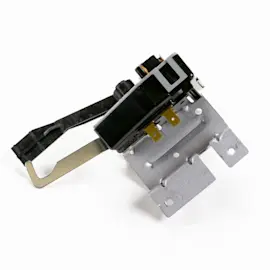
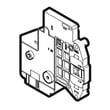
If the washer won’t start because the door won’t secure, a door-latch problem is common on front-load designs; for this model, the matching replacement is the door latch assembly 803920.
Why it matters
Most “washer problems” are installation and loading issues. Fixing leveling, load balance, and hose hookups improves cleaning, reduces vibration, and helps the washer reach full spin Speed so clothes come out drier.
Last updated: February 2026
Does Speed Queen have stackable washers and dryers?
Yes. Speed Queen makes stacked washer/dryer units (often called stacked laundry centers) that combine a washer and dryer in one vertical cabinet to save floor space while still delivering full-size washing and drying performance. Your Speed Queen STGNCASP115TW01 is one of these stacked washer/dryer designs; see the STGNCASP115TW01 owner's manual for operating and installation details.
What “stackable” can mean
Speed Queen products are described two common ways; both are stack solutions, but they are not the same.
- Stacked laundry center: factory-built, one-piece stacked washer and dryer (like STGNCASP115TW01).
- Stackable pair: separate washer and dryer that can be stacked with a stacking kit (model-dependent).
- Side-by-side: separate units installed next to each other.
How to confirm what you have
Use the model and serial tag on the unit to identify the exact configuration before ordering parts or planning service.
- Check the model number on the serial plate (STGNCASP115TW01).
- Confirm whether the dryer is gas or electric (the manual covers both types).
- Match the part to the correct section (washer vs. dryer) in the parts list.
Why it matters for parts and repairs
Stacked laundry centers use model-specific parts and access methods. For example, common dryer drive components for this model include:
| Symptom | Common related dryer parts (examples) | What you typically notice |
|---|---|---|
| Dryer drum not turning | Commercial dryer drum belt D511255P | Motor runs but drum does not tumble |
| Squealing or thumping | Cylinder roller D510708P | Noise that changes as the drum rotates |
| Drum slips or won’t stay tensioned | Idler wheel and bearing assembly D510142P | Belt squeal, intermittent tumbling |
Safety and installation notes we follow
Because stacked units combine washer and dryer utilities in one cabinet, we follow the manual’s safety basics during setup and troubleshooting.
- Do not use an extension cord for the dryer power connection.
- Keep flammable vapors and liquids away from the appliance.
- If you smell gas, follow the manual’s gas-safety steps and stop using the unit.
- After installation, run a test load and verify the unit is stable and level.
Last updated: February 2026
What's the average lifespan of a Speed Queen washer?
Speed Queen washers typically last about 25 years in normal household use. For your Speed Queen STGNCASP115TW01 stacked laundry center, routine care (especially hose inspection and periodic cleaning) helps you reach that kind of service life; see the maintenance schedule in the STGNCASP115TW01 owner's manual.
Typical lifespan: Speed Queen vs. most washers
Speed Queen machines are built with commercial-style components, so their average lifespan is longer than many residential washers.
| Washer type | Typical lifespan | What usually ends the washer first |
|---|---|---|
| Speed Queen (residential/commercial-style) | ~25 years | Wear items (hoses, belts, bearings), maintenance neglect |
| Typical residential washer | ~10 to 12 years | Suspension/bearings, control issues, leaks |
What most affects lifespan on the STGNCASP115TW01
These are the biggest factors we see that shorten washer life in stacked laundry centers:
- Fill and drain hose condition: cracked or blistered hoses can leak and cause damage.
- Hard water mineral buildup: can leave deposits that require periodic cleaning.
- Drain performance: slow draining can point to a clogged pump trap.
- Leveling and vibration: an unlevel unit can stress the tub and suspension during high-Speed spin.
- Overloading: consistently heavy loads increase wear on moving parts.
Maintenance habits that help you get the full lifespan
The STGNCASP115TW01 manual calls out several practical maintenance intervals we recommend following:
- Check hoses monthly for visible deterioration.
- Replace all hoses every 5 years (even if they look OK).
- Check fill-hose filter screens every 6 months; clean if filling is slow.
- Clean the foreign object trap if draining slows down.
- Run a quick stability check after installation or if vibration starts (verify the unit is stable at high-Speed spin).
Why it matters
A long washer lifespan is mostly about preventing the failures that cause secondary damage, especially leaks (hoses) and out-of-balance vibration (leveling). Staying ahead of those items protects the tub, pump, and drive system so the washer can deliver decades of reliable cycles.
Last updated: February 2026