Owner’s manual
 Error Codes



What is the average lifespan of a Kenmore Elite refrigerator?
Most Kenmore Elite refrigerators, including model 10651779510, typically last 10 to 15 years with normal household use and basic maintenance. Units that get regular cleaning and have good door sealing often reach the high end of that range.
Typical lifespan and what to expect
For a side-by-side refrigerator like Kenmore Elite 10651779510, the most common “end-of-life” drivers are sealed-system or cooling-system issues (compressor, refrigerant system) and wear items that affect temperature stability.
- Average lifespan: 10 to 15 years
- Common longer-life scenario: consistent coil cleaning, stable room temperature, doors closing tightly
- Common shorter-life scenario: restricted airflow, dirty condenser coils, frequent door openings, poor door sealing
Maintenance that helps you reach the high end of the range
We recommend focusing on the items that most directly protect cooling performance and reduce run time.
- Keep condenser coils clean (dust and pet hair raise compressor workload)
- Confirm doors seal fully; fix gaps and keep gaskets clean
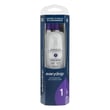
- Replace the water filter on schedule to protect water flow to the dispenser and ice maker
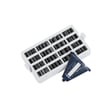
- Replace the air filter if your model uses one to reduce odors and keep airflow fresh
- Avoid overpacking; leave space for air circulation in both compartments
Quick reference: lifespan drivers
| What affects lifespan | What you can do | What you may notice if it’s getting worse |
|---|---|---|
| Cooling system workload | Clean coils, maintain airflow | Longer run times, warm temps |
| Door sealing | Clean/inspect gaskets, align doors | Frost, sweating, temp swings |
| Water system restriction | Replace filter, check supply | Slow dispenser, small/slow ice |
Why it matters
A refrigerator that runs hotter or longer than normal wears the compressor and sealed system faster. Simple upkeep (filters, airflow, door sealing) reduces strain and helps your Kenmore Elite refrigerator stay reliable longer.
For model-specific care and maintenance intervals, follow the 10651779510 owner's manual. For water-filter replacement steps, use how to replace the water filter in a Kenmore refrigerator.
Last updated: January 2026
How many cubic feet is my Kenmore Elite refrigerator?
For Kenmore Elite refrigerator model 10651779510, the exact cubic-foot capacity depends on the specific 106.5177* variant and configuration listed on the rating label; we use the capacity shown for your exact unit in the 10651779510 owner's manual.
How to find the exact capacity for your unit
Check these spots first (they are the most reliable for the exact variant):
- The model and serial tag inside the fresh food compartment (often on a side wall)
- The first pages of the 10651779510 owner's manual where model series and features are identified
- Product literature that came with the refrigerator (sometimes lists total and usable capacity)
Typical capacity range for this Kenmore Elite side-by-side style
Most Kenmore Elite side-by-side refrigerators in the 106.5177* family are in the mid-to-high 20 cu. ft. range. If you are comparing to a French door model, those are often larger for the same exterior footprint.
| Refrigerator style | Typical total capacity range |
|---|---|
| Side-by-side (like 10651779510) | ~25 to 29 cu. ft. |
| French door (common comparison) | ~27 to 31 cu. ft. |
Why it matters
Capacity affects how you shop for replacement shelves and bins, how you set airflow clearances for best cooling, and how often you may need to replace consumables like the Kenmore refrigerator water filter 9081.
Related maintenance that helps performance
If you are trying to improve taste, odor, or airflow (often confused with “low capacity”), these steps help:
- Replace the water filter on schedule (commonly every 6 months)
- Replace the air filter if your model uses one (odor control)
- Avoid blocking vents with large containers
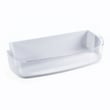
- Keep door bins and shelves seated correctly
For step-by-step filter guidance, use how to replace the water filter in a Kenmore refrigerator.
Last updated: January 2026
What year did the Kenmore Elite come out?
Kenmore Elite launched as a premium Kenmore line in the late 1990s (commonly cited as 1999). For your Kenmore Elite refrigerator model 10651779510, the exact build year is best confirmed by decoding the serial number using the date-code guidance in the 10651779510 owner's manual.
How to find the year for your specific Kenmore Elite 10651779510
We use the model number to identify the correct documentation and parts, but the serial number is what tells you when your refrigerator was manufactured.
- Look for the serial/model tag inside the fresh food compartment (often on a side wall or ceiling area).
- Write down the full serial number exactly as shown.
- Check the date-code section in the 10651779510 owner's manual for the decoding format used for this series.
- If the tag is worn, take a clear photo and zoom in to confirm characters.
- Use the manufacture date (not the purchase date) when estimating appliance age.
Quick timeline: “Kenmore Elite” vs. your refrigerator’s age
“Kenmore Elite” is a product line name, not a single release-year model.
| What you are asking about | What it means | What to use for accuracy |
|---|---|---|
| When Kenmore Elite came out | When the Elite line first appeared | General history (late 1990s) |
| How old my refrigerator is | The build date of model 10651779510 | Serial number date code |
| Warranty start | Coverage timing | Proof of sale and warranty terms |
Why it matters
Knowing the manufacture year helps us match the right refrigerator parts (like a water filter, ice maker, or door gasket), choose compatible upgrades, and set realistic expectations for maintenance as the unit ages.
Related maintenance that often comes up with age
If you are also trying to “date” the fridge because of performance changes, these are common age-related service items:
- Replace the refrigerator water filter on schedule (see how to replace the water filter in a Kenmore refrigerator).
- Replace the refrigerator air filter if odors linger.
- Inspect door gaskets for gaps, tears, or hardening.
- Watch for slow ice production or hollow cubes (often water supply or ice maker related).
- Clean condenser area regularly to support cooling efficiency.
Last updated: January 2026
What are the common problems with Kenmore Elite refrigerators?
Common problems on the Kenmore Elite 10651779510 side-by-side refrigerator include warm temperatures (airflow or sealed-system issues), frost buildup (defrost or door-seal problems), water leaks (clogged defrost drain or valve issues), and dispenser or ice maker failures. Use the 10651779510 owner's manual to match symptoms to the correct checks.
Most common symptoms and what usually causes them
- Not cooling or weak cooling: dirty condenser coils, evaporator fan issue, blocked vents, or a sealed-system problem
- Excessive frost or ice buildup: defrost heater/control issue, door left ajar, or a leaking door gasket
- Buzzing, clicking, or rattling noises: condenser fan obstruction, evaporator fan blade damage, or compressor/start device concerns
- Water under the refrigerator: clogged defrost drain, cracked water line, or inlet valve seepage
- No ice or slow ice production: restricted water supply, clogged filter, ice maker fault, or inlet valve problem
Quick checks we recommend before replacing parts
- Confirm temperatures: set refrigerator to about 37°F and freezer to about 0°F.
- Check airflow: make sure vents are not blocked by food packages.
- Inspect door sealing: close a sheet of paper in the door; if it slides out easily, the gasket may not be sealing.
- Look for ice at the freezer back wall: heavy frost often points to a defrost or airflow issue.
- Verify water supply (for dispenser/ice): confirm the shutoff valve is fully open and the line is not kinked.
| Symptom | Most likely area | Common next step |
|---|---|---|
| Warm fridge and freezer | Airflow or sealed system | Clean coils; check fans |
| Frost on freezer panel | Defrost system or door seal | Defrost and inspect gasket |
| No ice and no water | Water supply or inlet valve | Check supply; test valve |
| Bad taste/odor in water | Water filter | Replace filter |
Parts that commonly relate to these issues
- If water flow is weak or ice is slow, replacing the Kenmore refrigerator water filter 9081 is a common first step.
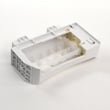
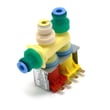
- If the ice maker is not cycling or not filling, the refrigerator ice maker W10873791 and the refrigerator water inlet valve WPW10341320 are frequent suspects.
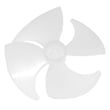
- If you hear fan noise or have poor airflow, inspect the refrigerator evaporator fan blade WP2169142.
Why it matters
Catching airflow, defrost, and water-supply problems early helps protect food temperatures, reduces ice buildup, and prevents leaks that can damage flooring and nearby cabinets.
Last updated: January 2026