Owner’s manual
 Error Codes





Which is better, top mount or bottom mount refrigerator?
A top-mount (top-freezer) refrigerator like the GE GIE18GSHERSS is usually the better choice if you want lower cost, simpler design, and strong energy efficiency. A bottom-mount is better if you want fresh-food items at eye level and easier access to the refrigerator section.
| Feature | Top mount (top-freezer) | Bottom mount (bottom-freezer) |
|---|---|---|
| Everyday access | Freezer is easiest to reach | Fresh food is easiest to reach |
| Typical price | Lower | Higher |
| Repairs | Often simpler (fewer features) | Often more complex (drawers, rails) |
| Organization | Basic shelves and bins | More drawer-style storage |
| Best for | Budget, reliability, efficiency | Convenience for fresh-food use |
- If you use the refrigerator section most (produce, drinks, leftovers), a bottom-mount reduces bending.
- If you use the freezer most (bulk frozen foods), a top-mount keeps it at a comfortable height.
- If you want fewer “extras” and straightforward maintenance, top-mount models are typically the simplest.
- If you need wide, pull-out freezer storage, bottom-mount designs usually win.
- If you are tight on space, confirm door swing and clearances before choosing; your GE manual lists recommended installation clearances.
Choosing the right layout affects daily comfort and food organization more than cooling performance. Both styles can cool well; the “better” option is the one that matches what you reach for most often and how your kitchen is laid out.
For model-specific features (shelves, drawers, temperature control, door swing reversal, and clearances), use the GIE18GSHERSS owner’s manual.
Last updated: February 2026
What are the disadvantages of a top mount fridge?
Top-mount (top-freezer) refrigerators like the GE GIE18GSHERSS are usually reliable and efficient, but the main drawbacks are convenience and storage layout: you bend more to reach fresh food, and they typically offer fewer built-in organization and dispenser features than many bottom-freezer designs.
- Less convenient fresh-food access: the refrigerator section is lower, so you bend more for everyday items.
- Fewer organization features: many top-mount models have simpler shelf and bin layouts.
- Limited premium features: external water and ice dispensers are less common on top-mount styles.
- Freezer usability: items can stack and get buried, especially in smaller top freezers.
- Door-swing clearance: in tighter kitchens, the door swing can feel more intrusive (reversing the swing may help).
We recommend these practical adjustments for a top-mount refrigerator:
- Keep daily-use foods at eye level on the main fresh-food shelves.
- Use clear bins to group snacks, deli items, and breakfast foods.
- Avoid overpacking; airflow matters for even temperatures.
- If doors do not fit your kitchen flow, follow the door-reversal steps in the owner's manual.
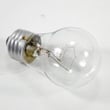
- If visibility is the issue, replace a dim or burned-out bulb with the correct GE appliance light bulb, 40-watt 40A15.
| Feature | Top-mount (top-freezer) | Bottom-freezer |
|---|---|---|
| Fresh-food access | Lower, more bending | Higher, easier reach |
| Organization | Often simpler | Often more flexible |
| Dispensers | Less common | More common |
| Cost/complexity | Often lower/simpler | Often higher/more complex |
Most households use the fresh-food compartment far more than the freezer. If bending and day-to-day access are a priority, a bottom-freezer layout can feel easier. If simplicity and straightforward storage are priorities, a top-mount design is a strong fit.
Last updated: February 2026
What is the most common problem with GE GIE18GSHERSS refrigerators?
The most common issues we see with the GE GIE18GSHERSS top-mount refrigerator are cooling complaints (fresh food too warm, freezer too warm, or temperature swings) and ice maker or water-related problems on units equipped for them. Most of these trace back to airflow, frost buildup, or a door not sealing tightly; see the owner's manual troubleshooting section for model-specific checks.
- Fridge warm, freezer cold: restricted airflow between compartments, evaporator fan issue, or frost/ice blocking vents
- Both sections warm: compressor start/capacitor problem, condenser airflow issue, or control/temperature sensing issue
- Noisy operation: evaporator fan rubbing ice, worn fan motor, or normal operating sounds (compare to the manual)
- Water leaks/puddles: clogged/iced defrost drain, water line connection issue (if equipped), or door left ajar
- Frost buildup: door gasket not sealing, frequent door openings, or defrost system problem
- Confirm the controls are set to normal mid-range and give changes 24 hours to stabilize.
- Make sure food packages are not blocking return vents in the fresh food section.
- Check the door closes on its own and the gasket makes full contact all the way around.
- Listen for the evaporator fan in the freezer; it should run during cooling.
- Clean dust from the condenser area and ensure airflow around the cabinet.
| Symptom | Common suspect | Example part on this page |
|---|---|---|
| Warm temps, weak airflow, fan noise | Evaporator fan motor | Refrigerator evaporator fan WR60X31522 |
| Frost buildup, poor cooling after a few days | Defrost heater (or related defrost issue) | Refrigerator defrost heater WR09X21107 |
| Door not sealing, moisture/frost | Door gasket | Refrigerator door gasket WR14X27235 |
Cooling and ice maker complaints usually start as an airflow or sealing problem. Fixing the root cause early helps prevent heavy frost buildup, food spoilage, and extra run time that can shorten the life of the compressor.
Last updated: February 2026