Owner’s manual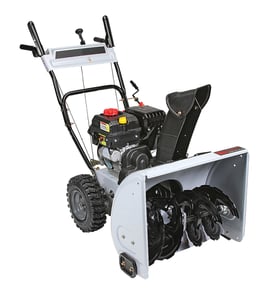


How do I tell how old my snowblower is?
To tell how old your MTD snow thrower model 316E640F000 is, we use the model and serial number tag on the machine’s frame and decode the serial number. The exact year code format varies, so the most reliable method is matching your tag details to the identification section in the owner's manual.
Where to find the model and serial number
On most MTD snow throwers, the ID tag is on the main frame (often near the rear of the unit, under the handle area, or along the side of the housing).
Check these common spots:
- Rear frame crossmember behind the engine
- Side of the frame near the wheels
- Under the handle panel area
- Near the auger housing mounting area
- Engine shroud tag (engine model and code, separate from the snowblower tag)
How to decode the year (practical approach)
Because serial formats vary by production run, we recommend this step-by-step process:
- Write down the full model number and full serial number exactly as shown
- Look in the owner's manual for the model family listing (your manual covers 316E610E000, 316E640F000, and 316E660G000)
- If the snowblower serial number does not clearly indicate a year, use the engine identification code as a cross-check (many engines include a date or code that indicates build period)
- Compare the estimated build period to wear items and maintenance history (belts, friction wheel, shear bolts)
Quick reference: what each number tells you
| Tag or label | What it identifies | Why it helps |
|---|---|---|
| Snowblower model number (316E640F000) | The exact machine configuration | Ensures correct parts and manual match |
| Snowblower serial number | Production sequence and often build date | Best clue to the unit’s age |
| Engine model/type/code | The engine’s build information | Useful backup for dating |
Why it matters
Knowing the approximate age helps us choose the right replacement parts and maintenance steps for your 316E640F000, especially for items that wear over time (drive components, springs, fasteners) and for seasonal storage planning.
Last updated: February 2026
How to tell if a snowblower auger belt is bad?
On your MTD 316E640F000 gas snowblower, a bad (or slipping) auger belt shows up as augers that stop or slow under load, poor snow throwing, belt squeal or burning rubber smell, and visible belt wear like cracking, glazing, or frayed edges. Confirm belt condition and clutch adjustment using the steps in the owner's manual.
Quick symptoms checklist
- Auger turns with no snow, but stalls or slips in heavy snow
- You hear squealing when you engage the auger control
- You smell hot rubber after a short run
- The belt looks shiny (glazed), cracked, stretched, or has missing chunks
- Excess vibration from the front housing area
- You find black rubber dust near the pulleys or belt cover
What to inspect (safe, practical steps)
- Shut the engine off and let all moving parts stop.
- Disconnect the spark plug wire before putting hands near belts or pulleys.
- Remove the front belt cover and look at both auger belts (this model uses two auger belts; the manual notes both must be removed to change either one).
- Check belt condition and tension:
- If the belt sits deep in the pulley groove, looks loose, or slips when the auger is engaged, it is worn or stretched.
- If the belt is glazed or cracked, replace it.
Belt condition vs. adjustment (what’s the difference?)
Sometimes the belt is fine, but the auger drive clutch or idler system is out of adjustment.
| What you notice | Most likely cause | What to do next |
|---|---|---|
| Belt looks good but auger still slips | Auger clutch or idler spring/tension issue | Check auger clutch adjustment in the owner's manual |
| Belt is cracked, frayed, or glazed | Belt worn out | Replace the auger belt(s) |
| Auger will not turn at all | Broken shear bolt or jammed auger | Clear obstruction; check shear bolts |
Why it matters
A slipping auger belt reduces throwing distance and can overheat, leaving rubber debris on pulleys. Replacing a worn belt early also helps protect idler pulleys, springs, and the auger drive clutch linkage.
Related DIY help
Last updated: February 2026
What are the parts of a snowblower called?
Snowblower parts are typically named by what they do: engine starting and fuel parts (spark plug, primer, choke), snow-moving parts (augers, auger shaft, shear bolts), and drive and control parts (belts, traction drive, shift rod, chute crank). For your MTD 316E640F000, the owner's manual shows common hardware and assemblies such as the chute crank, shift rod, and auger shear bolts.
Common snowblower part names (and what they do)
- Augers: pull snow into the housing
- Shear bolts/pins: sacrificial fasteners that break if the auger jams to protect the gearbox
- Chute and chute crank: aim where snow discharges (left or right)
- Drive system: traction drive, friction wheel, and drive belt to move the wheels
- Auger drive system: auger clutch and auger belt(s) to spin the augers
- Engine controls: throttle control, choke, primer, ignition key, recoil starter
Names you will see in the MTD 316E640F000 manual
The manual for this model family calls out these assemblies and service items:
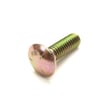
- Auger shear bolts (designed to shear if you hit a foreign object)
- Chute crank (turn clockwise to discharge left; counterclockwise to discharge right)
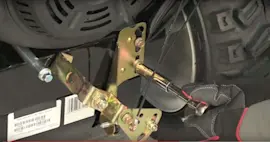
- Shift rod and clutch cables (link the controls to the drive system)
- Shave plate and skid shoes (wear items at the bottom of the housing)
Quick reference: wear items vs. control parts
| Category | Examples | What you notice when it fails |
|---|---|---|
| Wear items | skid shoes, shave plate, belts, shear bolts | poor scraping, slipping, auger stops under load |
| Control/linkage | shift rod, clutch cables, chute crank | hard shifting, drive not engaging, chute won’t aim |
| Engine tune-up | spark plug, oil | hard starting, rough running, stalling |
Why it matters
Knowing the correct part names helps you match diagrams, order the right replacement, and troubleshoot faster. For example, if the auger stops suddenly after a jam, the manual points to shear bolts as a designed failure point before bigger damage happens.
Last updated: February 2026
What is the most common reason snowblower won't start?
The most common reason an MTD snow thrower like model 316E640F000 will not start is stale fuel (or an empty tank), which can block fuel flow and make the engine fail to fire. The next most common causes are a missing ignition key, a disconnected spark plug wire, or a faulty spark plug (all listed in the troubleshooting guide in the owner's manual).
Quick checks we recommend first
- Confirm the ignition key is fully inserted; the engine will not start without it.
- Make sure the spark plug wire is firmly connected.
- Verify the fuel is fresh; drain old gas if it sat since last season.
- Check for a blocked fuel line (fuel will not reach the carburetor).
- If it starts and then dies, make sure it is not left running on CHOKE.
Troubleshooting by symptom (fast guide)
| What you see | Most likely cause | What to do |
|---|---|---|
| No start, no sputter | Key missing, plug wire off | Insert key; reconnect plug wire |
| Sputters with choke/prime but will not run | Stale fuel, blocked fuel line | Replace fuel; clear fuel delivery |
| Starts, runs rough | Water/dirt in fuel, stale fuel | Drain and refill; clean fuel system |
| Starts but lacks power | Choke left on, fuel issue | Move off CHOKE; refresh fuel |
Why stale fuel stops a snowblower from starting
Gasoline breaks down during storage and can leave varnish that restricts the tiny passages that feed the carburetor. When that happens, the engine may not get enough fuel to start or it may only run briefly on prime.
Safety notes before you work on it
- Stop the engine and remove the key before adjustments.
- Disconnect the spark plug wire before inspecting moving parts.
- Never clear the discharge chute by hand; use a stick or broom handle.
Last updated: February 2026