Owner’s manual
 View engine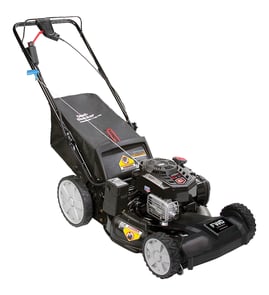


How do I find my lawn mower model number?
On the Husqvarna walk-behind mower model 917374462, the model and serial numbers are printed on a decal on the rear of the lawn mower housing. We recommend writing both numbers down before ordering parts or looking up maintenance specs in the 917374462 owner's manual.
Where to look on the mower
Check these common decal locations first (starting with the one confirmed for this model):
- Rear of the mower deck or housing (behind the engine, near the discharge area)
- Top of the deck near the engine mounting area
- Near the rear wheel height adjuster area
- On or near the handle mounting brackets
What to record (and why)
The decal typically includes more than one identifier. Capture all of these so you get the right parts the first time:
- Model number (used to match the correct parts diagrams)
- Serial number (helps confirm production run details)
- Date of purchase (useful for your records and maintenance tracking)
| Item | What it’s used for | When you’ll need it |
|---|---|---|
| Model number | Finding correct parts lists and diagrams | Ordering wheels, cables, handles, drive parts |
| Serial number | Confirming exact build/version | When parts vary by production range |
| Date of purchase | Maintenance history | Tune-ups, seasonal service planning |
Tips for reading the decal correctly
- Wipe the decal with a damp cloth; dried grass and dust can hide characters.
- Copy the number exactly as printed (including dots or dashes if present).
- Take a clear photo of the decal so you can zoom in later.
Why it matters
Husqvarna walk-behind mowers can look similar across multiple model series, but parts like the drive system, control cable, and wheel hardware can differ. Using the exact model number (such as 917374462) keeps you from ordering the wrong part.
Last updated: January 2026
What gas do I put in my lawn mower?
For the Husqvarna 917374462 gas walk-behind mower, we recommend fresh regular unleaded gasoline (87 AKI); premium is not needed for normal operation. Use clean fuel and avoid storing old gas from one season to the next; follow the fuel and storage guidance in the 917374462 owner's manual.
What to use (and what to avoid)
- Use fresh, clean unleaded gasoline from a busy station.
- Use up to 10% ethanol (E10) when available; avoid higher-ethanol blends.
- Do not use gasoline that smells sour, looks dark, or has been sitting for months.
- Do not mix oil into the gas (this mower is a 4-cycle setup; engine oil is added separately).
- Do not store gasoline in a rusty or dirty gas can.
Quick fuel checklist
| Item | Best practice | Why |
|---|---|---|
| Octane | 87 AKI regular | Starts and runs correctly for most small engines |
| Freshness | Buy what you’ll use in 30 days | Reduces hard-start and surging issues |
| Ethanol | E10 or less | Helps prevent fuel-system damage |
| Storage | Stabilizer for seasonal storage | Helps prevent stale fuel problems |
If the mower won’t start after fueling
Stale or contaminated fuel is a common cause of no-start. Check these basics before replacing parts:
- Confirm the tank has fresh gas (not last season’s fuel).
- Check the air filter for heavy dirt.
- Make sure the spark plug wire is firmly connected.
- Verify the operator presence control bar is held down during starting.
- If equipped, use the primer correctly for a cold start.
Why it matters
Fuel quality directly affects starting, power, and carburetor reliability. Using fresh gas and proper storage practices helps prevent “stale fuel” and “water in fuel” problems that can keep a mower from starting.
Last updated: January 2026
What is the best gas mower under $300?
For under $300, the best gas mower is the one that matches your yard and priorities (push vs. self-propel, mulch vs. bag, and easy starting). If you already own a Husqvarna walk-behind mower like model 917374462, use the feature and maintenance checklist in the 917374462 manual to compare budget mowers consistently.
What to look for under $300
- Cutting width: 20 to 22 inches for most small to mid-size yards
- Drive type: push for flat yards; self-propel for slopes or thicker grass
- Deck material: stamped steel is common and holds up well for typical residential use
- Cut options: mulching and bagging are the most useful; side discharge is a plus
- Height adjustment: single-point is faster than adjusting each wheel
- Serviceability: easy access to blade, wheels, and common wear parts
Quick comparison guide
| Yard and mowing needs | Best budget mower type | What you gain |
|---|---|---|
| Flat yard, lighter grass | Push mower | Lowest cost, simplest upkeep |
| Slopes or heavy growth | Self-propel mower | Less effort, steadier pace |
| Lots of leaves | Bagging-capable mower | Cleaner pickup and disposal |
| Prefer fewer bags | Mulching-capable mower | Returns clippings to the lawn |
How your Husqvarna 917374462 helps you choose
Your 917374462 is built around practical usability features called out in the manual, such as the operator presence control bar (must be held to run), a primer for cold starts, and a single-point height adjuster. When shopping under $300, prioritize those same “every-mow” features over marketing claims.
Specs that matter more than engine size
- Cut quality controls: height range and how easy it is to change
- Starting system: primer and accessible controls
- Maintenance access: blade removal, wheel service, and cleaning the deck
Why it matters
Budget mowers can cut well, but the wrong drive type or missing cut options makes mowing slower and more tiring. Matching the mower to your yard and routine delivers the best value.
Last updated: January 2026