Owner’s manual


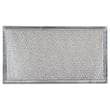

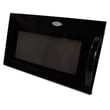
Does the Whirlpool low profile microwave need to be vented outside?
No. The Whirlpool MH1160XSQ1 microwave/hood combo does not have to be vented outside; it can be installed to vent to the outdoors or set up to recirculate air back into the kitchen (non-vented). The correct setup depends on your cabinet layout and existing ductwork.
Venting options for MH1160XSQ1
Most over-the-range microwave/hood combos support these configurations:
- Outside venting (ducted): exhausts cooking smoke and odors outdoors through ductwork
- Recirculating (ductless): filters air and returns it to the room
- Top or rear discharge (ducted): depends on whether your duct exits through the cabinet top or the wall behind
For the exact venting configuration and damper orientation for your installation, follow the MH1160XSQ1 owner's manual.
Quick checks before you decide
Use these practical checks to choose the right venting method:
- Look for an existing duct opening in the cabinet above the microwave or in the wall behind it
- Confirm you have a clear path to an exterior wall or roof cap if you want ducted venting
- If you are recirculating, make sure the vent openings are not blocked and the filters are installed correctly
- Verify the microwave is not installed where openings are covered or blocked (airflow is required)
- If the unit seems to run the fan by itself, that can be normal heat protection behavior
Common symptoms and what they point to
| What you notice | Most likely cause | What to do next |
|---|---|---|
| Steam and odors linger | Recirculating setup or restricted airflow | Clean filters, confirm vent path is open |
| Weak airflow at grille | Grease buildup or blocked discharge | Inspect grille and duct path |
| Fan turns on automatically | Cooktop heat triggers auto fan | Let it run; it can stay on up to about an hour |
Why it matters
Correct venting protects the microwave/hood combo from overheating, improves smoke and odor removal, and helps the vent fan work as designed. It also reduces the chance of blocked openings, which can lead to poor performance.
Last updated: February 2026
What is the difference between 1.7 and 1.9 cu ft microwave?
A 1.9 cu ft microwave gives you about 0.2 cu ft more usable cavity space than a 1.7 cu ft model, so it fits slightly larger cookware and taller food items more comfortably. For over-the-range units like Whirlpool MH1160XSQ1, exterior fit is often similar, but you should confirm cutout and mounting details in the MH1160XSQ1 owner's manual.
What changes in real-world use
That extra 0.2 cu ft usually shows up as a little more room for:
- Larger dinner plates and wider microwave-safe bowls
- Taller covered dishes (less chance of the cover touching the ceiling)
- 9x13-style casserole dishes (fit depends on turntable diameter and cavity shape)
- More clearance for steam bags and bulky packaging
What usually stays the same (especially over-the-range)
Many 1.7 and 1.9 cu ft over-the-range microwaves share similar outside dimensions because they’re designed to fit standard cabinet widths. Differences, when they exist, are typically in internal geometry and feature sets.
- Cabinet width fit is commonly the same
- Mounting style is similar (upper cabinet bolts plus wall bracket)
- Electrical requirements are often similar (dedicated circuit recommended)
Specs to compare before you buy or replace
Capacity alone does not tell you how well your dishes will fit. Use this checklist when comparing models.
| Spec to compare | Why it matters | What to look for |
|---|---|---|
| Turntable diameter | Determines max dish size | Bigger turntable usually fits bigger plates |
| Interior height | Helps with tall containers | More height reduces splatter-cover contact |
| Cooking wattage | Impacts heating speed | Higher wattage typically heats faster |
| Vent fan performance | Important for cooktop smoke/steam | Higher airflow moves more air |
Why it matters
If you regularly heat large plates, casserole dishes, or use taller covered containers, moving from 1.7 to 1.9 cu ft reduces crowding and improves airflow around food for more even heating. If your priority is guaranteed fit in the same cabinet space, the manual and installation measurements are the deciding factor.
Last updated: February 2026
How do I know what wattage my Whirlpool microwave is?
For your Whirlpool MH1160XSQ1 microwave/hood combo, the most reliable way to confirm cooking wattage is to check the rating label (often inside the door area) and the specifications section in the owner's manual. If you cannot access the label, you can estimate wattage by timing a simple water-heating test.
Where to find the wattage on the microwave
Check these common locations first:
- Rating label inside the door opening (frame area) or on the oven cavity edge
- Behind the vent grille area (some models place labels there)
- Specifications section of the owner's manual
- Your purchase paperwork (sometimes lists output wattage)
Quick at-home wattage estimate (water test)
This test helps you estimate output wattage when the label is hard to read.
- Measure 1 cup (8 oz) of room-temperature water in a microwave-safe glass.
- Heat on High and time how long it takes to reach a full rolling boil.
- Compare your time to the guide below.
| Time to boil 1 cup | Typical output wattage range |
|---|---|
| 2:00 to 2:15 | ~1000 to 1200 W |
| 2:30 to 3:00 | ~800 to 1000 W |
| 3:15 to 4:00 | ~600 to 800 W |
Why it matters
Knowing wattage helps you set correct cook times for packaged foods and recipes. Lower-wattage microwaves need longer cook times; higher-wattage units cook faster and can overcook if you follow generic directions.
Safety and power notes for this model
Your MH1160XSQ1 is designed for a grounded 3-prong outlet and a dedicated 120V, 60 Hz, 15- or 20-amp circuit. Avoid adapters and extension cords; stable power helps prevent nuisance shutdowns and protects internal components.
Last updated: February 2026
What is the average lifespan of a Whirlpool microwave?
Most Whirlpool microwaves, including over-the-range microwave/hood combos like model MH1160XSQ1, typically last 7 to 10 years with normal household use. Heavy daily use, poor ventilation, and repeated door slamming can shorten life; consistent cleaning and proper airflow help it reach the high end of that range.
What affects lifespan the most
- Daily run time (reheating once a day vs. cooking multiple meals)
- Ventilation and grease buildup in the hood and vent grille
- Door and latch wear (interlock switches must operate correctly)
- Power quality (frequent breaker trips or surges stress electronics)
- Maintenance habits (keeping the cavity and filters clean)
Signs it is near end-of-life (and what to check first)
If your MH1160XSQ1 is acting up, these are common symptoms and the first areas we check:
- Runs but does not heat (often points to high-voltage components)
- Dead display or intermittent power (can be a fuse or wiring issue)
- Stops when the door moves or will not start (door interlock system)
- Loud humming or buzzing that is new (internal component wear)
- Turntable not rotating (motor or coupler related)
| Symptom | Common area involved | Example part on this model page |
|---|---|---|
| No power / goes dead | Line fuse, wiring | Microwave fuse W11707984 |
| Won’t start / door error behavior | Door interlock switches | Microwave/hood micro-switch W10269458 |
| Turntable not turning | Turntable drive | Turntable motor W10642989 |
Why it matters
A microwave that is nearing the end of its service life can become unreliable for cooking performance and safety interlocks. Catching early symptoms (especially door-switch issues) helps prevent nuisance shutdowns and repeat fuse failures.
Good habits that extend life
- Keep the vent grille and filters clean so heat can escape
- Avoid running the microwave empty
- Use microwave-safe cookware only (no metal)
- Close the door gently so the interlock system stays aligned
- Follow the care and use guidance in the owner's manual
Last updated: February 2026