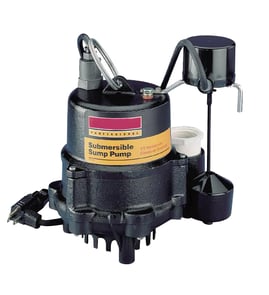

Is a 0.5 hp water pump enough for a home?
A 0.5 HP pump can be enough for many homes, but only when the well depth, total lift (head), and household demand match the pump’s flow and pressure capability. For a Kenmore 3902597 multi-stage jet pump, size the pump by gallons per minute (GPM) and total dynamic head, not horsepower alone.
How to tell if 0.5 HP will meet your needs
Use these checkpoints to match the pump to your home’s water demand:
- Water source depth: shallow well and short suction runs are easier on the pump
- Total dynamic head (TDH): vertical lift plus friction loss in piping plus desired pressure
- Peak demand: number of simultaneous uses (showers, laundry, irrigation)
- Pressure tank size and settings: affects cycling and usable flow
- Pipe size and run length: undersized or long piping reduces delivered flow
Quick sizing guide (typical home expectations)
These are practical targets we use when estimating residential performance.
| Home demand scenario | Typical target flow | Typical pressure target | 0.5 HP outcome (typical) |
|---|---|---|---|
| Small home, 1 bath, light simultaneous use | 5 to 8 GPM | 30 to 50 PSI | Often adequate |
| Medium home, 2 baths, occasional overlap | 8 to 12 GPM | 40 to 60 PSI | Sometimes marginal |
| Larger home, multiple fixtures at once | 12+ GPM | 50 to 70 PSI | Usually undersized |
Symptoms that the pump is undersized
If a 0.5 HP pump is too small for your system, we typically see:
- Pressure drops sharply when a second fixture opens
- Long recovery time to refill the pressure tank
- Frequent cycling (short on, short off)
- Sprinklers or outdoor hoses perform poorly
- Pump runs continuously during normal use
Why pressure switch setup matters
Even a correctly sized pump can feel weak if the pressure switch is out of adjustment or failing. On the Kenmore 3902597, a common service item is the pressure switch U217-366. A weak or mis-set switch can cause low cut-in pressure, short cycling, or inconsistent pressure delivery.
Why it matters: Horsepower is only one piece of the puzzle. Matching TDH, GPM, and pressure switch settings helps you get stable pressure, fewer cycles, and longer pump life.
Last updated: January 2026
What is the flow rate of a 25 hp water pump?
A “25 HP water pump” does not have one fixed flow rate; flow depends on pump type (centrifugal vs. jet), impeller design, pipe size, and total dynamic head. For a Kenmore 3902597 multi-stage jet pump, flow is typically discussed as a performance curve (GPM vs. head), not horsepower alone.
What changes the flow rate the most
Flow rate (GPM) is set by the system the pump is pushing against. These factors usually make the biggest difference:
- Total dynamic head (TDH): lift from water level to pump, plus pressure needed at the outlet, plus friction loss
- Pipe diameter and length: undersized or long piping can cut GPM sharply
- Nozzle/venturi and jet setup (for jet pumps): affects how well the pump can lift and maintain pressure
- Voltage and motor condition: low voltage, weak start components, or overheating reduces output
- Restrictions and air leaks: clogged inlet screen, partially closed valves, suction leaks, or a dirty filter
Typical flow-rate ranges (rule-of-thumb)
Because “25 HP” spans many pump designs, we use ranges to set expectations:
| Pump style (common use) | Typical flow range | Typical head/pressure behavior |
|---|---|---|
| High-flow centrifugal (irrigation/transfer) | ~200 to 800+ GPM | Lower head, very high volume |
| Multi-stage centrifugal (booster) | ~50 to 250 GPM | Higher head, steadier pressure |
| Multi-stage jet pump (like many well systems) | ~10 to 40 GPM | Designed for lift and pressure, not extreme volume |
How to estimate your real-world GPM
We recommend measuring at a hose bib or test port after the system is stable:
- Time how long it takes to fill a known container (for example, 5 gallons)
- Convert to GPM: GPM = gallons ÷ minutes
- Repeat with different valves open to see how pressure and flow change
Why it matters
Sizing by horsepower alone often leads to the wrong expectation. Matching GPM to TDH protects the pump, prevents short-cycling, and helps you choose the right controls and parts (especially the pressure switch).
Related part that affects flow and cycling
If the pump is surging, short-cycling, or not reaching cut-out pressure, the pressure control can be involved. For this model, we use the pressure switch U217-366 when replacement is needed.
Last updated: January 2026
What is the lifespan of a 0.5 hp water pump?
A 0.5 HP water pump typically lasts 10 years with normal use and good water conditions. For a Kenmore 3902597 multi-stage jet pump (210 series), consistent pressure settings, clean power, and avoiding short-cycling are the biggest factors that determine whether you get the full service life.
What affects lifespan the most
- Short-cycling (rapid on/off) wears the motor and pressure switch contacts faster.
- Dry running (loss of prime or no water supply) overheats seals and the pump end.
- Sand, silt, or scale accelerates wear on impellers, diffusers, and seals.
- Incorrect pressure settings can overwork the pump and stress plumbing.
- Electrical issues (low voltage, loose connections) increase heat and motor wear.
Quick health checks we recommend
- Listen for rapid clicking or frequent starts; that points to short-cycling.
- Watch the pressure gauge: a big swing between cut-in and cut-out often signals a tank or switch issue.
- Check for drips at the pump or fittings; small leaks can lead to loss of prime.
- Verify the pump has steady water supply and stays primed.
- If the pump won’t shut off or won’t start reliably, test the switch and wiring.
Typical lifespan ranges (what to expect)
| Pump situation | Typical lifespan | What usually ends it |
|---|---|---|
| Clean water, correct setup, normal cycling | 10 years | Seal wear, motor wear |
| Frequent short-cycling or pressure tank issues | 5 to 8 years | Motor overheating, switch failure |
| Sandy water or heavy sediment | 3 to 7 years | Pump-end wear, seal damage |
Why it matters
A pump that is near end-of-life often shows up as low water pressure, longer run times, overheating, or nuisance tripping. Fixing the root cause (like short-cycling) can extend life and prevent damage to the motor and plumbing.
Parts that commonly impact cycling and longevity
If you’re troubleshooting frequent cycling or inconsistent pressure on model 3902597, the pressure switch is one of the first components we check because it controls cut-in and cut-out operation: pressure switch U217-366.
Last updated: January 2026