Owner’s manual


What company makes Craftsman air compressors?
Craftsman is a brand name, so Craftsman air compressors are built by different manufacturers depending on the model and production run. For Craftsman model 919152911, you can identify the actual maker by checking the unit’s manufacturer number on the metal data plate described in the owner's manual.
The manual explains where to find the key ID numbers on your compressor. Use these locations to confirm who built your specific unit:
- Model number: on the maintenance label on top of the motor cover or on the tank
- Code number: on the foil label on the rear of the air tank
- Manufacturer’s number: on the metal data plate welded to the backside of the air tank (painted the same color as the tank)
Craftsman-branded compressors have been produced by multiple OEMs over the years. That is why two Craftsman compressors can look and service differently even if they share the Craftsman name.
- Older units often trace back to legacy compressor manufacturers
- Later units may be produced under different corporate ownership or contract manufacturing
- The manufacturer’s number on the data plate is the most reliable identifier for parts and service references
| Number on the compressor | Where you’ll use it | Why it matters |
|---|---|---|
| Model number (919152911) | Parts lookup and manual matching | Identifies the Craftsman model family |
| Code number | Production run identification | Helps narrow revisions/variations |
| Manufacturer’s number | OEM identification | Ties the unit to the actual builder |
Knowing the OEM behind your Craftsman 919152911 air compressor helps you match the correct repair parts list, troubleshoot accurately, and avoid ordering look-alike components that do not fit your specific pump, pressure switch, or tank setup.
Last updated: February 2026
Are air compressor parts interchangeable?
Most air compressor parts are not interchangeable because key components must match the exact design of your compressor. For the Craftsman 919152911 air compressor, we recommend using the parts list and specifications in the 919152911 owner's manual to match components like the pump, valves, gauges, and regulator correctly.
Many parts depend on the pump design, pressure rating, and how the tank and controls are plumbed.
- Usually model-specific: pump components (piston/cylinder parts, reed valves), check valve style, unloader tube routing, pressure switch mounting and cut-in/cut-out range
- Often interchangeable with careful matching: pressure gauges, regulators, safety valves, drain valves
- Most “universal” (still must match): quick-connect couplers, plugs, air hose fittings
Even when a part looks the same, small differences can cause leaks, poor performance, or unsafe operation.
- Thread type and size (common shop fittings are NPT, but size still varies)
- Pressure rating (PSI rating must meet or exceed your compressor’s maximum)
- Port location and orientation (especially on regulators, pressure switches, and check valves)
- Electrical ratings for switches (voltage, amperage, and wiring style)
- Compressor type (oil-free vs. oil-lubricated; single-stage vs. two-stage)
| Part type | Interchangeable? | What must match |
|---|---|---|
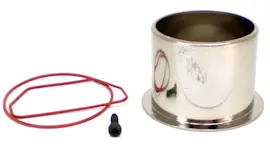
| Pump internals (valves, piston parts) | Rarely | Exact pump design for 919152911 |
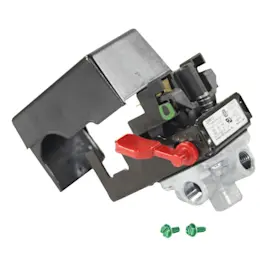
| Pressure switch | Sometimes | Cut-in/cut-out range, port size, electrical ratings |
| Regulator | Sometimes | Port size, flow needs, pressure rating |
| Couplers/plugs | Often | Style (industrial/automotive), thread size, seal method |
Your 919152911 is designed to compress air to a specific tank pressure and then control that pressure through the regulator and safety devices. The manual notes that regulator outlet pressure must never exceed the tool’s rating, and that a regulator is required for many lower-pressure tools. Using mismatched control parts can lead to leaks, nuisance tripping, or incorrect pressure control.
If you are troubleshooting a part that seems “universal,” these guides help you narrow it down by symptom:
- Air compressor won't start
- Air compressor won't build tank pressure
- Air compressor air leaks
- How to replace an air compressor pressure switch
Last updated: February 2026
What is the most common cause of air compressor failure?
The most common cause of air compressor failure is poor maintenance that leads to overheating and accelerated wear. On the Craftsman 919152911, restricted airflow (dirty intake filter, blocked ventilation) and running the compressor hard for long periods commonly trigger overload trips, leaks, and pressure-control problems. See the owner's manual for the maintenance and troubleshooting steps specific to this model.
When maintenance slips, these issues show up most often:
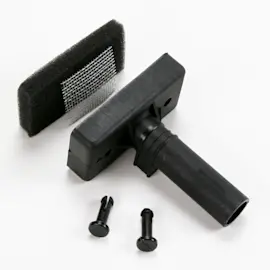
- Restricted air intake filter: starves the pump of air, increases heat, and reduces output.
- Air leaks: at fittings, hoses, or valves; the compressor runs longer and hotter to keep up.
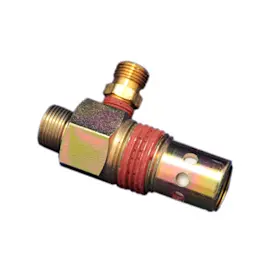
- Check valve problems: can cause hard starting or restart issues and poor pressure control.
- Pressure switch issues: can prevent proper cut-in and cut-out operation, leading to abnormal pressure behavior.
- Moisture left in the tank: promotes internal corrosion and can create long-term tank problems.
These habits prevent most “sudden” failures:
- Keep ventilation openings clear; do not run it in a tight, enclosed space.
- Inspect and tighten air fittings if you hear hissing; fix leaks early.
- Drain water from the air tank after use and before storage.
- Use the correct extension cord gauge and keep cord length reasonable to avoid voltage drop.
- If the motor overload trips, let it cool and correct the cause (often heat, load, or airflow).
| What you notice | Most likely cause | What to check first |
|---|---|---|
| Won’t start or won’t restart | Overload tripped, voltage drop, check valve stuck, head pressure not unloading | Power supply, cord size, check valve, pressure switch unload function |
| Won’t build tank pressure | Leak, restricted intake, prolonged heavy use, compressor undersized for tool | Listen for leaks, check intake filter, reduce demand |
| Safety valve pops or tank pressure too high | Pressure switch not shutting off at cut-out | Turn off immediately; inspect pressure switch operation |
| Pressure drops a lot under use | Regulator needs adjustment under flow | Adjust regulated pressure while air is flowing |
Overheating and leaks force the pump and motor to run longer than designed. That extra run time increases heat, trips overload protection, and wears seals and valves faster, which turns a small maintenance issue into a no-start or no-pressure failure.
Last updated: February 2026
Is it worth it to repair a compressor?
Yes, it’s worth repairing a Craftsman air compressor model 919152911 when the problem is limited to common service parts (like a pressure switch, check valve, fittings, or an air filter) and the tank is sound. If the air tank or welds leak, replacement is the safer, more practical choice.
- Repair when the issue is a single, diagnosable failure (won’t start, won’t build pressure, leaks at fittings).
- Repair when the fix is a standard component (pressure switch, check valve, safety valve, drain valve).
- Repair when the compressor still reaches normal cut-in and cut-out operation after the fix.
- Replace when the air tank or tank welds leak (the manual treats a defective tank as a non-routine condition).
- Replace when repeated electrical shutoffs point to a power-supply mismatch (may require a dedicated 20-amp circuit).
- Replace when multiple major symptoms stack up (won’t start, won’t build pressure, and leaks).
The 919152911 manual emphasizes two repair realities:
- Safety and scope: Before maintenance or repair, unplug the compressor and bleed off all tank pressure; repairs not listed should be done by qualified service personnel. See the owner's manual.
- Tank condition matters: Water condenses in the tank and must be drained; corrosion can weaken the tank. A leaking tank or welds is a strong “replace” signal.
| Symptom | Often caused by | Typical fix path |
|---|---|---|
| Won’t start | Power supply, pressure switch, unloader/check valve issues | Verify circuit, then test/replace pressure switch or check valve |
| Won’t build tank pressure | Air leaks, valve issues, pump wear | Find leaks, service valves, consider pump rebuild |
| Leaks at fittings | Loose or worn fittings | Tighten, reseal, replace fittings |
| Safety valve pops | Pressure switch not shutting off | Replace pressure switch if it won’t cut out |
A repair that restores proper pressure control protects the motor and prevents over-pressurization. Draining the tank and fixing leaks also helps prevent corrosion-related tank failure and keeps the compressor performing at full capacity.
- Air compressor won't start
- Air compressor won't build tank pressure
- Air compressor air leaks
- How to rebuild an air compressor pump
Last updated: February 2026