Installation guide
 Owner’s manual
 Error Codes


How wide is a Kenmore side by side refrigerator?
Most Kenmore side-by-side refrigerators are about 32 to 36 inches wide; your Kenmore model 25356293409 is in that common range. For the exact cabinet width (and door-clearance needs), we recommend checking the dimensions section in the owner's manual.
Side-by-side refrigerator widths vary mainly by capacity and whether the unit is counter-depth.
- Standard-depth side-by-side: typically 33 to 36 inches wide
- Counter-depth side-by-side: typically 32 to 36 inches wide
- Installation clearance: plan extra space for door swing, handles, and airflow
- Floor leveling matters: an unlevel cabinet can change how doors align and seal
To avoid ordering the wrong door gasket or planning a tight fit, measure the refrigerator itself, not the opening.
- Measure the cabinet width (main box) at the widest point
- Measure with handles if the refrigerator must pass through a doorway
- Measure door-open clearance (how far the doors need to swing)
- Confirm the unit is tilted slightly back and level side-to-side (common installation setup)
| Measurement you need | What it includes | Best for |
|---|---|---|
| Cabinet width | Refrigerator body only | Fitting into the cutout/opening |
| Width with doors/handles | Doors and handles | Doorway and hallway clearance |
| Door swing clearance | Space in front/side | Making sure doors open fully |
Width affects more than fit. If the refrigerator is squeezed too tightly or not leveled correctly, doors may not seal evenly, which can lead to temperature swings, frost buildup, and higher run time.
Last updated: February 2026
Where is the model number on a Kenmore side by side refrigerator?
On Kenmore side-by-side refrigerator model 25356293409, the model number is printed on the serial plate located inside the fresh food (refrigerator) compartment. Open the refrigerator door and look along the interior walls near the front edges for the label.
- Inside the refrigerator compartment (not the freezer)
- On a serial plate or rating label
- Along the side wall near the front opening
- Near the top area of the fresh food section on many units
- On a label that also lists the serial number
The serial plate usually includes both identifiers you need for parts and service.
| Item on label | What it’s used for | Example format |
|---|---|---|
| Model number | Matching parts and diagrams | 25356293409 |
| Serial number | Production info and service history | Letters plus numbers |
| Purchase date (not always on label) | Warranty records | Date you record |
We use the model number to match the exact Kenmore parts list for your refrigerator, including model-specific items like the water filter and dispenser components. Using the correct model number helps prevent ordering the wrong part.
- Write the model number exactly as shown on the label
- Take a clear photo of the serial plate for reference
- Keep it with your paperwork and your owner's manual
Last updated: February 2026
What causes a side-by-side refrigerator to stop cooling?
When a Kenmore 25356293409 side-by-side refrigerator stops cooling, the most common causes are loss of power, temperature controls set incorrectly, restricted airflow from blocked vents or overpacking, and dirty condenser coils that prevent heat from leaving the system. Use the owner's manual settings and checks first.
- Confirm the plug is fully seated and the outlet has power.
- Verify the temperature controls are set to the recommended range (then wait 24 hours for temperatures to stabilize).
- Make sure food packages are not blocking cold air vents; do not overcrowd shelves.
- Check that both doors close tightly and are not being held open by bins or containers.
- Clean the condenser area; periodic condenser cleaning helps the refrigerator run efficiently.
| What you notice | Most likely cause | What to do next |
|---|---|---|
| No lights, no fan sounds | Power issue | Check outlet, breaker, and cord connection |
| Lights on, but warm temps | Controls or airflow | Adjust controls; clear vents; reduce door openings |
| Runs a lot, still warm | Dirty condenser or door not sealing | Clean condenser; inspect door closure and gasket |
| Frost buildup, weak airflow | Defrost system issue | Check defrost components; service as needed |
If basic checks do not restore cooling, these model-compatible parts are often involved in airflow or defrost-related failures:
- Refrigerator defrost bi-metal thermostat 5303918214 (can affect defrost operation)
- Defrost heater 5303918255 (helps clear frost from the evaporator)
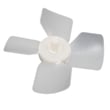
- Refrigerator evaporator fan blade 5308000010 (moves cold air through the compartments)
- Motor 5303918774 (condenser fan motor assembly; supports heat removal)
A side-by-side refrigerator cools by moving air across the evaporator and dumping heat at the condenser. Blocked vents, frequent door openings, poor door closing, or a dirty condenser forces longer run times and can make temperatures climb even when the compressor is running.
Last updated: February 2026
What are the most common problems with Kenmore refrigerators?
The most common problems we see on Kenmore refrigerators like model 25356293409 are weak or no cooling, water leaks, ice maker or dispenser issues, and unusual noises. These usually come from airflow problems (dirty coils or fan issues), door seal leaks, or defrost system trouble; use the 25356293409 owner's manual to match symptoms to checks.
- Not cooling or weak cooling: dirty condenser coils, failed condenser fan motor, evaporator fan issue, or frost buildup from a defrost failure
- Runs too long: warm air leaking past the door gasket, dirty condenser, doors opened often
- Water leaking or puddles: clogged/iced defrost drain, door slightly open, heavy humidity and condensation
- Ice maker not making ice: ice maker switch off, water valve closed, freezer too warm, clogged water filter
- Noises (buzzing, rattling, clicking): fan blade hitting ice, worn fan motor, items vibrating against the cabinet
- Set controls correctly; allow 24 hours for temperatures to stabilize after changes.
- Clean the condenser area so heat can dissipate.
- Check door alignment and sealing; look for gaps, tears, or a loose gasket.
- If ice clumps in the bin, remove the bin and shake to loosen cubes (do not use sharp tools).
- For no-ice complaints, confirm the household water valve is open and the freezer is cold enough.
| Symptom | Common fix | Example part |
|---|---|---|
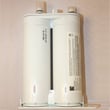
| Bad taste or weak dispenser flow | Replace water filter | Genuine Kenmore refrigerator water filter WF2CB |
| Frost buildup, warming | Check defrost thermostat | Refrigerator defrost bi-metal thermostat 5303918214 |
| Rattling from freezer fan area | Inspect fan blade for ice contact | Refrigerator evaporator fan blade 5308000010 |
Airflow and a tight door seal keep temperatures stable. When coils are dirty or frost blocks the evaporator, the refrigerator runs longer, warms up, and ice and water performance drops.
For filter-related ice and water issues, we follow how to replace the water filter in a Kenmore refrigerator.
Last updated: February 2026
How to tell if a Kenmore refrigerator compressor is bad?
On Kenmore model 25356293409, a bad compressor typically shows up as poor or no cooling even though the refrigerator has power, often paired with unusual compressor behavior (repeated clicking, a high-pitched hum with no cooling, or the unit running too long). Before condemning the compressor, we verify power, control settings, airflow, and defrost-related issues using the owner's manual.
- Make sure the freezer and fresh food controls are not set to "0" (that stops the compressor but does not fully disconnect power).
- Confirm the refrigerator is plugged into a properly grounded 3-prong outlet (avoid extension cords).
- Listen for normal sounds: modern compressors can have a higher-pitched hum; clicking can also come from controls cycling.
- Check whether the unit is simply in a normal defrost cycle (cooling pauses during defrost).
- Inspect door gaskets for gaps, dirt, or damage; warm air leaks can make the refrigerator run constantly.
- Check condenser cleanliness and airflow around the cabinet; a dirty condenser can cause long run times.
| What you notice | What it usually means | What we check next |
|---|---|---|
| Runs constantly but temperatures stay warm | Sealed system or compressor not pumping | Condenser fan operation, frost pattern, amp draw (tech test) |
| Repeated clicking every few minutes | Start device overload tripping or compressor locked | Start components, wiring, compressor windings (tech test) |
| Compressor very hot and cooling is weak | Overload cycling from strain or poor heat rejection | Condenser coil condition, condenser fan motor, ventilation |
| Compressor silent but lights work | Not being powered or start circuit failure | Controls not at “0”, power supply, start components |
Your manual notes that voltage variation of about 10% or more can affect performance and that operating with insufficient power can damage the compressor. If the refrigerator shares a weak circuit, trips breakers, or is on a GFCI that nuisance-trips, correct the power issue first.
If basic checks pass and a technician confirms the compressor is not starting or not pumping, replacement is the fix. For this model, the sealed-system compressor part listed for ordering is the refrigerator compressor 5304511983.
Last updated: February 2026