 Owner’s manual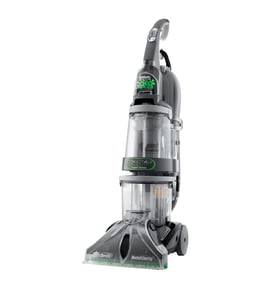

Can I use Dawn in my Hoover FH40010?
Using a small amount of Dawn in a Hoover FH40010 is a common workaround, but we recommend sticking to a low-sudsing, non-oily cleaner to protect the pump, hoses, and recovery system. For the safest mix ratios and approved cleaner guidance, follow the FH40010 owner's manual.
What to use (and what to avoid)
Hard floor cleaners like the Hoover FH40010 work best with solutions that rinse clean and do not create heavy foam.
- Best choice: a hard-floor cleaner labeled low-sudsing (made for floor machines)
- Okay in a pinch: very small amount of mild dish soap diluted heavily
- Avoid: oily cleaners, waxes, polishes, pine-oil style cleaners, and anything that leaves residue
- Avoid: bleach or ammonia mixes (can damage components and create harsh fumes)
- Avoid: extra-foamy soaps (foam can reduce suction and cause messy recovery tank issues)
If you decide to use Dawn anyway
Use the minimum needed and watch for excess suds.
- Empty and rinse both tanks first
- Mix in warm water, not hot
- Start with a tiny amount; if you see foam in the recovery tank, dump and rinse immediately
- After cleaning, run a full tank of clean water through the system to flush residue
Quick guideline table
| Cleaner type | Works well in FH40010 | Main risk |
|---|---|---|
| Low-sudsing hard floor cleaner | Yes | Minimal |
| Dish soap (Dawn) | Sometimes | Foam, residue buildup |
| Oily/waxy/polish products | No | Clogs, poor pickup |
Why it matters
Too much foam or oily residue can reduce pickup performance and leave buildup in the solution path, which can lead to odors, streaking, and premature wear on seals and internal passages.
Last updated: February 2026
How to use a Hoover FH40010?
To use your Hoover FH40010 hard floor cleaner, we fill the clean-solution tank, select the wash setting, and make slow forward-and-back passes while squeezing the trigger only in wash mode. Then we switch to dry mode and make passes without the trigger to pick up leftover water.
Quick start steps (wash, then dry)
- Vacuum or sweep first so grit does not scratch the floor.
- Fill the clean-solution tank with the recommended cleaner and water (use the mix ratio in the owner's manual).
- Set the dial to wash (or the cleaning mode).
- Squeeze the solution trigger while moving forward; overlap passes for even coverage.
- Release the trigger and make a couple of extra passes to improve pickup.
- Switch the dial to dry mode and make slow passes without squeezing the trigger.
Best practices for better cleaning and faster drying
- Use dry mode after washing to squeegee and vacuum up excess water.
- Keep the machine moving; pausing in one spot can leave extra moisture.
- Empty the dirty-water tank when it reaches the fill line; suction drops when it is full.
- Rinse tanks after use to reduce odor and keep airflow strong.
What each mode does
| Mode/setting | What it’s for | Trigger use |
|---|---|---|
| Wash/clean | Dispenses solution and scrubs | Use the trigger while moving |
| Dry | Picks up water for faster drying | Do not use the trigger |
Why it matters
Using the trigger only in wash mode prevents over-wetting and helps the squeegee and suction system recover water properly in dry mode. That protects sealed floors (like laminate) and reduces streaks.
Last updated: February 2026
Why is my floor scrubber not putting out water?
If your Hoover FH40010 hard floor cleaner isn’t dispensing water, the cause is usually a tank or flow restriction issue (empty tank, mis-seated tank, clogged screen/nozzle, or a kinked hose). Less often, the trigger/valve mechanism or an internal pump path is blocked and needs cleaning or service; use the FH40010 owner's manual for model-specific tank and cleaning steps.
Quick checks (most common fixes)
- Confirm the solution tank is filled and the cap is tightened fully.
- Remove the tank and reinstall it firmly so the outlet seats correctly.
- Check the spray nozzle area for dried solution or mineral buildup; clean it.
- Inspect visible tubing for kinks, pinches, or cracks.
- Make sure you are using the correct cleaning solution mix (overly thick solution can restrict flow).
Clean the flow path (what to do next)
- Empty the tank and rinse it with warm water.
- Flush the tank outlet by filling with warm water, reinstalling, and briefly triggering spray over a sink or towel.
- Clean any removable screen, gauze, or inlet filter (if your FH40010 configuration includes one).
- Wipe the spray tip/nozzle with a soft brush or cloth; avoid enlarging the opening.
What the symptoms usually mean
| Symptom | Most likely cause | What to do |
|---|---|---|
| No spray at all | Tank not seated, clogged outlet/nozzle | Reseat tank; clean outlet/nozzle |
| Weak spray | Partial clog, thick solution, kinked hose | Flush with warm water; correct mix; straighten hose |
| Sprays briefly then stops | Debris shifting in line, air in tank outlet | Rinse tank; flush system; reseat tank |
| Leaks but no spray | Misalignment at tank seal/outlet | Reinstall tank; check seal seating |
Why it matters
Running a floor scrubber with restricted water flow reduces cleaning performance and can leave residue on hard floors. Clearing clogs early also helps prevent buildup that can keep the valve or spray path from opening consistently.
Last updated: February 2026