
Is it healthy to sleep with a humidifier every night?
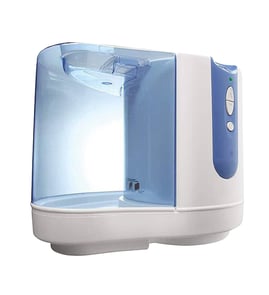
Yes, it’s healthy to sleep with a humidifier every night when you keep indoor humidity in the 30% to 50% range and keep your Bionaire CM-6 humidifier clean. The main risks come from over-humidifying (damp room, mold) or using dirty standing water.
Best nightly settings for a bedroom
Keeping humidity controlled is what makes nightly use comfortable and safe.
- Target 30% to 50% relative humidity.
- Use a hygrometer (humidity meter) so you are not guessing.
- Start on a low or medium output setting; increase only if symptoms persist.
- Keep the unit a few feet from the bed so mist does not soak bedding.
- Run it with the door mostly closed for more stable humidity.
Cleaning routine that prevents “dirty mist”
A humidifier is healthiest when it is treated like a water appliance.
- Empty and refill daily; do not “top off” old water.
- Rinse the tank and base daily to remove film.
- Deep clean weekly (descale mineral buildup, then rinse thoroughly).
- Let parts air-dry when possible to reduce biofilm.
- If your area has hard water, consider distilled water to reduce white dust.
Quick symptom check: too dry vs. too humid
Use these signs to adjust output or runtime.
| What you notice | Likely cause | What to do tonight |
|---|---|---|
| Dry throat, static shocks | Humidity too low | Increase output slightly |
| Condensation on windows | Humidity too high | Lower output or shorten runtime |
| Musty smell, damp surfaces | Humidity too high or unit needs cleaning | Turn off, clean, dry room |
| White dust on furniture | Mineral-heavy water | Switch to distilled water |
Why it matters
Nightly humidifier use can ease dry skin, irritated sinuses, and cough from dry air, but only when humidity stays in a healthy range and the tank and base are kept clean. That balance helps you get the benefits without creating a damp environment.
Parts and model help
If you need help identifying the correct replacement items for your CM-6 (such as a tank, cap, wick/filter, or knob), start with the model number lookup and diagrams on Sears PartsDirect. You can also use our model number tips in how to find your appliance model number (and what it means for parts).
Last updated: February 2026
How long does a 6 gallon humidifier last?
A 6-gallon humidifier typically runs about 2 to 4 days (roughly 48 to 96 hours) between refills, depending on fan speed, humidity setting, room size, and how dry your home is. For the Bionaire CM-6, real-world runtime is usually closer to that range than a fixed hour estimate.
What changes the runtime the most
- Humidity setpoint: higher targets make the unit run longer and use more water.
- Fan speed: high speed evaporates water faster.
- Home dryness: cold weather and heated air can dramatically increase water use.
- Room size and airflow: open doors, stairwells, and HVAC returns pull moisture away.
- Wick/filter condition: a scaled-up wick can reduce output and change how often you refill.
Quick runtime guide (typical)
| Setting and conditions | What you’ll usually see from 6 gallons |
|---|---|
| Low fan, moderate humidity target | 72 to 96 hours |
| Medium fan, average winter dryness | 48 to 72 hours |
| High fan, very dry air or large open area | 24 to 48 hours |
How to estimate your exact refill schedule
- Fill the tank to the same level each time.
- Run for 24 hours at your normal setting.
- Measure how much water is gone.
- Divide 6 gallons by your daily usage to estimate days per fill.
Why it matters
Knowing the expected runtime helps you avoid running the humidifier dry (reduced comfort and possible mineral buildup) and helps you choose settings that balance comfort, noise, and refill frequency.
Parts and help for your CM-6
If you need help identifying the correct replacement items for your Bionaire CM-6 humidifier, start with the model-based parts information, then broaden your search by model number on Sears PartsDirect. You can also use how to find your appliance model number (and what it means for parts) to confirm you are matching the right model.
Last updated: February 2026
What is negative about ultrasonic humidifiers?
Ultrasonic humidifiers can be negative because they may blow mineral “white dust” into the air when used with tap water, and they can also spread microbes if the tank and base are not cleaned often. For a Bionaire CM-6 humidifier, consistent cleaning and using low-mineral water are the biggest keys to avoiding these issues.
Common downsides to know
- White dust buildup: Minerals in hard water can become airborne and settle on furniture and floors.
- More frequent cleaning: Any cool-mist unit can grow biofilm; ultrasonic models can make this worse if maintenance slips.
- Air quality concerns: Fine particles from minerals can irritate sensitive lungs, especially in nurseries or for people with asthma.
- Over-humidifying risk: If you run it too high, you can create condensation on windows and damp surfaces that encourage mold.
- Not always pet-friendly: Some pets react to high-frequency sound, even when humans do not notice it.
How we recommend reducing the negatives (practical steps)
- Use distilled or demineralized water to cut down white dust.
- Empty the tank daily; refill with fresh water.
- Clean and dry the tank and base on a regular schedule (more often with hard water).
- Keep indoor humidity in a safer range (most homes do best around 30% to 50%).
- Place the humidifier on a water-resistant surface and away from walls to prevent moisture damage.
Quick comparison: ultrasonic vs evaporative
| Feature | Ultrasonic humidifier | Evaporative humidifier |
|---|---|---|
| Mineral “white dust” | More likely with tap water | Less likely (minerals stay in the wick) |
| Cleaning demand | High | Moderate (wick changes plus cleaning) |
| Noise | Usually quiet | Can be louder (fan) |
| Best water choice | Distilled/demineralized | Tap water often works better |
Why it matters
The main tradeoff with ultrasonic humidifiers is comfort versus maintenance: they are typically quiet and effective, but water quality and cleaning habits directly affect indoor air particles, odors, and hygiene.
Parts and model help
If you are shopping for replacement items for your Bionaire CM-6 (such as a tank, cap, base components, or controls), start with the model-based parts list, or search by model number on Sears PartsDirect. You can also confirm you are using the correct model identification with how to find your appliance model number (and what it means for parts).
Last updated: February 2026
Can a humidifier be repaired?
Yes. A Bionaire humidifier like model CM-6 can usually be repaired by fixing common issues such as mineral scale, a stuck float, restricted airflow, or a power problem. Most repairs are cleaning, clearing clogs, and checking simple electrical connections before replacing components.
What we check first (fast troubleshooting)
- Confirm the outlet works by testing another device.
- Unplug the humidifier for 5 minutes, then plug it back in (resets some controls).
- Verify the tank is seated correctly and the cap is fully tightened.
- Check for hard-water scale on the base, mist outlet, and any water passages.
- Make sure the float moves freely (if your CM-6 uses a float-style shutoff).
- Inspect the cord for cuts, kinks, or a loose plug.
Cleaning fixes that solve most “not working” complaints
Mineral buildup is the most common reason a humidifier stops producing mist or runs poorly.
- Empty the tank and base; rinse with warm water.
- Descale the base with white vinegar (soak, then scrub gently with a soft brush).
- Clear any small water ports with a cotton swab (do not enlarge holes).
- Rinse thoroughly and dry before reassembly.
Why it matters
Scale blocks water flow and interferes with sensors and floats; that leads to low output, intermittent operation, and noisy running.
When it’s a repair vs. a replacement
| Symptom | Most likely cause | Typical fix |
|---|---|---|
| No power at all | Outlet, cord, switch, internal wiring | Verify power, inspect cord, check wiring |
| Runs but no mist | Scale, clogged passages, low water feed | Descale, clear clogs, reseat tank |
| Shuts off too soon | Stuck float or sensor issue | Clean float area, remove debris |
| Loud buzzing/rattling | Vibration, scale, fan obstruction | Clean, level unit, clear obstruction |
Safe DIY electrical checks
If you suspect an electrical issue, we use basic testing steps before replacing anything.
- Unplug before opening any covers.
- Look for loose spade connectors or heat discoloration.
- Test continuity on suspect components with a meter.
A good walkthrough for basic electrical testing is our how to use a multimeter to test electrical parts video.
Getting the right parts
If you decide to repair your CM-6, we match parts by the full model number and the exact component description. Start with the parts list for Bionaire CM-6; for broader model searches and ordering, use Sears PartsDirect.
Last updated: February 2026
Is a humidifier safe for lungs?
Yes, a humidifier is safe for your lungs when it’s kept clean and used correctly; problems happen when a unit like the Bionaire CM-6 humidifier grows mold or bacteria, or when mineral-heavy water creates airborne “white dust” that can irritate airways.
How to use a humidifier safely (lung-friendly)
- Use distilled or demineralized water to reduce mineral dust and residue.
- Empty the tank daily and let it air-dry when you’re not using it.
- Clean and disinfect regularly (more often if you see slime, film, or smell mustiness).
- Keep indoor humidity in a comfortable range (about 30% to 50%).
- Place the humidifier where mist won’t soak walls, bedding, or carpets.
- If anyone has asthma, allergies, or COPD, run it conservatively and keep it extra clean.
Quick symptoms checklist: when the humidifier is the problem
If you notice these after running the CM-6, treat it as a cleaning or humidity-level issue:
- Musty or sour odor from the unit or room
- White dust on furniture (common with tap water)
- Increased coughing, wheezing, or throat irritation
- Visible film, scale, or discoloration in the tank/base
- Condensation on windows or damp surfaces nearby
Cleaning basics (safe, practical routine)
- Unplug the humidifier before cleaning.
- Drain the tank and base; rinse with warm water.
- Descale mineral buildup (common in hard-water areas).
- Disinfect the tank/base per the cleaner’s label directions; rinse thoroughly.
- Dry surfaces before reassembly to slow microbial growth.
Humidity targets: what to aim for
| Indoor humidity | What it usually means | What we recommend |
|---|---|---|
| Below 30% | Air feels dry; static; dry throat | Add humidity gradually |
| 30% to 50% | Comfortable for most homes | Best target range |
| Above 50% | Higher risk of mold/dust mites | Reduce runtime; improve ventilation |
Why it matters
Your lungs do best with clean moisture. Dirty tanks can aerosolize microbes, and high humidity can encourage mold and dust mites, both of which can trigger respiratory irritation.
Parts and model help
For model-specific parts lookups and diagrams for the Bionaire CM-6, start with the parts list for this model; for broader model-number searches and ordering, use Sears PartsDirect.
Last updated: February 2026