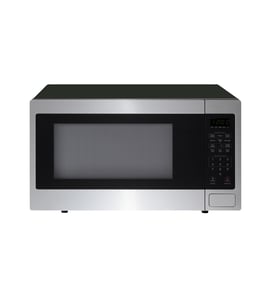



Are all 30 inch microwaves the same size?
No. “30-inch” microwaves are built to fit a standard 30-inch-wide space, but the exact outside dimensions are not identical across brands and models. Width is usually close to 30 inches, while height, depth, venting clearances, and interior capacity can vary a lot.
Most 30-inch microwaves are designed around a common cabinet opening, so the overall width is typically about 29 1/2 to 30 inches. The differences that affect fit are usually:
- Height (standard vs low-profile designs)
- Depth (how far the unit sticks out)
- Required rear and side clearance for airflow
- Mounting style (countertop vs built-in trim kit vs over-the-range)
- Door swing and handle projection
Use these checks to avoid a return or a cabinet modification:
- Measure the opening width, height, and depth in three places (front, middle, back)
- Confirm you have the clearance needed behind the microwave for the cord and airflow
- Check whether your setup is countertop, built-in, or over-the-range (they are not interchangeable)
- Compare the new unit’s exterior dimensions to your space, not just the “30-inch” label
- If your current unit uses a trim kit, match the trim kit size and cutout requirements
| Spec that affects fit | What to expect | Why it matters |
|---|---|---|
| Width | Usually very close to 30 inches | Fits the cabinet opening |
| Height | Can vary by several inches | Impacts shelf and cabinet clearance |
| Depth | Often varies the most | Affects how far it protrudes |
| Venting/clearance | Model-specific | Prevents overheating and nuisance shutdowns |
Even small differences in depth or required airflow clearance can cause overheating, poor door clearance, or an unstable countertop setup. Getting the exterior dimensions right protects the microwave and helps it heat consistently.
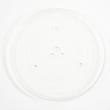
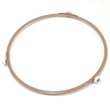
If you are keeping your Whirlpool WMC30516AS and just need common turntable components, these model-matched parts are typical replacements:
Last updated: January 2026
What are common problems with whirlpool microwaves?
Common problems we see with Whirlpool microwaves (including model WMC30516AS) are no heat, no power, sparking/arcing, keypad or display issues, and turntable problems. Many symptoms trace back to door switches, a blown fuse, or turntable components; heating failures often involve high-voltage parts.
- Microwave runs but doesn’t heat: often a magnetron, high-voltage diode, capacitor, or door switch issue.
- Microwave won’t turn on: outlet/power cord issue, blown internal fuse, or door interlock problem.
- Sparking or burning smell: food splatter, metal in the cavity, damaged waveguide cover, or a failing stirrer area.
- Buttons don’t respond or display is erratic: moisture/grease contamination, stuck key, or control board failure.
- Turntable not rotating: worn tray support, coupler/shaft, or a failed turntable motor.
- Confirm power: test the outlet with a lamp; avoid extension cords.
- Check the door: close firmly; look for a loose latch or misaligned door.
- Inspect the cavity: remove any metal, twist ties, or foil; clean splatter.
- Verify the turntable setup: make sure the tray sits correctly on the support and coupler.
- Try a simple reset: unplug for 2 minutes, then restore power.
If the tray wobbles, drags, or won’t rotate on WMC30516AS, these parts are frequent culprits:
| Symptom | Most likely part | What it does |
|---|---|---|
| Tray slips or wobbles | Microwave turntable tray support W10451792 | Supports the glass tray and helps it roll smoothly |
| Tray doesn’t engage | Shaft turn WPW10451789 | Couples the motor drive to the tray/support |
| Tray is chipped or unstable | Microwave glass tray WPW10451786 | Provides the rotating cooking surface |
A microwave that won’t heat or sparks can indicate a high-voltage or cavity issue; continuing to run it can worsen damage. Turntable problems are usually simpler and can improve heating consistency by rotating food.
Use a technician for no-heat conditions, repeated fuse blowing, burning smells, or internal arcing. High-voltage microwave components can retain dangerous energy even when unplugged.
For deeper symptom-based guidance, use why is my microwave not heating and never do these things with a microwave.
Last updated: January 2026
What is the average lifespan of a whirlpool microwave?
Most Whirlpool microwaves, including the Whirlpool WMC30516AS countertop microwave, typically last 7 to 10 years with normal household use. With lighter use and good care, it’s common to reach the upper end of that range; heavy daily use can shorten lifespan.
A microwave’s life depends more on usage and ventilation than brand alone.
- Daily run time: multiple long heating cycles per day wear components faster
- Airflow: blocked vents and tight spaces trap heat and stress electronics
- Door use: slamming the door can damage door switches and latches
- Power quality: frequent surges can shorten control board life
- Cleaning habits: grease and food buildup can cause overheating and arcing
Here’s what we see most often on countertop microwaves like WMC30516AS:
| Component area | What you may notice | Typical outcome |
|---|---|---|
| Door switches/latch | Won’t start, stops when door moves | Switch or latch service |
| Control panel/electronics | Random resets, dead display | Control repair or replacement |
| Turntable system | Tray not turning, noisy rotation | Replace tray, support, or coupler |
| Heating system | Runs but doesn’t heat | Professional diagnosis recommended |
If your turntable parts are worn, replacing them can reduce noise and improve cooking consistency; see the microwave turntable tray support W10451792 or the microwave glass tray WPW10451786.
Knowing the expected 7 to 10 year lifespan helps you decide whether to repair (often worth it for simple turntable or door issues) or replace (more likely when heating performance drops or electronics fail).
- Keep at least a few inches of clearance around vents
- Wipe the cavity and waveguide cover area regularly (no harsh abrasives)
- Never run it empty; it strains internal components
- Use microwave-safe containers only (no metal or foil)
- Stop use if you see arcing or burn marks and address the cause promptly
For heating problems, follow the troubleshooting steps in why is my microwave not heating.
Last updated: January 2026


