Owner’s manual
 Error Codes


Are bottom mount fridges better?
Bottom-mount refrigerators like the LG LFXS24623D can be a better choice for many kitchens because the fresh-food section sits at eye and waist level, so the items you use most are easier to reach. The tradeoff is that the freezer is lower, so you bend more for frozen foods; see the owner's manual for model-specific features and setup.
When a bottom-mount refrigerator is the better fit
- You use fresh foods more often than frozen foods (produce, dairy, drinks).
- You want fewer bends and less reaching for everyday items.
- You prefer wide refrigerator shelves for meal prep and leftovers.
- You like freezer drawers that help separate bags, boxes, and bulk items.
When it might not be better
- You access frozen foods multiple times per day (you will bend more).
- You want the simplest layout and lowest purchase cost (top-freezer models often win here).
- You need maximum freezer visibility at standing height.
Quick comparison
| Layout | Best for | Common downside |
|---|---|---|
| Bottom-mount (bottom freezer) | Fresh-food convenience and ergonomics | More bending for freezer access |
| Top-freezer | Budget and simple storage | Fresh-food section sits lower |
| Side-by-side | Narrow door swing, equal access | Narrower shelves for wide trays |
Why it matters
Choosing the right configuration affects daily comfort, food organization, and energy use habits. For example, keeping frequently used items in the refrigerator section can reduce door-open time and help temperatures stay more stable.
Setup tip for best performance
For stable cooling and good door closing, we recommend leveling the refrigerator so the front is slightly higher than the rear, and leaving about 2 inches of clearance from nearby surfaces (as outlined in the owner's manual).
Last updated: February 2026
What are the disadvantages of a bottom freezer refrigerator?
Bottom-freezer refrigerators like the LG LFXS24623D put fresh food at eye level, but the tradeoffs are higher purchase cost, more bending to access frozen items, and freezer drawers that can feel deep and harder to organize. They can also be more sensitive to airflow and drain/defrost upkeep.
Common disadvantages you may notice
- More bending and lifting: you reach down for frozen foods, ice bins, and heavy items.
- Freezer organization can be tricky: deep pull-out baskets can hide smaller packages.
- Often higher upfront cost: bottom-mount designs typically cost more than top-freezer models.
- Potential for puddles from drain issues: when a defrost drain clogs, water can collect and leak.
- Airflow sensitivity: tight clearances or blocked vents can reduce cooling efficiency.
What we recommend for day-to-day use
Use these habits to reduce the most common bottom-freezer frustrations:
- Keep frequently used frozen items in the top basket for easier access.
- Avoid overpacking; leave space so cold air can circulate.
- Keep the refrigerator properly spaced from nearby surfaces (many models call for about 2 inches of clearance) to help efficiency.
- When adjusting temperatures, change the refrigerator setting first, then wait 24 hours before making another change.
- Follow the setup and safety guidance in the LFXS24623D owner's manual.
Quick comparison: bottom freezer vs top freezer
| Feature | Bottom freezer | Top freezer |
|---|---|---|
| Fresh food access | Easier (eye level) | Requires bending |
| Freezer access | Requires bending | Easier (higher) |
| Organization | Deep drawers, can bury items | Shelves, often simpler |
| Typical cost | Higher | Lower |
Why it matters
Most complaints we see with bottom-mount refrigerators come down to ergonomics (bending for the freezer) and maintenance (airflow and defrost drain care). Good loading habits and correct spacing help the LG LFXS24623D cool efficiently and reduce nuisance issues.
Last updated: February 2026
What is the most common problem with LG refrigerators?
The most common problem we see with LG refrigerators, including the LG LFXS24623D bottom-mount refrigerator, is a cooling complaint (not cold enough, temperature swings, or long run times). Start by confirming actual temperatures, then follow the troubleshooting flow in the LFXS24623D owner's manual to narrow it to airflow, defrost, or the compressor system.
Most common symptoms
- Fresh food section warm while freezer is still partly cold
- Freezer warming up; ice production slows or stops
- Compressor seems to run most of the time
- Clicking, buzzing, or vibration noises
- Frost buildup on the rear freezer panel
- Water puddles near the front of the refrigerator
Quick checks that often pinpoint the cause
- Confirm temps: Target about 37°F in the refrigerator and 0°F in the freezer.
- Door seal and closing: Make sure doors close fully and gaskets seal all the way around.
- Airflow: Keep vents clear; avoid packing food tightly against the back wall.
- Condenser area: Clean dust from the condenser area to reduce run time.
- Frost pattern: Heavy frost behind the freezer back panel points to a defrost or airflow issue.
Symptom-to-system guide
| What you notice | Most likely area | What to do first |
|---|---|---|
| Runs a long time, temps drift warm | Condenser/airflow | Clean condenser; check door sealing |
| Warm fridge, freezer OK | Airflow between sections | Clear vents; check for frost |
| Puddles under unit | Defrost drain | Clear drain; inspect drain path |
Parts that are often involved (when symptoms match)
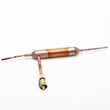
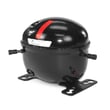
- Cooling failure tied to the sealed system can involve the refrigerator compressor TCA38091801.
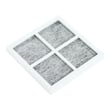
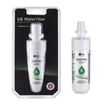
- Water or ice issues often start with the LG kenmore refrigerator water filter ADQ36006101.
- Leaks from a blocked or damaged drain path can involve the refrigerator drain tube 5251JA3003D.
Why it matters
Cooling symptoms overlap; matching the symptom to the correct system prevents unnecessary part replacement and gets your LFXS24623D back to stable temperatures faster.
You can order model-matched parts from the parts list for your LFXS24623D, or search by model on Sears PartsDirect.
Last updated: February 2026
Why is my LG refrigerator leaking from the bottom?
A bottom leak on an LG LFXS24623D bottom-mount refrigerator is typically caused by a clogged defrost drain that overflows into the base, or a water-supply leak from the ice maker, filter, or inlet valve that runs down to the bottom. Use the LFXS24623D owner's manual for access and shutoff steps.
Quick checks we recommend first
- Look for water or a thin sheet of ice under the crisper drawers (common with a blocked defrost drain).
- Check the dispenser area and drip tray for slow dripping or overflow.
- Pull the refrigerator forward and inspect the rear water line connection and tubing.
- Confirm the water filter is fully seated and locked.
- Check the back drain tube area for blockage or kinks.
Most common causes and what to do
| What you see | Most likely cause | What to do next |
|---|---|---|
| Water inside fresh-food section, then pooling at the bottom | Clogged defrost drain | Clear the drain opening; flush with warm water to remove debris. |
| Water only when dispensing or when ice maker fills | Water inlet valve or supply connection seep | Tighten fittings; replace the valve if it weeps or does not close fully. |
| Water near the back/bottom after defrosting | Restricted or misrouted drain tube | Clear the tube and confirm it routes into the drain pan. |
Parts that commonly solve bottom-leak problems
- LG refrigerator water inlet valve AJU72992601 (controls water flow to ice maker and dispenser)
- LG kenmore refrigerator water filter ADQ36006101 (replace if the filter connection is leaking)
- Refrigerator drain tube 5251JA3003D (replace if cracked or deformed)
Why it matters
Bottom leaks can damage flooring and create ice buildup that restricts airflow, leading to warm temperatures. Fixing the drain path or water-supply leak quickly helps keep cooling performance stable.
For prevention tips, see how to prevent water dispenser and ice maker problems. You can order model-matched parts from the parts list for this refrigerator, or search by model number on Sears PartsDirect.
Last updated: February 2026