Error Codes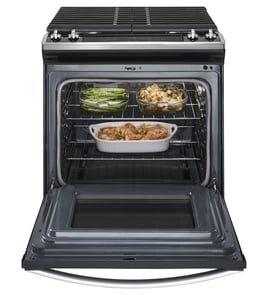



Is GE Profile considered high end?
Yes. GE Profile is generally considered GE’s higher-end, feature-forward line, positioned above standard GE models. For a GE range like model PGS930YP6FS, that typically means more premium cooking features, upgraded finishes, and more advanced controls than entry-level ranges.
What “high end” usually means for GE Profile ranges
GE Profile models commonly focus on performance and convenience upgrades that show up in everyday cooking.
- More precise oven temperature control and cooking modes
- Higher-output burners (BTU) and better simmer control
- More advanced electronic controls and display features
- Premium exterior styling (often stainless steel)
- Added features like convection, air fry, or smart connectivity (varies by model)
Quick comparison: standard GE vs GE Profile (typical)
| Feature area | Standard GE (typical) | GE Profile (typical) |
|---|---|---|
| Burner performance | Basic to mid-range | More high-output options |
| Controls | Simpler | More advanced, more modes |
| Fit and finish | Good | More premium look and feel |
| Repair parts cost | Often lower | Often higher |
Why it matters when buying parts or troubleshooting
“High end” often means more electronics and sensors. When a feature stops working, the fix is frequently a control, sensor, or ignition component rather than a purely mechanical adjustment.
For example, if you are chasing an oven temperature or heating complaint on PGS930YP6FS, a common diagnostic path includes checking the range oven temperature sensor WB24X25557 and related wiring connections before replacing larger assemblies.
Practical tips for owners
- Keep burner heads and caps clean; clogged ports can mimic ignition or gas flow problems.
- If a burner clicks but will not light, check for moisture and debris around the igniter area.
- If the oven seems off-temperature, verify with an oven thermometer before replacing parts.
- Use a multimeter for electrical checks when safe and appropriate; see how to use a multimeter to test electrical parts video.
Last updated: January 2026
What does F930 mean?
On the GE PGS930YP6FS gas range, the F930 code points to a problem with the oven door lock system during (or right after) a self-clean cycle. The range is detecting that the door is not locking or unlocking as expected, so it stops the cycle and may alarm.
What to do right away
- Press Cancel/Off to stop the cycle and silence the alarm.
- Let the oven cool completely; the door lock can stay engaged until temperatures drop.
- If the door is locked, wait 60 to 90 minutes after cooling before trying again.
- Turn off power at the breaker for 2 to 5 minutes, then restore power to reset the control.
- If the code returns, avoid using self-clean until the lock issue is corrected.
Common causes of an F930 door lock error
| Likely cause | What you may notice | Typical fix |
|---|---|---|
| Door lock mechanism binding | Door will not lock or unlock smoothly | Inspect linkage, clean debris, replace lock parts as needed |
| Door switch not reading correctly | Oven thinks door is open/closed incorrectly | Test/replace door switch |
| Control not sensing lock position | Error returns quickly after reset | Check wiring, replace control or related sensing circuit |
| Heat-related wiring issue | Intermittent errors, especially after self-clean | Inspect harness and connectors for damage |
Parts that can be involved
We match parts by symptom and model. For F930, these are commonly checked on ranges like the PGS930YP6FS:
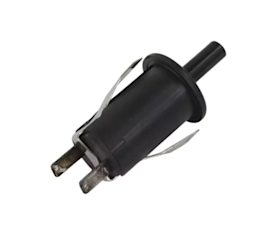
- Door switch circuit (a failed switch can mimic a lock fault); see range oven door switch WB24X27550.
- Control and sensing circuits (if the lock feedback is not being read correctly).
- Wiring/connectors between the latch area and the control (loose, overheated, or damaged).
Why it matters
The self-clean cycle runs at very high temperatures. If the range cannot confirm the door is safely locked, it will stop the cycle to prevent unsafe operation and to protect the control system.
Last updated: January 2026
What is the average lifespan of PGS930YP6FS?
A GE gas range like model PGS930YP6FS typically lasts 13 to 15 years with normal household use and basic maintenance. Keeping burners clean, ensuring proper ignition, and addressing heating issues early helps you reach the full service life.
Typical lifespan and what affects it
Most of the lifespan difference comes down to heat exposure, cleaning habits, and how quickly small problems are fixed.
- Heavy daily cooking and frequent self-clean cycles can shorten life
- Spills and boil-overs that clog burner ports can strain ignition parts
- Poor oven temperature control can overwork the burner system
- Power surges can damage electronic controls
- Worn door seals and hinges increase heat loss and run time
Parts that commonly drive “end of life” repairs
If your range is otherwise in good shape, replacing a few key parts often restores performance.
| Symptom | Common part area | Example part for PGS930YP6FS |
|---|---|---|
| Oven won’t ignite or takes too long | Ignition system | Range oven burner igniter WB13X40206 |
| Oven temperature swings | Temperature sensing | Range oven temperature sensor WB24X25557 |
| Clicking or weak spark at burners | Spark/ignition module | Range spark module WB13X24741 |
How to help your range last longer
- Clean burner caps and heads regularly; keep ports clear
- Avoid lining the oven bottom with foil (it disrupts airflow and heat)
- Use self-clean sparingly; wipe spills after the oven cools
- Verify the oven preheats and holds temperature; fix drift early
- Keep the range level to protect the door alignment and cooking results
Why it matters
Knowing the 13 to 15 year average helps you decide whether to repair or replace. If your PGS930YP6FS is within that window and the issue is isolated (ignition, sensor, spark), a targeted part replacement is often the most cost-effective path.
Last updated: March 2026