
Where is the filter on a Coleman furnace?
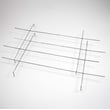
On most Coleman furnaces (including model DGRT070AUB), the air filter is located in the return-air path, either in a filter slot at the furnace cabinet, behind the lower front access panel, or in a return-air grille or filter rack near the furnace. Use the return ductwork as your guide: the filter is always on the return side, before the blower.
- Return-air grille filter: a large wall or ceiling return vent with a removable grille.
- Filter rack at the furnace: a slot where the return duct connects to the furnace.
- Inside the furnace cabinet: behind the lower access door/panel (blower compartment).
- In a return-air drop: a vertical return duct just above or beside the furnace.
- At the air handler closet door: sometimes a filter is mounted in the door or frame.
- Turn the thermostat to OFF.
- Turn off power to the furnace at the switch or breaker.
- Look for airflow direction arrows on the filter frame.
- The arrow should point toward the blower/furnace (toward the supply side).
| What you see | What it usually means |
|---|---|
| Big return grille with latches | Filter is often behind that grille |
| Narrow slot with a removable cover near return duct | Filter rack at the furnace |
| Lower door removed and you see the blower housing | Filter may slide in near the blower compartment |
A correctly placed filter protects the blower wheel, heat exchanger area, and evaporator coil (if you have central AC). A missing, backwards, or clogged filter commonly causes weak airflow, overheating shutdowns, and higher energy use.
- Match the size printed on the old filter (for example, 16x25x1).
- Use a filter type your system can handle; very high-MERV filters can restrict airflow on some setups.
- Replace 1-inch filters about every 1 to 3 months in typical conditions.
For more help identifying the correct model information before ordering parts, use how to find your appliance model number (and what it means for parts).
Last updated: February 2026
Where is the limit switch on a Coleman furnace?
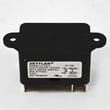
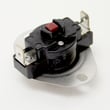
On a Coleman Evcon furnace like model DGRT070AUB, the limit switch is typically mounted on the furnace’s hot-air side near the heat exchanger area, often on or just above the burner compartment bulkhead (behind the front access panel). It is a small round or rectangular safety switch with two wires.
After turning power off at the breaker and shutting off the gas, remove the front access panel(s) and look for the limit switch in these common spots:
- On the supply-air plenum side of the furnace cabinet (hot-air outlet area)
- On the partition panel separating the burners from the blower compartment
- Near the burner box or heat exchanger cell panel (usually centered or slightly offset)
- Close to the rollout switches (rollout switches are usually nearer the burners; the limit is usually higher up)
- In the blower compartment area on some builds (less common, but possible)
Most furnace limit switches share a few easy identifiers:
| Item | Typical appearance | Typical wiring |
|---|---|---|
| High-limit switch | Small disc or small rectangular body, mounted with 2 screws | 2 wires on spade terminals |
| Rollout switch (not the same) | Small disc switch closer to burners | 2 wires; often multiple rollout switches |
We use these checks to avoid mixing it up with a rollout switch or pressure switch:
- The limit switch is usually farther from the burner flames than rollout switches
- It is mounted to sense hot air or heat exchanger area temperature, not vent pressure
- It is in the safety circuit; if it opens, the burners shut off and the blower may keep running
- If you are testing, use a meter and follow safe electrical practices; see how to use a multimeter to test electrical parts video
The limit switch protects the furnace from overheating. If it is tripping, the root cause is usually airflow related (dirty filter, blocked returns, closed registers, weak blower, or a dirty evaporator coil on an AC-equipped system), not just a “bad switch.”
Last updated: February 2026
Why is my Coleman furnace not working?
If your Coleman DGRT070AUB furnace is not working, the most common causes are a power or thermostat issue, a tripped safety switch, a clogged air filter causing overheating, or an ignition or flame-sensing problem. Start with the basic power and airflow checks before moving to electrical testing.
- Confirm the thermostat is set to HEAT and the temperature is set higher than room temperature.
- Make sure the furnace service switch is ON and the circuit breaker is not tripped.
- Replace a dirty furnace filter; restricted airflow can overheat the unit and trigger a safety shutdown.
- Check that the blower compartment door is fully closed; many furnaces will not run if the door switch is open.
- If the furnace stopped after running, wait 45 to 60 minutes; an overheated blower motor or limit switch can reset after cooling.
| What you notice | Most likely cause | What we recommend |
|---|---|---|
| Nothing happens at all | No power, open door switch, bad thermostat call | Verify power, door seated, thermostat settings |
| Blower runs but no heat | Ignition failure, gas supply issue, flame sensor problem | Check gas shutoff is open; then move to ignition checks |
| Starts then shuts off quickly | Dirty filter, blocked vents, overheating limit trip | Replace filter, open registers, check return air |
| Clicking or repeated tries to start | Igniter issue or flame not proving | Inspect igniter area; clean flame sensor if accessible |
- Turn off power to the furnace at the switch or breaker.
- Inspect the filter and return air path; correct any airflow restrictions.
- Restore power and listen for the start sequence (inducer, ignition, burner, blower).
- If you have a multimeter, test for voltage at the furnace control and safety switches.
For guidance on electrical testing, we recommend how to use a multimeter to test electrical parts video.
A furnace that will not run is often protecting itself. Overheating from poor airflow, an open safety switch, or a failed flame-proving step can stop heat to prevent damage to the heat exchanger, blower motor, or control board.
Last updated: February 2026
What is the most common part to fail on a furnace?
On a Coleman Evcon furnace like model DGRT070AUB, the most common “failure point” we see is the air filter (clogging and overheating the furnace), followed closely by the flame sensor (dirty and unable to prove flame) and the igniter (no ignition). These issues often trigger safety shutdowns.
- Air filter: Restricted airflow can overheat the heat exchanger area and trip the high-limit switch.
- Flame sensor: A dirty sensor can cause short cycling (burners light, then shut off).
- Hot surface igniter or spark igniter: Cracked or weak igniter prevents burner ignition.
- Pressure switch: Venting or inducer airflow problems keep the switch from closing.
- Inducer motor: If it fails, the furnace often will not start the ignition sequence.
- Control board: Can cause intermittent no-heat, no-ignition, or blower timing issues.
- Set thermostat to HEAT and raise the setpoint 3 to 5 degrees.
- Replace the air filter and confirm all supply registers are open.
- Check the furnace power switch and the circuit breaker.
- Look for a status light on the control board and count the blink pattern.
- Inspect the vent/intake for blockage (snow, nests, debris).
| Symptom | Most likely culprit | What you typically observe |
|---|---|---|
| Blower runs, no heat | Igniter, flame sensor, gas valve circuit | No burner flame or flame drops out quickly |
| Starts then shuts off in 5 to 30 seconds | Flame sensor, airflow/filter | Burners light briefly, then stop |
| Nothing happens at a call for heat | Power, door switch, control board | No inducer, no clicks, no blower |
| Inducer runs, no ignition | Pressure switch, venting | Inducer on, then lockout |
These “common failures” are often maintenance-related (filter and flame sensor) and can look like major breakdowns. Fixing airflow and basic ignition sensing first prevents repeat shutdowns and protects key components.
For safe electrical testing during diagnosis, we use a meter and follow proven steps like those in how to use a multimeter to test electrical parts video.
Last updated: February 2026
What is the most expensive part to fix on a furnace?
The most expensive furnace repair is typically the heat exchanger. On a Coleman Evcon furnace like model DGRT070AUB, heat exchanger replacement usually costs the most because it is labor-intensive and often requires significant disassembly, plus the part itself is a major component.
In most gas furnaces, these repairs tend to be the highest-cost items:
- Heat exchanger (often the top cost due to labor and complexity)
- Blower motor (especially variable-speed ECM motors)
- Furnace control board (main control or integrated furnace control)
- Draft inducer motor (combustion blower)
- Gas valve (less common, but can be pricey)
Cost is usually a mix of parts cost, labor time, and diagnostic complexity.
| Repair item | Why it gets expensive | What you may notice |
|---|---|---|
| Heat exchanger | Major teardown; critical combustion component | Furnace may shut down, odd smells, soot, repeated rollout trips |
| Blower motor | High-cost motor; setup and wiring | Weak airflow, overheating, noisy blower |
| Control board | Electrical diagnosis time; board cost | No heat, intermittent operation, error codes |
| Inducer motor | Venting and pressure switch checks | Starts then stops, pressure switch faults |
These steps help prevent the failures that lead to the biggest bills:
- Replace or clean the air filter on schedule to protect the blower and limit overheating.
- Keep supply and return vents open to maintain proper airflow.
- Have the burners and flame sensor cleaned during routine service.
- Make sure the venting and intake are clear (snow, nests, debris).
- Address short-cycling quickly; repeated overheating stresses the heat exchanger.
The heat exchanger is the barrier between combustion gases and your home’s air stream. When it is compromised, the furnace often cannot be operated reliably, and the repair becomes a high-priority, high-labor job.
For DGRT070AUB part lookups and diagrams, we use the model number to match the correct furnace parts list on Sears PartsDirect.
Last updated: February 2026