
Is it worth it to repair a compressor?
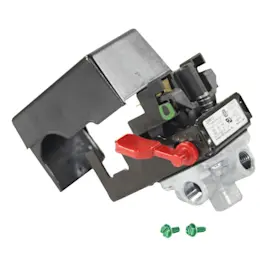
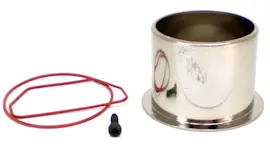
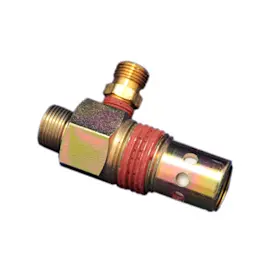
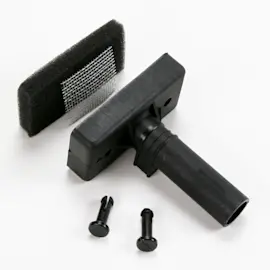
Yes, it’s worth repairing a Coleman air compressor like model L6006016 when the problem is limited to a common service part (pressure switch, check valve, regulator, gauges, safety valve) and the tank and pump are in good condition; it’s usually not worth it when the tank is compromised or the pump/motor damage is extensive.
Quick decision checklist
- Repair it if it still builds pressure (even slowly) and the issue is control-related (won’t start, won’t shut off, won’t regulate pressure).
- Repair it if the leak is from a fitting, drain valve, hose, regulator, or check valve.
- Replace it if the tank leaks, shows heavy rust, or has damage at welds or seams.
- Replace it if the pump has severe internal wear (metal noise, seized pump, heavy blow-by) and rebuild cost is high.
- Replace it if the motor repeatedly trips breakers after basic electrical checks.
Typical repair cost vs. replacement (rule-of-thumb)
| What’s wrong | Common fix | Usually worth repairing? |
|---|---|---|
| Won’t start or cycles oddly | Pressure switch, unloader, wiring check | Often yes |
| Won’t build tank pressure | Check valve, intake filter, valve plate, seals | Depends |
| Can’t adjust outlet pressure | Regulator | Often yes |
| Gauge reads wrong | Tank or regulator gauge | Often yes |
| Tank won’t hold air | Tank leak/rust | No |
Why it matters
A failing tank is a safety and reliability problem, while many “dead compressor” symptoms are actually inexpensive control or air-leak issues. Diagnosing the symptom first prevents spending money on the wrong part.
Best next step for model L6006016
Use a symptom-based path to pinpoint the failure before buying parts:
- If it won’t power up: air compressor won't start
- If it runs but won’t reach cut-out pressure: air compressor won't build tank pressure
- If it won’t regulate outlet pressure: air compressor can't adjust the output air pressure
- If it leaks down: air compressor air leaks
Last updated: February 2026
What is the common problem with an air compressor?
The most common problems we see on air compressors like the Coleman L6006016 are air leaks, failure to start, and not building or holding tank pressure. These issues usually trace back to a worn pressure switch, leaking fittings or hoses, a stuck check valve, or restricted airflow from a dirty intake filter.
Most common air compressor problems (and what they point to)
- Won’t start or trips the breaker: power cord/outlet issue, bad pressure switch, motor overload, or a pump that is hard to start under pressure
- Won’t build tank pressure: intake restriction, leaking reed valves, worn piston seal, or major air leak
- Tank won’t hold air: leaking drain valve, safety valve, tank fitting, or hose connection
- Can’t adjust output pressure: regulator problem, gauge issue, or downstream leak
- Safety valve pops open: pressure switch not cutting out, regulator issue, or overpressure condition
- Excessive noise or vibration: loose fasteners, worn bearings, or pump wear
Quick checks you can do first
- Listen for leaks around the regulator, quick-connect, drain valve, and tank fittings.
- Watch the gauges: does tank pressure rise normally, stall early, or drop quickly after shutoff?
- Check the intake: a clogged filter or blocked intake can reduce airflow and cause overheating.
- Test restart behavior: if it struggles to restart with pressure in the tank, the check valve or unloader circuit is a common cause.
Symptom-to-likely-cause guide
| Symptom | Most likely cause | What to do next |
|---|---|---|
| Won’t start | Pressure switch, power supply, motor overload | Follow air compressor won't start |
| Won’t build pressure | Pump valves/seals, intake restriction, leak | Follow air compressor won't build tank pressure |
| Air leaks | Fittings, hose, drain valve, check valve | Follow air compressor air leaks |
| Safety valve opens | Pressure switch not shutting off | Follow air compressor safety valve keeps popping open |
Why it matters
Air leaks and pressure-control problems make the compressor run longer and hotter, which accelerates pump wear and can lead to repeated breaker trips or early failure. Catching the root cause early also helps you avoid replacing good parts unnecessarily.
Last updated: February 2026
Will a 20 gallon air compressor run an impact wrench?
Yes. A 20-gallon air compressor can run an impact wrench, but performance depends more on the compressor’s CFM at 90 PSI than tank size. With a Coleman L6006016, expect short bursts to work well; continuous hammering can outpace the pump and force recovery time.
What to check before you buy or use the tool
- Impact wrench air requirement (CFM @ 90 PSI): compare the tool’s spec to your compressor output.
- Duty cycle: many homeowner compressors are designed for intermittent use, not nonstop impacts.
- Hose and fittings: undersized quick-connects or a long, small hose can starve the tool.
- Regulator setting: set output pressure to the tool’s recommended PSI; do not exceed it.
- Tank recovery time: if pressure drops quickly, you will need pauses between bursts.
Quick rule of thumb (tank vs. CFM)
A bigger tank helps you run longer before pressure drops, but CFM determines whether you can keep running.
| Scenario | What you will notice | What it usually means |
|---|---|---|
| Works great for lug nuts, then slows | Tool loses power after a few fasteners | CFM is lower than the wrench demand |
| Compressor runs constantly during use | Motor rarely shuts off | You are near or over the compressor’s capacity |
| Strong at first, then pressure falls below cut-in | Long recovery pauses | Tank is buffering demand, pump cannot keep up |
Setup tips that make a 20-gallon compressor work better
- Use the shortest practical hose and a larger inside diameter when possible.
- Keep the filter, regulator, and couplers clean and unrestricted.
- Drain tank moisture regularly; water reduces effective air delivery and can damage tools.
- Use impact-rated sockets and correct technique (short bursts instead of continuous trigger).
Why it matters
If the compressor cannot supply the wrench’s required CFM, the impact mechanism will hit weaker and slower, fasteners take longer, and the compressor runs hotter and longer. Matching CFM to the tool protects the motor, pressure switch, and pump.
For common “won’t start” or “won’t keep up” situations, use our troubleshooting steps in air compressor won't start.
Last updated: February 2026