
What are the 4 important rules for a bench grinder?
For the Craftsman bench grinder model 257190470, the 4 most important rules are: wear proper eye/face protection, keep the tool properly adjusted and guarded, grind only on the wheel’s face (not the side), and start and stop safely (let it reach full speed; wait for a complete stop before handling work).
The 4 rules (with what to do)
- Protect yourself every time: Wear safety glasses (and ideally a face shield); tie back long hair; avoid loose sleeves, gloves, jewelry, and anything that can catch.
- Keep clearances and guards correct: Keep the work rest close to the wheel (commonly about 1/8 inch) and keep the spark guard and wheel guards in place and positioned correctly.
- Use the wheel correctly: Grind on the front face of the wheel only; never grind on the side of a standard bench grinding wheel.
- Start and stop safely: Stand slightly to one side at startup, let the wheel reach full speed before grinding, and wait for the wheel to stop completely before setting anything down near it or making adjustments.
Quick safety checklist before you grind
- Inspect the wheel for chips/cracks and replace damaged wheels.
- Confirm the wheel is rated for the grinder’s RPM.
- Use light pressure; let the abrasive do the work.
- Keep the workpiece moving to prevent overheating and gouging.
- Keep the area clear of flammables; sparks travel.
Common setup targets (typical)
| Item | Typical target | Why it matters |
|---|---|---|
| Work rest gap | ~1/8 in. | Reduces the chance of the workpiece getting pulled into the wheel |
| Spark guard gap | ~1/4 in. | Helps contain sparks and debris |
| Startup position | Off to the side | Avoids the line of fire if a wheel fails |
Why it matters
Most bench grinder injuries come from wheel contact, flying debris, or a workpiece getting grabbed between the wheel and rest. Good guarding, correct gaps, and safe startup habits prevent the highest-risk failures.
Parts note for maintenance
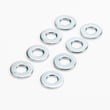
If you need to replace missing or stripped fasteners while servicing guards or covers, we list model-compatible hardware such as the screw 534222402.
Last updated: February 2026
What is a Craftsman bench grinder?
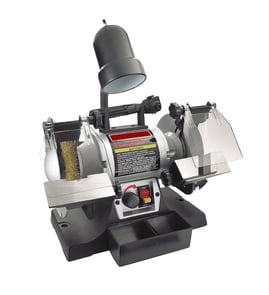
A Craftsman bench grinder like model 257190470 is a stationary power tool that spins abrasive wheels to grind, sharpen, deburr, and clean up metal. We typically see it used for sharpening hand tools, shaping small parts, and removing rust or burrs in a home shop.
What you can do with a bench grinder
- Sharpen chisels, lawn mower blades, and other edged tools
- Grind down welds or rough metal edges
- Deburr cut metal after sawing or drilling
- Clean metal using a wire wheel attachment (if equipped)
- Shape small parts and hardware
Key parts and features to know
Most bench grinders (including Craftsman models) are built around a few core components:
| Component | What it does | Common issue if it fails |
|---|---|---|
| Grinding wheel(s) | Removes material and sharpens edges | Vibration, glazing, uneven grinding |
| Tool rest | Supports the workpiece for control | Poor accuracy, grabbing |
| Eye shield/spark guard | Helps deflect debris | More mess, higher injury risk |
| Motor and switch | Powers and controls the grinder | No start, intermittent running |
If you are replacing missing or stripped fasteners during a repair, a model-compatible option listed for this grinder is the screw 534222402.
Safe, basic use checklist
- Wear eye protection and keep guards in place
- Stand slightly to one side at startup in case a wheel is damaged
- Use light pressure; let the wheel do the work
- Keep the tool rest close to the wheel (a small gap helps prevent grabbing)
- Unplug the grinder before changing wheels or servicing wiring
Why it matters
Using the right grinder setup (wheel condition, guard position, and tool rest adjustment) improves sharpening results and reduces vibration, overheating, and the chance of the workpiece catching.
Last updated: February 2026
What is the maximum clearance that the tool rest should be on a bench grinder?
For a Craftsman bench grinder model 257190470, set the tool rest (work rest) so the gap to the grinding wheel is no more than 1/8 inch (0.125 inch). Keeping this clearance tight helps prevent the workpiece from getting pulled into the wheel.
Recommended setup for safe grinding
We use these setup checks any time we install a wheel, adjust the rest, or notice vibration:
- Unplug the bench grinder before adjusting the tool rest.
- Set the tool rest gap to 1/8 inch max; closer is better as long as the wheel spins freely.
- Re-check the gap after the first few minutes of grinding (wheels wear and clearances change).
- Keep the tool rest rigid; tighten mounting hardware so it cannot shift under pressure.
- Dress the wheel if it is out-of-round; a wobbling wheel makes it harder to hold a safe gap.
Quick reference: tool rest clearance
| Item | Maximum clearance | Why it matters |
|---|---|---|
| Tool rest to wheel | 1/8 inch | Reduces the chance the workpiece wedges between rest and wheel |
Why it matters
A larger gap increases the risk of the workpiece catching, chattering, or being pulled down between the rest and the wheel. That can damage the wheel, damage the part you are grinding, and create a serious safety hazard.
If the tool rest will not hold adjustment
If the rest drifts or will not tighten, inspect the mounting points and fasteners. A missing or stripped fastener is a common cause. If you need a replacement fastener for this model, check the parts list for the screw 534222402.
Last updated: February 2026
What is the best speed for a bench grinder?
For a Craftsman bench grinder like model 257190470, the “best” speed depends on the job: high-speed grinders (about 3,450 to 3,600 RPM) remove material faster, while slow-speed grinders (about 1,725 to 1,800 RPM) give more control and reduce heat buildup on tool edges.
Quick speed guide (what to choose and why)
- 3,450 to 3,600 RPM: best for fast stock removal, rough shaping, and general grinding
- 1,725 to 1,800 RPM: best for sharpening and edge work where overheating is a concern
- If you frequently blue the metal (overheat it), a slower speed or lighter pressure is the better setup
- If you need to remove a lot of material quickly, higher speed is typically more efficient
- Wheel choice matters as much as RPM; a harder wheel can run hotter than a cooler-cutting wheel at the same speed
Best speed by task
| Task | Recommended speed range | Why it matters |
|---|---|---|
| Sharpening chisels, plane irons, knives | 1,725 to 1,800 RPM | Better control; less heat at the edge |
| Touch-up sharpening (light passes) | 1,725 to 3,600 RPM | Works at either speed if pressure is light |
| Removing rust, cleaning metal | 3,450 to 3,600 RPM | Faster surface work |
| Shaping metal (rough grinding) | 3,450 to 3,600 RPM | Faster material removal |
How to avoid overheating (works at any RPM)
- Use light pressure and let the wheel do the cutting
- Dip the workpiece in water frequently to keep the edge cool
- Keep the wheel dressed so it cuts cleanly instead of rubbing
- Use the tool rest and keep a consistent angle
- Replace damaged or worn hardware so the wheel stays stable; for example, check mounting fasteners such as the screw 534222402
Why it matters
Grinding speed directly affects heat, control, and finish quality. Too much heat can soften an edge and ruin temper; too little control can round over a bevel. Matching RPM to the task helps you grind faster while protecting your tools.
Last updated: February 2026
How to tighten the bolts on a bench grinder?
On the Craftsman 257190470 bench grinder, tighten wheel and guard fasteners firmly, then recheck that the grinding wheel spins freely without wobble or rubbing. For grinding wheel nuts, snug the nut, back it off slightly, then re-snug so the wheel is secure without being over-clamped.
Before you start (safety and setup)
- Unplug the bench grinder before touching the wheel, guards, or tool rests.
- Let the wheel stop completely; never “grab” a coasting wheel.
- Wear eye protection and avoid loose sleeves or gloves near rotating parts.
- If you removed a guard screw or cover screw, keep hardware organized so it goes back in the same location.
How we tighten the grinding wheel nut (typical bench grinder method)
- Hold the wheel to keep it from turning.
- Tighten the wheel nut until it is snug.
- Back the nut off about 1/8 turn.
- Tighten again with a short, firm pull so it seats.
- Spin the wheel by hand to confirm it turns freely and does not slip on the shaft.
Direction matters
Many bench grinders use opposite threads on one side so normal rotation helps keep the nut tight.
| Wheel side | Common thread style | What that means for tightening |
|---|---|---|
| Left wheel | Left-hand thread (common) | Tightens opposite of “normal” |
| Right wheel | Right-hand thread (common) | Tightens the usual direction |
Tightening “bolts” on guards, tool rests, and spark shields
Use a hand tool (not an impact driver) and tighten until the part does not move when you push on it.
- Guard screws: guard should not rattle or contact the wheel
- Tool rest bolts: rest should not shift under moderate hand pressure
- Spark shield fasteners: shield should stay positioned and not vibrate loose
If a fastener will not tighten or keeps loosening, replace the stripped or missing hardware with the correct size. For this model, a commonly listed fastener is the screw 534222402.
Why it matters
Correct tightening prevents wheel wobble, reduces vibration, and helps keep the wheel from slipping on the arbor. Over-tightening can crack a wheel or bind it against flanges, which increases risk and reduces grinding accuracy.
Last updated: February 2026