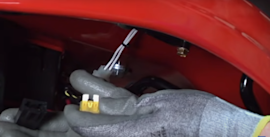
Installation guide
 Owner’s manual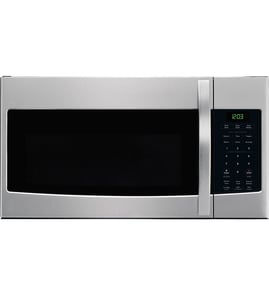

How do I reset my GE microwave touchpad?
To reset the touchpad on your GE JVM1790SK01 microwave/hood combo, disconnect power for 1 to 2 minutes, then restore power and re-set the clock. This clears minor control glitches and reboots the control board.
Reset steps (JVM1790SK01)
- Press CLEAR/OFF once to stop any active cooking cycle.
- Unplug the microwave (or switch the dedicated breaker off).
- Wait 1 to 2 minutes.
- Restore power.
- Set the clock (use the Clock feature described in the JVM1790SK01 owner’s manual).
If the touchpad still will not respond
A power reset helps with temporary software lockups. If keys are still dead or random buttons activate, the issue is usually a door-interlock problem, a stuck key, or a control-related failure.
- Confirm the door closes firmly and latches cleanly.
- Try a different outlet only if it is properly grounded and on the correct circuit.
- If the display is blank after reset, check the home breaker and outlet first.
| Symptom after reset | Most likely direction | What we recommend next |
|---|---|---|
| Display works, keys do nothing | Touchpad/control issue | Use the manual’s control-panel guidance; service may be needed |
| Unit goes dead, then returns | Power interruption | Verify outlet and breaker stability |
| Dead display, no interior light | Power supply or internal protection | Consider professional diagnosis; internal testing involves high voltage |
Why it matters
Resetting power is the safest first step because it can clear a frozen control without disassembly. If the problem repeats, it points to an underlying electrical or control issue that a reset will not fix.
Last updated: January 2026
What's the average lifespan of a GE microwave?
GE microwaves, including the GE JVM1790SK01 microwave/hood combo, typically last 7 to 10 years with normal household use. Lifespan depends most on how often it runs, how well the door and vents are treated, and whether it is kept clean and properly vented per the JVM1790SK01 owner’s manual.
What affects lifespan the most
A microwave/hood combo like the JVM1790SK01 works harder than a countertop unit because it also handles ventilation and heat from the cooktop.
- Heavy daily use (multiple long cook cycles) shortens life
- Running empty overheats internal components
- Slamming or forcing the door wears door latches and interlock switches
- Grease buildup restricts airflow and raises internal temperatures
- Poor venting or blocked filters makes the vent fan work harder
Simple habits that help it reach 10 years
- Keep the cavity clean; wipe spills before they carbonize
- Use microwave-safe cookware; avoid metal trim that can cause arcing
- Do not operate the unit with no food inside
- Clean or replace vent filters on schedule (grease and charcoal, if used)
- Let the fan run after high-heat stovetop cooking to clear heat
Repair vs. replace: a quick rule of thumb
If your JVM1790SK01 is near the 7 to 10 year mark, the decision often comes down to the type of failure.
| Symptom | More likely a repair | More likely replacement consideration |
|---|---|---|
| Dead display/no power | Fuse, door switch, wiring | Repeated electrical failures |
| Runs but does not heat | Not typical DIY; high-voltage system | Major high-voltage component issues |
| Loud noises | Fan/motor related | Multiple worn components |
If the microwave is completely dead, a common first check is the internal fuse; see how to replace a microwave fuse and match the correct part for this model such as the microwave fuse WB27X10928.
Why it matters
A microwave that is overheating, arcing, or struggling to vent can fail sooner and may also cook unevenly. Basic cleaning and airflow maintenance are the easiest ways to protect key components like the magnetron, thermal cut-offs, and vent fan.
Last updated: January 2026
What are the parts of a microwave?
A GE microwave/hood combo like model JVM1790SK01 includes cooking components (turntable system, cooking cavity, controls) plus ventilation parts (fan, filters, ducting or recirculation hardware). Some internal high-voltage parts exist as well, but they are service items and should be handled only by qualified technicians.
Main parts you will see and use
- Door assembly: door, handle, latches, and safety interlock system
- Control panel: display, keypad or dial, and control board behind it
- Cooking cavity: interior box where food sits
- Turntable system: glass tray, support ring, and drive shaft
- Vent hood system: vent fan, grease filters, and (on some setups) a charcoal filter
- Lighting: cooktop light and cavity light (varies by configuration)
Key internal components (not typically DIY)
Microwaves also rely on high-voltage and heating-related components that are not meant for casual inspection.
| Component | What it does | Typical symptom if it fails |
|---|---|---|
| Fuse | Protects the microwave from electrical overload | Unit goes completely dead |
| Door interlock switches | Prevents operation with the door open | Won’t start, runs with door issues |
| Thermal cut-off | Shuts unit down if it overheats | Dead or intermittent operation |
| Convection element (on combo units) | Provides convection bake/roast heat | Convection won’t heat properly |
Model-specific examples of parts for JVM1790SK01
If you are identifying parts on your specific unit, these are common examples we see for GE JVM1790SK01:
- Turntable tray: microwave glass turntable tray WB49X10176
- Turntable support: rotating ring WB06X10705
- Grease filter: microwave grease filter WB06X10654
- Fuse (electrical protection): microwave fuse WB27X10928
Why it matters
Knowing the major parts helps you describe symptoms accurately (for example, “turntable not rotating” vs. “not heating”) and quickly narrow down whether you need a cleaning, a simple replacement part, or professional service.
For diagrams, operating features, and care/cleaning details, use the JVM1790SK01 owner’s manual.
Last updated: January 2026