Owner’s manual
 Error Codes


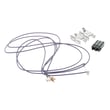

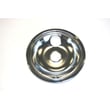
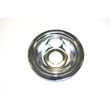
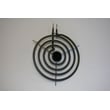
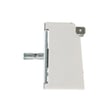
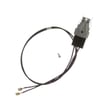
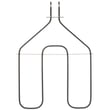
Can you replace the oven heating element in a Kenmore oven?
Yes. On the Kenmore 36262781001 electric range, you can replace a failed bake or broil heating element; the job is straightforward if you shut off power at the breaker, access the element mounting screws, and reconnect the wires securely. Use the owner's manual for model-specific access and safety steps.
Before you start (safety and prep)
- Turn off power at the home circuit breaker (not just the control knob).
- Let the oven cool completely before touching any internal parts.
- Keep the oven vent unobstructed (it is under the right rear surface unit on this model).
- Avoid letting oven mitts or tools contact a hot element; burns happen fast.
- If you ever see flame in the oven, close the door to smother it and use a multi-purpose dry chemical or foam-type extinguisher if needed.
How replacement typically works
Most Kenmore electric ranges replace elements the same way:
- Remove oven racks for working room.
- Remove the screws holding the element to the rear oven wall.
- Gently pull the element forward a few inches to expose the wire terminals.
- Disconnect the wires (hold the connectors, not the wire itself).
- Connect the new element wires firmly, then remount the element.
What to check if the oven still will not heat
- Loose or burned wire connectors at the element terminals
- A failed control (temperature knob or electronic control, depending on your version)
- A tripped breaker or weak power supply (range needs full 240V)
- Temperature calibration issue (this model’s manual describes adjusting the oven thermostat knob)
Quick symptom guide
| Symptom | Most likely cause | What to do next |
|---|---|---|
| No bake heat, broil works | Bake element failed | Replace bake element (match by model) |
| No broil heat, bake works | Broil element failed | Replace broil element |
| Both bake and broil dead | Power or control issue | Check breaker, wiring, then controls |
Why it matters
A weak or open heating element causes long preheat times, uneven baking, and can overwork controls and wiring. Replacing the failed element restores normal oven temperature performance and cooking results.
Last updated: February 2026
How many watts does a Kenmore oven use?
A Kenmore electric range oven like model 36262781001 typically uses about 2,000 to 3,500 watts when baking, and about 3,000 to 4,500 watts when broiling (the element cycles on and off to hold temperature). For the exact wattage on your unit, check the rating information in the owner's manual.
Typical wattage by function (what to expect)
Most electric range ovens have two main heating loads:
- Bake element: usually the primary heat source for baking
- Broil element: higher-wattage element for top heat and broiling
- Control and lights: small additional load compared to the elements
- Cycling: elements do not stay on continuously once preheated
| Oven function | Typical wattage range | What that means in use |
|---|---|---|
| Bake | 2,000 to 3,500 W | Highest draw during preheat; then cycles |
| Broil | 3,000 to 4,500 W | High draw while broiling; may cycle |
| Self-clean (if equipped) | 3,000 to 5,000 W | Long run time; heavy electrical load |
How to estimate amps and electrical load
If you know watts, you can estimate current draw:
- Amps = watts ÷ volts
- Most U.S. electric ranges run on 240 volts
- Example: 3,600 W ÷ 240 V = 15 amps (approx.)
Why it matters
Wattage affects how fast the oven preheats, how much it can recover temperature after opening the door, and whether your circuit and cord connection are sized correctly. If you see heat-related issues, common repair parts for this model include the range bake element WB30X46987 and range broil element WB30X46986.
Last updated: February 2026
What does F13 mean on a Kenmore stove?
On a Kenmore electric range like model 36262781001, an F13 error points to a problem the control is detecting in the oven temperature sensing circuit or the electronic control’s ability to read it. In most cases, the fix involves checking the sensor wiring connections and, if needed, replacing the failed component.
What to check first (safe, quick steps)
- Reset power: turn the range off at the breaker for 10 seconds, then restore power (a power surge can cause odd display behavior).
- If the code returns, unplug the range or shut off the breaker before inspecting anything.
- Check for loose or damaged wiring at the oven temperature sensor connector (common after moving the range).
- Look for pinched wires where the harness passes through the rear panel.
- If the oven won’t heat or heats erratically, treat the code as an active fault, not a one-time glitch.
For control locations and access panels specific to your range, use the owner's manual.
What F13 usually involves
Most F13 scenarios come down to one of these:
| Likely cause | What you’ll notice | Typical next step |
|---|---|---|
| Loose connection in sensor circuit | Code comes and goes, oven may work sometimes | Reseat connectors, inspect harness |
| Failed oven temperature sensor | Baking temps off, preheat issues, code repeats | Replace sensor (model-specific part) |
| Electronic oven control problem | Code persists even after wiring checks | Control diagnosis and replacement |
Why it matters
The oven control uses the temperature sensor signal to regulate bake and broil. When that signal is missing or out of range, the range may shut down heating or heat unpredictably, which affects cooking results and can damage components over time.
When to replace parts
- If wiring and connectors are solid and F13 returns consistently, the sensor is the first component we replace in most electric ranges.
- If a known-good sensor and wiring still produce F13, the control becomes the primary suspect.
If you need help identifying the correct sensor or control for model 36262781001, match parts by model number in the parts list for this range.
Last updated: February 2026
How to read Kenmore model numbers?
Kenmore model numbers are built in sections: the first 3 digits identify the manufacturer source, the next group identifies the base design, and the remaining digits show feature or production variations. For your Kenmore electric range model 36262781001, the key is matching the full number when selecting parts.
How Kenmore model numbers are structured
Most Kenmore appliance model numbers follow this pattern:
- Prefix (first 3 digits): manufacturer identifier (who built it for Kenmore)
- Middle digits: base model series (platform and core design)
- Ending digits: revision, color, feature package, or production change
Quick example
| Section | What it tells you | Why you care |
|---|---|---|
| 3-digit prefix | Manufacturer source | Helps narrow down compatible designs |
| Base model digits | Core platform | Points to the right diagrams and parts |
| Suffix digits | Variant/revision | Prevents ordering the wrong switch, element, or trim |
Where to find the model number on the range
On Kenmore electric ranges like model 36262781001, we look for the model and serial label in common spots:
- Behind the range door (around the frame)
- Behind the storage drawer (pull the drawer out and look at the frame)
- On the frame near the oven cavity opening
The owner's manual also describes typical label locations for this style of range.
Why the full model number matters for parts
Small suffix changes can affect electrical and fit details, especially on an electric range. Using the complete model number helps ensure the correct match for items such as:
- Surface element control switches
- Terminal blocks and wiring connections
- Oven door gasket and hinges
- Bake and broil elements
Common “wrong part” situations
| Symptom | Often caused by | What to verify |
|---|---|---|
| Burner won’t regulate heat | Wrong control switch rating | Match the exact model and switch type |
| Oven heats unevenly | Incorrect element style | Confirm element shape and terminals |
| Power issues | Incorrect terminal block | Confirm wire connection layout |
Last updated: February 2026
What was the size of the Kenmore 36262781001 oven?
The exact overall dimensions and required clearances for the Kenmore 36262781001 electric range are listed in the “Dimensions & Clearances” section of the owner's manual. Use those specs for fitting the range into a space; then measure your unit to confirm handle and leveling-leg differences.
Where to find the exact size for model 36262781001
In the owner's manual, go to the installation section and look for:
- Dimensions & clearances (overall width, height, depth)
- Rear and side clearances (space needed for safe operation)
- Electrical connection space (room for the cord/terminal area)
- Leveling instructions (final installed height)
What to measure on the range (so it matches the manual)
Even with the manual specs, we recommend confirming the real-world measurements on your range:
- Width: widest point, including any cooktop overhang
- Height: floor to cooktop surface (with leveling legs set as installed)
- Depth: back panel to the front of the door/handle
- Door swing clearance: space needed to fully open the oven door
| Measurement | Measure from | Include |
|---|---|---|
| Width | Left outer edge to right outer edge | Cooktop lip/trim if it overhangs |
| Height | Floor to cooktop | Leveling legs setting |
| Depth | Back to front | Handle and door projection |
Why it matters
Using the model-specific dimensions prevents fit issues with cabinets and countertops, protects the power connection area from being pinched, and ensures proper airflow at the oven vent.
Last updated: February 2026