Owner’s manual
 Error Codes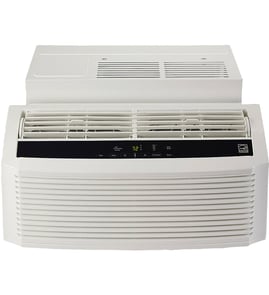




Is the LG portable air conditioner any good?
The LG LW8010ER is a window-type room air conditioner, and it’s a solid choice when it’s correctly sized for the room and maintained regularly. Most cooling complaints come from airflow restrictions (dirty filter, blocked rear clearance) or incorrect settings, not from the unit being “bad.” See the LW8010ER owner’s manual for operating and maintenance details.
What “good” looks like for this LG room air conditioner
A properly working LW8010ER should cool consistently and cycle normally without frequent shutdowns.
Common signs it’s performing well:
- Blows noticeably cooler air in Cool mode after a few minutes
- Maintains a steady room temperature once stabilized
- Fan speeds change as selected
- No repeated tripping of the breaker or fuse
- Airflow feels strong at the front grille
Quick checks if it’s not cooling well
The manual’s troubleshooting guidance focuses on settings, filter condition, and installation clearance.
Do these first:
- Confirm the mode is Cool and the temperature is set lower than the room temperature
- Clean or replace a clogged filter; a dirty filter is a top cause of weak cooling
- Make sure the rear of the unit has more than 20 inches of clearance from a wall or fence
- Close doors and windows; reduce heat sources in the room
- Verify the unit is plugged into a proper outlet and the breaker or fuse is OK
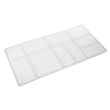
If you need a replacement filter for this model, use the exact LG part listed for LW8010ER: room air conditioner air filter 5231A20027A.
Noise expectations (what’s normal vs not)
Room air conditioners are never silent. Fan noise and compressor cycling are normal, especially on high fan.
| Sound type | Usually normal | Usually needs attention |
|---|---|---|
| Steady airflow “whoosh” | Yes | No |
| Compressor hum that cycles | Yes | No |
| Rattling or buzzing that changes with vibration | No | Yes |
| Squeal or grinding from the fan area | No | Yes |
Why it matters
A clean air filter and proper rear clearance protect cooling performance and help prevent icing, overheating, and nuisance shutdowns. Regular maintenance also reduces strain on the fan motor and compressor.
Last updated: January 2026
What is the common problem of an LG air conditioner?
For the LG LW8010ER room air conditioner, the most common problems are “not cooling enough” and “won’t run,” and they’re usually caused by a clogged air filter, incorrect temperature settings, or a power issue (outlet, fuse, or circuit breaker). Start with the quick checks in the LW8010ER owner’s manual.
Most common symptoms and what they usually mean
- Air does not feel cold enough: temperature setting is too warm, filter is dirty, airflow is blocked, or the room has heat sources.
- Unit does not operate: not plugged into a proper outlet, tripped breaker, blown fuse, or abnormal voltage.
- Water dripping from the rear: can be normal in humid or rainy conditions due to water collecting in the base pan.
- Clicking or pinging noises: often normal compressor cycling or water being picked up by the fan in humid weather.
- Fan runs but compressor is quiet: can be a normal operating condition during cycling.
Quick fixes we recommend first (LW8010ER)
- Confirm power: verify the unit is plugged into a working outlet; check the home fuse/circuit breaker.
- Verify settings: set the mode to cooling and lower the temperature setting.
- Clean the air filter: a clogged filter is a top cause of weak cooling; replace it if damaged.
- Improve airflow: keep the outside rear of the unit clear; most window units need about 20 inches of clearance behind them.
- Reduce heat load: close doors/windows and limit heat sources in the room.
Parts that commonly solve airflow and cooling complaints
If cleaning does not restore airflow, replacing the filter is a common next step.
| Symptom | Likely cause | Common part to check |
|---|---|---|
| Weak airflow, poor cooling | Dirty or damaged filter | Room air conditioner air filter 5231A20027A |
| Noisy airflow or vibration | Loose fan hardware | Room air conditioner fan blade clamp (inspect for looseness) |
Why it matters
A restricted air filter makes the LW8010ER work harder, reduces cooling performance, and can lead to icing or nuisance shutoffs. Keeping airflow clear is the fastest way to prevent repeat cooling problems.
Last updated: January 2026
What is the lifespan of LG AC?
Most LG room air conditioners like model LW8010ER typically last 8 to 12 years with normal seasonal use and basic maintenance (clean filter, clear airflow, and keep coils clean). Heavy run time, poor airflow, and neglected cleaning can shorten life; consistent upkeep extends it.
What to expect for LW8010ER (typical)
Room (window) air conditioners generally wear out sooner than central AC because the compressor and fan run in a compact, high-vibration cabinet.
- Typical service life: 8 to 12 years
- Common “life-limiting” issues: compressor wear, refrigerant leaks, control board failures, fan motor problems
- Maintenance that makes the biggest difference: airflow and cleanliness
- If cooling is weak but the unit runs: start with filter and coil cleaning before replacing parts
For model-specific operating and care instructions, follow the LW8010ER owner's manual.
Maintenance checklist that extends lifespan
- Clean or replace the air filter regularly (more often with pets, smoke, or dust)
- Keep the front grille and return-air path unobstructed (curtains and furniture reduce airflow)
- Clean the evaporator and condenser coils seasonally (gentle cleaning helps heat transfer)
- Confirm the unit is level and securely mounted to reduce vibration and water issues
- Use a dedicated outlet and avoid undersized extension cords (voltage drop stresses the compressor)
Helpful parts for airflow and cooling performance
If the filter is damaged or won’t come clean, replacing it helps protect the evaporator coil and keeps temperatures stable.
| Symptom | Often helps first | Related part for LW8010ER |
|---|---|---|
| Weak airflow | Clean/replace filter | Room air conditioner air filter 5231A20027A |
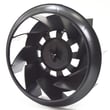
| Noisy airflow or vibration | Inspect fan blade and mounts | Room air conditioner evaporator fan blade MDG58298301 |
| Poor window seal, hot air leaks | Check side panels | Room air conditioner accordion fillter assembly, left AET73732404 |
Why it matters
A clogged filter or restricted airflow makes the compressor run hotter and longer, which is the fastest way to shorten the life of a room air conditioner. Keeping airflow strong is the simplest, lowest-cost way to get the full lifespan from an LG unit.
Last updated: January 2026