Installation guide
 Owner’s manual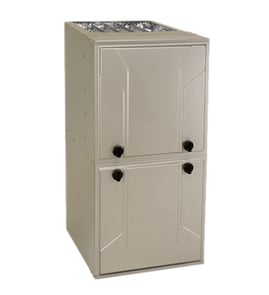

Who makes EB17B furnace?
The EB17B is a Coleman Evcon EB Series electric furnace; it’s made under the Coleman brand (Evcon is the product line name used on these furnaces). For model-specific identification details and approved system information, use the owner's manual.
How to confirm the manufacturer on your exact unit
Check the data plate (rating label) on the furnace cabinet; it lists the brand and model number.
Common places to look:
- Inside the front access panel
- On the blower compartment door
- Near the electrical junction box cover
- On the side panel of the cabinet
What “Evcon” means on this model
“Evcon” is used as the furnace line name, while “Coleman” is the brand shown for this model page (EB17B). In the EB Series documentation, the furnace is described as an EB Series electric furnace.
Why it matters
Knowing the exact brand and model helps you match the correct wiring diagram, thermostat setup, and replacement components (like sequencers, transformer, blower motor, and heater elements) so the furnace operates safely and correctly.
Quick reference (from EB Series documentation)
| Detail | What to expect on EB Series furnaces |
|---|---|
| Power | 240 volts, 60 Hz, single phase |
| Filter size | 16 x 20 x 1 (universal across models) |
| Thermostat | Heat/cool thermostat is typically packed with the furnace |
For installation-related labeling and model series details, use the installation guide.
Last updated: February 2026
Why is my electric furnace running but no heat?
If your Coleman Evcon electric furnace model EB17B is running (blower on) but you are getting little or no heat, the most common causes are restricted return airflow (dirty filter or blocked return grille) or a tripped furnace circuit breaker that shut off the heating elements while the blower still runs. See the owner's manual for your filter location and breaker reset steps.
Quick checks we recommend first
- Set the thermostat to Heat and raise the setpoint 3 to 5 degrees above room temperature.
- Check the return air grille; do not block it with furniture, rugs, or a closed closet door.
- Inspect the air filter and replace it if it is dirty (a clogged filter can make the elements cycle off on the limit).
- Look for furnace circuit breakers behind the lower furnace door; a trip can stop heat output.
- Check the home’s electrical panel for a tripped breaker feeding the furnace.
Airflow problems that stop heat (but the blower keeps running)
Your EB17B needs steady return airflow back to the circulating blower. When return air is restricted, the heating elements can cycle off and on repeatedly, which feels like “no heat” at the registers.
Common airflow restrictions
| What to check | What you may notice | What to do |
|---|---|---|
| Return air grille blocked | Weak airflow, heat cuts in and out | Clear the grille and open doors as needed |
| Dirty filter | Furnace runs a lot, low heat output | Replace the filter and keep spares on hand |
| Return path from rooms | Some rooms cold, furnace short-cycles | Make sure air can get back to the return |
If the furnace breakers tripped
The EB17B has built-in circuit breakers behind the furnace door near the bottom. Resetting is a two-step process: shut off power at the home breaker panel first, then reset the breaker(s) in the furnace, reinstall the door, and restore power. If the breaker trips again, the furnace has an internal electrical problem that needs service.
Why it matters
Electric furnaces are designed to operate within a specific airflow and static pressure range. Restricted return air or a tripped breaker can prevent the heating elements from operating correctly, reducing comfort and efficiency and causing repeated limit cycling.
Last updated: February 2026
How many square feet will a 60,000 BTU furnace do?
A 60,000 BTU furnace typically heats about 1,200 to 2,000 sq. ft. The exact coverage depends on your climate, insulation, air leakage, window quality, and ceiling height. For the Coleman Evcon EB17B, the installation details in the installation guide help confirm airflow and setup, but square footage still requires a proper heat-loss calculation.
Quick sizing rule of thumb (what 60,000 BTU usually covers)
Use this as a starting point only; colder climates and drafty homes need more BTUs per square foot.
- Warm/mild climates: often closer to 2,000 sq. ft.
- Mixed climates: often 1,500 to 1,800 sq. ft.
- Cold climates: often 1,200 to 1,500 sq. ft.
- High ceilings or lots of glass: expect less coverage
- Tight, well-insulated homes: expect more coverage
How your EB17B compares
Your Coleman Evcon EB17B is an electric furnace. In the installation data, EB17B is listed at about 56,000 BTU output at 240V (not 60,000). That difference can reduce the practical square-foot coverage compared with a true 60,000 BTU unit.
| Rating you may see | What it means | Why it matters |
|---|---|---|
| 60,000 BTU | Common “size” people reference | Used for rough square-foot estimates |
| EB17B output (about 56,000 BTU @ 240V) | Model-specific output | More accurate for real sizing |
What changes the square-foot number the most
These factors usually swing sizing more than any “BTU per sq. ft.” chart:
- Climate zone and winter design temperature
- Insulation levels (attic, walls, rim joists)
- Air sealing (drafts, leaky ducts, unsealed returns)
- Window type and window area
- Ceiling height and open floor plans
- Return air and airflow restrictions (closet/alcove installs)
Why it matters
Oversizing can cause short cycling and comfort issues; undersizing can leave rooms cold and drive up run time. The best match comes from a room-by-room load calculation (Manual J) and confirming the furnace can move the required airflow per the owner's manual.
Last updated: February 2026
How much does a 80,000 BTU furnace cost to install?
Installing an 80,000 BTU furnace typically runs about $3,000 to $9,000 total, with higher prices when you choose a high-efficiency unit, need ductwork or venting changes, or have electrical or gas-line upgrades. Use your installation guide to understand clearance and return-air requirements that can affect labor time.
What drives the installed price
A furnace install price is mostly equipment choice plus job complexity. Common cost drivers include:
- Furnace type and efficiency (single-stage vs. two-stage vs. variable-speed blower)
- Fuel and venting (gas venting changes can add labor and materials)
- Electrical work (new circuit, disconnect, breaker sizing, or wiring repairs)
- Ductwork changes (plenum transitions, sealing, resizing, adding returns)
- Permits and code compliance (local requirements vary)
- Access difficulty (tight closets, attic installs, limited service clearance)
Typical cost ranges (what most homeowners see)
These ranges reflect common U.S. pricing for an 80,000 BTU class furnace installation.
| Install scenario | Typical total cost | Best fit |
|---|---|---|
| Basic replacement (easy access, minimal changes) | $3,000 to $6,000 | Like-for-like swap, existing duct and vent usable |
| Mid-range install (some duct, electrical, or vent updates) | $5,000 to $7,500 | Most standard replacements |
| High-efficiency or complex install (major modifications) | $7,800 to $12,500+ | New venting, significant ductwork, difficult access |
Why it matters for your Coleman Evcon EB17B
If you are comparing costs to your Coleman Evcon EB17B, keep in mind the EB17B is an electric furnace and its installation requirements are different than an 80,000 BTU gas furnace. For example, the EB series installation guidance calls out service access (typically 24 inches in front) and minimum return-air free area (often 200 square inches or more, depending on the system setup). Those details can change the amount of carpentry, ductwork, and labor needed.
Quick checklist before you accept a bid
Use this to compare quotes apples-to-apples:
- Confirm the quote includes equipment, labor, and haul-away
- Ask whether duct transitions or return-air changes are included
- Verify whether electrical or venting upgrades are included (if needed)
- Make sure the installer plans for service clearance and safe access
- Request the model and efficiency rating of the proposed furnace in writing
Last updated: February 2026