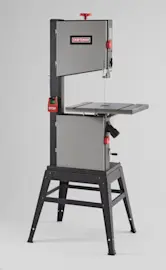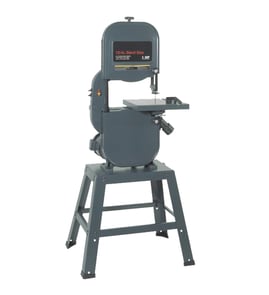



What is the 3-tooth rule for bandsaws?
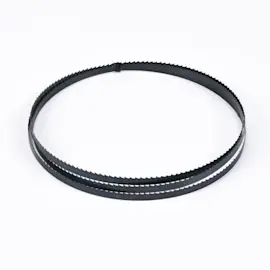
The 3-tooth rule means you choose a band saw blade so at least 3 teeth are in the cut at all times on your Craftsman band saw model 113248290. This prevents tooth snagging and vibration, improves cut quality, and helps the blade track and last longer.
How to apply the 3-tooth rule
Use the material thickness to pick a blade tooth pitch (TPI, teeth per inch) that keeps 3 or more teeth engaged.
- Measure the stock thickness at the cut (including any angle or curve that changes effective thickness).
- Pick a TPI that gives 3 to 6 teeth in the cut for most woodworking.
- Avoid too-coarse blades on thin stock; they grab, chatter, and can strip teeth.
- Avoid too-fine blades on thick stock; they cut slowly and heat up.
- If you hear rhythmic thumping or see washboard marks, change TPI and re-tension the blade.
Quick TPI guide (typical woodworking)
| Material thickness | Typical blade pitch (TPI) | What you’ll notice if wrong |
|---|---|---|
| 1/8 to 1/4 inch | 10 to 14 TPI | Coarse TPI chatters and chips edges |
| 1/4 to 3/4 inch | 6 to 10 TPI | Too fine cuts slow and burns |
| 3/4 to 2 inches | 3 to 6 TPI | Too fine loads up and wanders |
Why it matters
Keeping multiple teeth engaged spreads the cutting load across the blade. That reduces tooth breakage, improves control at the table, and helps your Craftsman 113248290 make straighter, smoother cuts.
If the saw still cuts poorly
The blade pitch is only one piece of the setup. Check these common causes next:
- Blade tension and tracking on the wheels
- Guide blocks or guide bearings set too far from the blade
- Dull blade (especially after cutting hardwoods)
- Feed rate too fast for the blade TPI
- Wheel tires worn or glazed
For step-by-step blade setup and replacement, use our DIY guide: how to replace a band saw blade.
Last updated: February 2026
How to replace belt on Craftsman band saw?
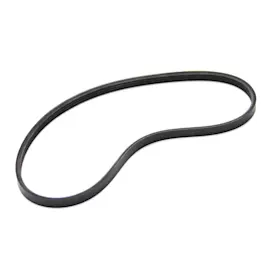
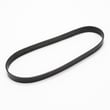
To replace the drive belt on your Craftsman band saw model 113248290, we remove power, relieve belt tension, remove the lower wheel, swap the belt onto the pulleys, then reassemble and track the blade. This restores proper blade speed and reduces slipping.
Safety first
- Unplug the band saw before starting.
- Remove the blade or fully release blade tension to reduce pinch risk.
- Wear cut-resistant gloves when handling the blade and wheels.
- Keep fingers clear of the wheel spokes and belt path.
- Do not test-run with guards removed.
Steps to replace the drive belt (typical for this Craftsman design)
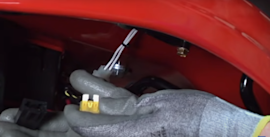
- Disconnect power and open the lower wheel/drive area cover.
- Relieve belt tension by loosening the motor mount or belt-tension adjustment (design varies by revision).
- Remove the lower wheel:
- Remove the retaining clip (often a C-clip or snap ring) from the lower wheel shaft.
- Slide the lower wheel off the shaft.
- Remove the old belt from the lower wheel pulley and motor pulley.
- Install the new belt:
- Loop the belt onto the lower wheel pulley first, then onto the motor pulley.
- Reinstall the lower wheel and retaining clip.
- Set belt tension: tighten until the belt has firm tension with slight deflection when pressed midway between pulleys.
- Reassemble and test:
- Reinstall covers.
- Restore power and briefly run the saw.
- If you removed the blade, reinstall it and confirm blade tracking and guide alignment.
Quick checks after installation
- Belt rides centered on both pulleys (no walking).
- No squeal at startup (common sign of low tension).
- Blade speed stays steady under light cutting load.
- No vibration from a mis-seated wheel or clip.
Troubleshooting if it still slips or cuts poorly
| Symptom | Most common cause | What we do next |
|---|---|---|
| Belt squeals | Belt too loose or oily pulleys | Re-tension; clean pulleys |
| Blade slows in wood | Dull blade or wrong TPI | Replace blade; match TPI to material |
| Vibration | Wheel not seated, belt misaligned | Re-seat wheel; check pulley alignment |
Why it matters
A worn or loose drive belt reduces torque transfer from the motor to the wheels. That leads to slow cutting, burning, and inconsistent feed pressure, even when the blade is sharp.
For more band saw troubleshooting by symptom, use our band saw repair guide landing page.
Last updated: February 2026
What is the 4 inch rule for bandsaw?
The 4-inch rule for a band saw means we keep our hands and fingers at least 4 inches away from the moving blade during any cut. On a Craftsman band saw model 113248290, this is a core safety practice; use push sticks, jigs, or clamps whenever your hands would otherwise get closer.
How to follow the 4-inch rule in real cuts
- Use a push stick or push block for narrow stock and short offcuts.
- Clamp the workpiece to a miter gauge, sled, or jig instead of hand-holding.
- Plan the cut so your hands stay to the side of the blade path, not in line with it.
- Stop and reposition before your hands drift inside the 4-inch zone.
- Keep the table clear so you are not reaching around scraps near the blade.
What to do when the cut “forces” your hands too close
If the workpiece is too small or the cut is too tight to keep 4 inches of clearance, we treat it as a setup problem, not a hand-skill problem.
| Situation | Safer approach that keeps 4 inches | Why it helps |
|---|---|---|
| Very small parts | Use a carrier board or jig | Moves your hands away from the blade |
| Narrow ripping | Use a fence plus push stick | Controls stock without fingertip pressure |
| Curves/tight radius | Use a narrower blade and relief cuts | Reduces twisting and sudden grabs |
| Short pieces | Clamp to a sled or miter gauge | Prevents “pinch and push” near the blade |
Why it matters
A band saw blade can pull material forward and change direction quickly if the blade is dull, tension is off, or tracking is poor. The 4-inch rule builds a buffer so a slip, kick, or bind does not put fingers into the blade.
Related performance checks (often tied to safer control)
- If the saw is hard to feed, address blade sharpness and tooth pitch; see band saw cutting slowly.
- If the saw wanders, correct blade tracking, guide alignment, and tension; see band saw not cutting straight.
- For broader troubleshooting, use the band saw repair guide landing page.
Last updated: February 2026
What are the main parts of a band saw?
On a Craftsman band saw model 113248290, the main parts are the wheels that carry the blade, the blade-guiding and tensioning system, the table and adjustments that control the cut, and the motor and drive components that power the saw. These parts work together to keep the blade tracking correctly and cutting safely.
Main band saw parts (what they do)
- Upper and lower wheels: Support the band saw blade and keep it moving in a continuous loop.
- Tires (wheel tires): Provide grip on the wheels so the blade tracks smoothly.
- Blade guides (side guides and thrust bearing): Keep the blade from twisting and reduce wandering during cuts.
- Tension control: Tightens the blade to the correct tension for stable cutting.
- Tracking control: Adjusts how the blade rides on the wheels so it stays centered.
- Table and blade slot (throat): Supports the workpiece and allows the blade to pass through.
- Table tilt and squaring adjustments: Set the table to 90 degrees for straight cuts or tilt for bevel cuts.
- Motor and drive system (belt and pulleys on many saws): Transfers power to the drive wheel.
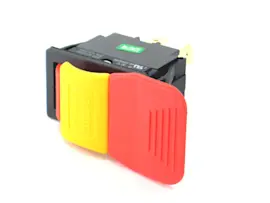
- On/off switch and wiring: Controls power to the motor.
- Blade guard and covers: Help protect you from the moving blade and wheels.
Quick layout: where you will find key components
| Area of the saw | Common components | What you adjust most often |
|---|---|---|
| Upper housing | Upper wheel, tracking knob, tension knob, upper guides | Tracking, tension, guide position |
| Lower housing | Lower wheel, drive belt/pulley (if equipped), lower guides | Belt condition, lower guide alignment |
| Table area | Table, insert/throat plate, trunnions/tilt hardware, fence (if equipped) | Squaring, bevel angle, fence alignment |
Why it matters
Knowing the main parts helps you diagnose symptoms faster. For example, slow cutting usually points to blade condition, tension, or feed rate; cuts that drift often point to guide setup or tracking.
Helpful DIY troubleshooting and repair guides
Last updated: February 2026
What is the specs of the Craftsman 12 inch bandsaw 113248290?
The Craftsman band saw model 113248290 is a 12-inch class vertical band saw. For setup and buying the right blade, the specs that matter most are throat capacity, max cutting height (resaw), table size and tilt, and the blade length and width the saw is designed to run.
Core specs to identify on your 113248290
These are the spec points customers use most for blade fit, guide setup, and cut accuracy:
- Throat capacity: 12 inches (class rating)
- Max cutting height (resaw): 5 inches (typical for this Craftsman 12-inch class)
- Table: about 13 x 13 inches (common on this Craftsman 12-inch class)
- Table tilt: 0 to 45 degrees (for bevel cuts)
- Blade: confirm blade length and usable blade width range from your current blade or the saw’s blade path
Quick spec check you can do in 10 minutes
Use a tape measure and the blade you have now to lock in the exact numbers for your saw:
- Measure throat from the blade to the inside of the frame.
- Measure max height from the table to the highest safe guide position.
- Read the blade length printed on the blade (many blades have it stamped/printed).
- If the blade is unmarked, measure the old blade end-to-end after removal.
For safe removal and installation steps, use: how to replace a band saw blade.
Why these specs matter
Correct throat, resaw height, and blade length prevent ordering the wrong blade and help reduce drift, slow cutting, and rough edges. If the saw is cutting slowly even with a sharp blade, use: band saw cutting slowly.
| Spec | What it affects | What to match |
|---|---|---|
| Blade length | Fit on wheels and tracking | Your current blade length |
| Blade width | Curve radius and straightness | Task (curves vs ripping) |
| Resaw height | Max thickness you can cut | Your stock thickness |
Last updated: February 2026