Error Codes



Do electric stoves use a lot of electricity?
Electric stoves can use a noticeable amount of electricity, but the real cost depends on how long you cook and which heating elements you use. For an Amana ACR4303MMS2 electric range, the cooktop and oven are high-wattage loads that cycle on and off to hold temperature.
Most electric ranges fall into these common ranges:
- Cooktop surface element: about 1,000 to 3,000 watts per burner (higher on “high” settings)
- Oven bake/broil heating: about 2,000 to 5,000 watts while actively heating
- Cycling behavior: once preheated, the oven usually cycles the element on and off, so it does not draw full wattage continuously
- Biggest drivers: long bake times, frequent preheats, and using multiple burners at once
Use this to estimate energy use. (kWh = watts ÷ 1000 × hours used.)
| What you use | Typical watts | 1 hour use (kWh) | 2 hours use (kWh) |
|---|---|---|---|
| One surface element | 1,500 W | 1.5 | 3.0 |
| Large surface element | 2,500 W | 2.5 | 5.0 |
| Oven heating (active) | 3,500 W | 3.5 | 7.0 |
To estimate cost, multiply kWh by your electric rate (for example, 3.5 kWh × $0.18/kWh = $0.63 for an hour of active oven heating).
- Match pan size to the burner so heat is not wasted.
- Use lids on pots to shorten boil time.
- Avoid repeated door opening during baking (heat loss increases cycling).
- Use the smallest burner that maintains the simmer or boil you need.
- Keep the oven door seal in good shape; a worn seal can leak heat and increase run time.
If you suspect the oven is overheating or running too long to maintain temperature, checking the oven temperature sensor is a smart first step; see the range oven temperature sensor WPW10181986.
Electric ranges are among the highest-wattage appliances in a home. Small habit changes (shorter preheats, fewer door openings, right-size burners) reduce kWh use and can also improve cooking consistency.
Last updated: February 2026
What is the most reliable brand of electric stove?
The most reliable electric range brand is usually the one with a simple design, widely available parts, and a strong service history. In our experience, mainstream brands like Whirlpool, GE, and Frigidaire tend to be dependable for most homes; premium brands can perform well but often cost more to repair.
Reliability is mostly about consistent heating and fewer control failures over time. For an Amana ACR4303MMS2 free standing electric range, long-term reliability also depends on keeping key wear parts in good shape.
Common reliability factors:
- Fewer electronic features (fewer boards and touch panels to fail)
- Stable oven temperature control (sensor and wiring condition)
- Durable surface element controls and receptacles
- Parts availability and reasonable repair cost
- Proper electrical supply (tight connections, correct voltage)
Most shoppers do best with a “serviceable” brand that has common parts and straightforward repairs.
| Brand tier | What you typically get | Best for |
|---|---|---|
| Mainstream (Whirlpool, GE, Frigidaire) | Strong parts availability, familiar designs | Most households, value-focused buyers |
| Premium (Bosch and similar) | Fit and finish, features | Buyers prioritizing premium build and features |
| Budget/value (including some Amana models) | Lower upfront cost, simpler feature sets | Basic cooking needs and lower purchase price |
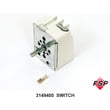
A range can feel “unreliable” when a common component fails and the repair is delayed or expensive. For the Amana ACR4303MMS2, examples of commonly replaced parts that affect performance include the range oven temperature sensor WPW10181986 and the range surface element control switch WP3148952.
- Avoid slamming the oven door; it reduces stress on hinges, glass, and seals.
- If the oven bakes unevenly, check temperature accuracy early (sensor and calibration).
- If a surface burner cycles erratically, inspect the switch, receptacle, and wiring.
- Keep terminals clean and tight; heat damage at connections causes repeat failures.
- Use the correct cookware size for coil elements to reduce overheating and cycling.
Choosing a “reliable” brand is really choosing a range you can keep heating accurately and repair quickly. A model with common, replaceable components and readily available parts usually delivers the best long-term ownership experience.
Last updated: February 2026
Why is my Amana electric range oven not working?
If your Amana ACR4303MMS2 electric range oven is not working, the most common causes are a power supply problem (tripped breaker or loose cord connection), a failed heating component, or a control issue. Start with power checks, then test the bake and broil heating circuits.
- Confirm the range has 240 volts at the outlet; a range can light up on 120 volts but the oven will not heat.
- Reset the double breaker fully: switch OFF, then ON.
- Make sure the oven is not in Delay Start or Control Lock mode.
- Try Bake and Broil; if neither heats, suspect power, wiring, or control.
- If the display is dead, check the house breaker and the range cord/terminal block connections.
If power is correct and the oven still will not heat, these parts are frequent culprits on electric ranges:
- Oven temperature sensor: if it reads out of range, the control may prevent proper heating.
- Broil element: if broil does not glow red, it may be open.
- Bake heating circuit: depending on your configuration, a failed bake component or wiring can stop heating.
- Electronic control: if it is not sending voltage to the heating circuit, the oven will not heat.
Helpful model-matched parts to consider:
- Range oven temperature sensor WPW10181986
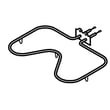
- Broiler element W10856603
- Control, electronic (lcx) (black) W11747105
| Symptom | Most likely direction | What we recommend |
|---|---|---|
| Display works, oven never heats | Heating circuit or sensor | Test sensor resistance; inspect element and wiring |
| Broil works, bake does not | Bake circuit issue | Inspect wiring and bake component path; check for burned connectors |
| Neither bake nor broil heats | Power, control, or wiring | Verify 240V supply; then check control output and harness |
| Oven heats but temperature is wrong | Sensor or calibration | Test/replace sensor first |
An electric oven needs the correct 240V supply and an intact heating circuit to produce heat. A weak connection, failed sensor, or open element can stop heating completely or cause long preheat times and uneven baking.
- Disconnect power at the breaker before removing panels.
- Look for overheated terminals, melted insulation, or loose spade connectors.
- Use a meter for accurate diagnosis; see how to use a multimeter to test electrical parts video.
Last updated: February 2026