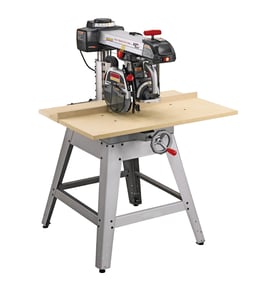

Are radial arm saws still being manufactured?
Radial arm saws are generally not being manufactured in meaningful volume today. Most “new to you” radial arm saws are older Craftsman and similar machines sold used, refurbished, or from old stock. For Craftsman model 3230-CLAMP (a clamp accessory), the focus is on finding a compatible replacement accessory, not a newly made saw.
Radial arm saws largely shifted out of mainstream production as other tools (miter saws, table saws, track saws) became the standard for most shops.
- Used and vintage radial arm saws are widely available
- Refurbished units show up through resellers and local listings
- Replacement accessories and hardware are often the practical path for keeping an older saw working
- Compatibility matters more than “universal fit” for clamps and hold-downs
- Safety setup (guarding, alignment, workholding) is the priority on older saws
Because 3230-CLAMP is a radial saw accessory, the key is matching the clamp to your saw’s table and fence setup so it holds stock securely during crosscuts and dado work.
| What to verify | Why it matters | What to measure/check |
|---|---|---|
| Table or fence thickness | Ensures the clamp can grip securely | Thickness at the clamping point |
| Clamp opening range | Prevents bottoming out or slipping | Max and min jaw opening |
| Hardware condition | Avoids stripped threads and weak hold | Threads, knobs, bolts, washers |
| Mounting style | Prevents interference with travel | Where and how it attaches |
- Confirm the accessory ID is 3230-CLAMP
- Inspect for bent jaws, cracks, or stripped threads
- Clean rust and debris from threads and contact faces
- Replace missing fasteners with the correct size and grade
- Test clamping force on scrap stock before cutting
A radial arm saw depends on stable workholding. A worn or mismatched clamp can let material shift during a cut, which reduces accuracy and increases kickback risk.
For help confirming the correct model identification before shopping for parts or accessories, use how to find your appliance model number (and what it means for parts).
Last updated: February 2026
Are radial arm saws worth anything?
Yes. Radial arm saws can still be worth owning and worth money when they are complete, tight, and accurately adjustable, especially for wide crosscuts, repetitive cut setups, and dado work. For the Craftsman 3230-CLAMP radial saw accessory, value depends most on condition, completeness, and whether it fits your saw.
- Condition and wear: slop in pivots, worn bearings, bent arm, or damaged guards lowers value.
- Completeness: missing clamps, hardware, fences, or guards reduces usefulness and resale.
- Accuracy potential: a saw that can be tuned to cut square and stay aligned is worth more.
- Capacity and build: heavier, cast-iron and industrial-style units typically hold value better.
- Local demand: these are often “local pickup” tools, so pricing varies by region.
Most homeowner-grade radial arm saws sell for modest prices because many woodworkers prefer a miter saw or table saw for everyday work.
| Condition | What you can expect | Who buys it |
|---|---|---|
| Rough or incomplete | Low value | Parts/repair buyers |
| Working but needs tuning | Low to mid value | DIYers willing to tune |
| Clean, complete, accurate | Mid value | Woodworkers needing capacity |
| Heavy-duty/collector-grade | Higher value | Enthusiasts, small shops |
A radial arm saw is a good fit when you need capacity and repeatability more than portability.
- Cutting wide boards to length (crosscuts)
- Repetitive cuts with a stop block setup
- Dadoes and half-laps (with the right setup and guarding)
- Shop workflows where the saw stays set up and calibrated
Radial arm saws can do excellent work, but their value is tied to safe setup and precision. A well-tuned saw can be a productive crosscut station; a loose or incomplete saw becomes frustrating and risky.
For help identifying the exact model and compatible parts or accessories, use how to find your appliance model number (and what it means for parts).
Last updated: February 2026
What are the common problems with radial arm saws?
Common radial arm saw problems include inaccurate cuts, blade binding or kickback, excessive vibration, and electrical issues like a bad switch or damaged cord. With the Craftsman 3230-CLAMP radial saw accessory, most issues come from setup, alignment, or unsafe operating conditions rather than a single “failed part.”
- Cut not square or drifting: arm, yoke, or fence not aligned; table not flat.
- Blade binds or stalls: dull blade, wrong blade type, feeding too fast, wood pinching.
- Kickback or self-feeding: incorrect blade direction, improper technique, or misadjusted carriage travel.
- Excessive vibration: bent blade, dirty arbor, loose mounting hardware, worn bearings (on the saw itself).
- Motor struggles or won’t start: failing switch, damaged power cord, tripped breaker, worn brushes (if applicable).
- Unsafe entanglement hazard: loose clothing, gloves, jewelry, or long hair near the blade and motor shaft.
- Stop the blade completely and unplug the saw before touching the blade area or making adjustments.
- Confirm the blade is sharp and appropriate for the material (crosscut vs. rip).
- Verify the fence and table are secure and the workpiece is supported.
- Check for loose fasteners on the arm, carriage, and mounting points.
- Inspect the power cord and plug for cuts, heat damage, or loose prongs.
| Symptom | Most likely cause | What to do first |
|---|---|---|
| Cut not square | Alignment/fence/table issue | Re-square fence and arm, verify table flatness |
| Burning or slow cutting | Dull/wrong blade, feed rate | Replace/clean blade, slow feed |
| Vibration | Bent blade, debris on arbor, loose hardware | Clean arbor, tighten, swap blade |
| Won’t start | Switch/cord/power supply | Check outlet/breaker, inspect cord, test switch |
Radial arm saw problems often show up as accuracy issues first, but the same misalignment or binding that ruins a cut can also increase kickback risk. Safe shutdown and careful setup protect both the tool and the operator.
For electrical troubleshooting steps and safe testing practices, use our guide: how to use a multimeter to test electrical parts video.
Last updated: February 2026
What is the best brand of radial arm saw?
There is no single “best” radial arm saw brand; the right choice depends on how you will use it (hobby vs. production), whether you want a vintage cast-iron saw or a modern machine, and what support and parts availability you need. For a Craftsman accessory like model 3230-CLAMP, we focus on fit, safety, and compatibility with your saw.
- Match the saw to the work: crosscuts all day, dadoes, light trim, or production runs.
- Prioritize rigidity and alignment: heavier arms and solid yokes typically hold calibration longer.
- Check parts and serviceability: common wear items should be easy to source.
- Consider safety features: effective guards, anti-kickback design, and clear adjustments.
- Decide new vs. vintage: older saws can be excellent, but may need restoration and tuning.
| User need | What typically works best | What to watch for |
|---|---|---|
| Occasional DIY and shop projects | Well-maintained vintage saws, including many Craftsman units | Alignment drift, missing guards, worn bearings |
| Heavy-duty hobbyist | Older, heavier cast-iron designs (often sought in DeWalt and Delta/Rockwell lines) | Space requirements, power needs, restoration time |
| Production and new equipment preference | Industrial and specialty makers (often higher-end) | Cost, lead time, footprint |
A radial arm saw is only “best” when it stays square, cuts smoothly, and can be adjusted safely. Brand reputation helps, but condition, setup, and ongoing calibration usually matter more than the badge.
- Confirm motor voltage/amp requirements match your shop circuit.
- Inspect for arm play, carriage smoothness, and repeatable 90 degree cuts.
- Verify the guard and return spring are present and functional.
- Plan for a tune-up: squaring the arm, setting stops, and checking blade runout.
- If you are shopping parts or accessories by model, use how to find your appliance model number (and what it means for parts).
Last updated: February 2026