Owner’s manual
 Error Codes




What is the average lifespan of an upright freezer?
Most upright freezers last 10 to 20 years, and many land in the 12 to 15 year range with normal household use. For your Whirlpool WSZ57L18DM03, steady temperatures, good airflow, and basic cleaning from the WSZ57L18DM03 owner’s manual routine help you reach the longer end of that range.
What affects lifespan the most
- Room conditions: heat, humidity, and tight enclosures make the compressor work harder
- Airflow: blocked vents or packed shelves reduce circulation and raise run time
- Door seal health: leaks cause frost, temperature swings, and longer run cycles
- Cleaning habits: dust buildup near the condenser area increases operating stress
- Power quality: frequent outages or surges can shorten control and compressor life
Maintenance that typically adds years
We recommend these habits for a frost-free upright freezer like the WSZ57L18DM03:
- Keep air vents clear and avoid overpacking against the back wall
- Clean dust from the condenser area periodically (frequency depends on pets and dust)
- Check the door gasket for gaps; clean it with mild soap and water and dry fully
- Confirm the freezer is level so the door closes and seals consistently
- Replace failed temperature-sensing parts promptly; a drifting sensor can cause over-running (example: refrigerator thermistor WPW10383615)
Quick lifespan expectations by component
| Component | Typical service life | What you notice when it’s failing |
|---|---|---|
| Compressor | 10 to 20 years | Warm temps, clicking, long run times |
| Evaporator fan | 8 to 15 years | Noisy freezer, uneven temps |
| Door gasket | 5 to 10 years | Frost buildup, moisture, warm spots |
Why it matters
A freezer that runs longer than necessary uses more electricity and puts extra wear on the sealed system. Simple airflow and cleaning steps help the compressor and fans cycle normally, which is the biggest driver of long-term reliability.
Last updated: January 2026
How to reset a Whirlpool upright freezer?
To reset your Whirlpool WSZ57L18DM03 upright freezer, unplug it, wait a few minutes, then plug it back into a grounded 3-prong outlet and reset the temperature control settings. This clears many control glitches after a move, power outage, or door service.
Reset steps (safe, quick method)
- Unplug the freezer from the wall outlet.
- Wait 3 to 5 minutes.
- Plug the freezer back into a grounded 3-prong outlet.
- Reset the control settings (the manual calls this out after service steps). See the WSZ57L18DM03 owner's manual.
- Let temperatures stabilize; most upright freezers need about 24 hours to fully return to set temperature after a reset.
What “reset” means on this model
On the WSZ57L18DM03, a reset is typically a power reset plus re-setting the control (not a hidden button sequence). The manual specifically notes to “reset the control” after plugging the unit back in.
| Situation | Best reset approach | What to expect |
|---|---|---|
| Power flicker or control acting odd | Unplug 3 to 5 minutes, plug back in | Control responds normally again |
| After moving or door/hinge work | Plug in, then reset control settings | Temps may take up to 24 hours |
| Freezer not cooling after reset | Reset once, then troubleshoot airflow and fans | May indicate a part issue |
If it still will not cool after a reset
These checks catch the most common “no cool” causes on upright freezers:
- Confirm the outlet has power and the cord is firmly seated.
- Make sure the door closes and seals fully; warm air leaks can prevent proper freezing.
- Allow clearance for airflow; blocked vents reduce cooling performance.
- Listen for the evaporator fan; if it is not running, inspect the fan area and related parts.
- If you suspect a temperature sensing issue, the refrigerator thermistor WPW10383615 is a common control input part.
Why it matters
A proper reset restores normal control operation and ensures the freezer restarts with correct settings, which helps prevent temperature swings that can lead to soft ice cream, thawing, or excessive run time.
Last updated: January 2026
Why is my Whirlpool upright freezer not freezing?
If your Whirlpool upright freezer model WSZ57L18DM03 runs but will not freeze, the most common causes are incorrect temperature settings, blocked airflow inside the cabinet, or a cooling system problem such as a failed fan, sensor, or defrost issue. Start with control settings and airflow checks in the WSZ57L18DM03 owner’s manual.
Quick checks we recommend first
- Confirm cooling is turned on (some models allow cooling to be turned off at the control).
- Verify the freezer is plugged into a grounded 3-prong outlet and the breaker is not tripped.
- Make sure the door closes fully and the gasket is sealing.
- Avoid overpacking; blocked vents prevent cold air from circulating.
- Give temperature changes time; after adjustments, allow several hours for temperatures to stabilize.
Airflow and loading (most common “not freezing” cause)
Proper airflow is required for the freezer to reach and hold freezing temperatures. Cool air enters from the freezer wall and recirculates through the cabinet; if shelves, bins, or food block that path, temperatures rise.
| What you see | Likely issue | What to do |
|---|---|---|
| Top is colder than bottom | Airflow blocked | Reorganize items, keep vents clear |
| Frost buildup on back wall | Defrost system or airflow issue | Reduce loading, check for fan operation |
| Door hard to close or pops open | Leveling or door alignment | Adjust brake feet so the unit is steady |
Parts that commonly cause “runs but not freezing”
If the basic checks look good, these model-compatible parts are common suspects:
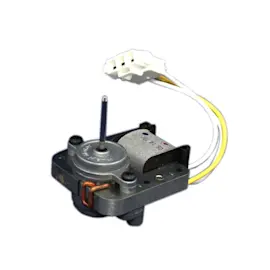
- Evaporator fan not moving air: evaporator motor WPW10359880
- Temperature sensing problem: refrigerator thermistor WPW10383615
- Heavy frost from a defrost failure: refrigerator defrost heater WPW10316428
- Compressor start issue (clicking, intermittent cooling): combination W10873801
Why it matters
A freezer that is not freezing can be caused by something simple (controls, door seal, airflow) or something that can damage food quickly (fan, defrost, or compressor-start problems). Doing the quick checks first helps avoid unnecessary parts replacement.
Last updated: January 2026