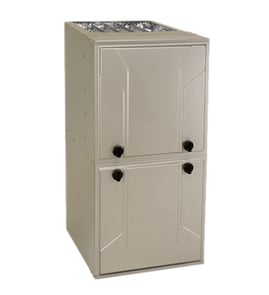

Who makes the dependable P-FMD16F10001A furnace?
York makes the P-FMD16F10001A furnace; “P-FMD16F10001A” is a York model number used to identify the exact furnace design so you can match the correct furnace parts and service information.
Use the furnace rating plate (data tag) to verify the maker and model details before ordering parts.
- Look for the York name/logo on the cabinet or inside the blower door
- Find the rating plate and confirm MODEL: P-FMD16F10001A
- Record the serial number (helps match production series)
- Note the fuel type (natural gas or LP conversion) and voltage
- Match the control board and ignition type (hot surface igniter vs spark)
Furnace parts like the control board, flame sensor, pressure switch, inducer motor, and igniter are model-specific. Confirming York and the full model number prevents ordering a part that fits a different York series.
| What to check | Where to find it | What it helps with |
|---|---|---|
| Brand (York) | Rating plate/cabinet label | Confirms manufacturer |
| Model number (P-FMD16F10001A) | Rating plate | Matches correct parts list |
| Serial number | Rating plate | Narrows revision/production run |
| BTU input and electrical | Rating plate | Confirms correct replacement specs |
If the rating plate is hard to read, use our guide: how to find your appliance model number (and what it means for parts).
Last updated: February 2026
What is a 92% furnace?
A 92% furnace is a high-efficiency gas furnace rated at about 92% AFUE (Annual Fuel Utilization Efficiency). In practical terms for a York P-FMD16F10001A furnace, roughly 92% of the fuel’s energy becomes usable heat for your home, and about 8% is lost (mostly through the venting process).
AFUE is the standard efficiency rating for furnaces. It describes how effectively the furnace converts fuel into heat over a typical heating season.
- 92% AFUE: about 92 units of heat delivered for every 100 units of fuel energy
- Lower AFUE: more heat lost up the flue or through the cabinet
- Higher AFUE: less wasted heat, typically with more advanced venting and heat exchanger design
A higher AFUE furnace generally costs less to run than a lower-efficiency furnace of the same size because it wastes less heat.
- Can reduce heating costs compared to older, lower-AFUE furnaces
- Often provides steadier heat because the system is designed to capture more heat from combustion
- Usually uses sealed combustion and induced draft components (common on high-efficiency units)
| AFUE rating | Efficiency level | Typical venting style |
|---|---|---|
| 80% | Standard efficiency | Metal flue (commonly) |
| 90% to 98% | High efficiency | PVC venting (commonly) |
Because “92%” is a rating, the exact AFUE depends on the specific furnace configuration and data plate.
- Look for the AFUE on the furnace rating label (often inside the burner compartment door)
- Confirm whether it is single-stage, two-stage, or modulating
- Note the input BTU and output BTU to understand heating capacity
- Match parts by the full model number P-FMD16F10001A when ordering
If you are troubleshooting power or control issues while evaluating furnace performance, use a meter safely and methodically: how to use a multimeter to test electrical parts video.
Last updated: February 2026
Is it worth fixing a 20 year old furnace?
For a 20-year-old York furnace like model P-FMD16F10001A, it’s usually worth fixing only when the repair is small and the unit has been reliable; otherwise, replacement is the better long-term value because efficiency, comfort, and breakdown risk typically worsen after two decades.
Use these rules to decide fast:
- Repair if it’s a low-cost, one-time issue (for example: flame sensor cleaning, igniter, capacitor, minor wiring repair).
- Replace if you’ve had repeated no-heat calls, frequent short cycling, or multiple parts failing in the last 1 to 2 seasons.
- Replace if the repair estimate is around 50% or more of the installed cost of a new furnace.
- Replace if the furnace is noisy, struggles to keep temperature, or your gas/electric bills have climbed noticeably.
- Stop and schedule service immediately if you suspect a combustion or venting problem (burning smell, soot, headaches, or unusual flame behavior).
| Symptom | Common cause | Typical outcome |
|---|---|---|
| Furnace runs but no heat | Ignition component, flame sensor, control issue | Often repairable if isolated |
| Starts then shuts off | Dirty flame sensor, pressure switch, venting/airflow issue | Repairable; venting checks matter |
| Blower runs, burners don’t | Thermostat signal, control board, safety switch | Repairable; diagnosis required |
| Frequent cycling, uneven heat | Airflow restriction, blower issues, duct problems | May be repairable; sometimes points to replacement |
A furnace is a safety-critical appliance. As systems age, you can spend money chasing intermittent failures, and downtime tends to happen during peak cold weather. A clear repair-or-replace threshold helps you avoid repeated service calls and surprise no-heat situations.
- Shut off power before inspecting wiring or panels.
- Check and replace the air filter; restricted airflow causes overheating and shutdowns.
- Confirm the thermostat has steady power and correct settings.
- If you’re comfortable testing, use a meter to verify power at key components.
For safe testing basics, follow our guide: how to use a multimeter to test electrical parts video.
Last updated: February 2026