Error Codes



How do I reset the door lock on my GE oven?
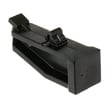
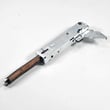
On the GE JB625RK9SS electric range, we reset a stuck door lock by canceling any self-clean cycle, letting the oven cool completely, and power-cycling the range to reboot the control. If the latch still will not move, the door lock mechanism is likely jammed or failing.
Step-by-step reset you can try first
- Press Cancel/Off to stop self-clean (if it is running).
- Wait until the oven is fully cool; the lock will not release while the control senses high temperature.
- Power cycle the range: turn the breaker OFF for 5 minutes, then turn it back ON.
- If the door is still locked, start Bake at 350°F for 2 minutes, then press Cancel/Off and wait; this can sometimes re-home the latch.
- If the control is showing an error, use our GE freestanding range error codes guide to identify what the control is detecting.
If the lock is still stuck (common causes)
A door that stays locked after cooling and a power reset usually points to a mechanical latch issue or a control signal issue.
- Food residue or debris binding the latch
- Bent latch parts or a weak latch spring
- Door lock switch not changing state
- Control not driving the lock motor/solenoid correctly
Parts that commonly fix a persistent lock problem
| Symptom | Most likely area | What we typically replace |
|---|---|---|
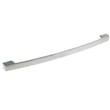
| Door stays locked after self-clean | Latch mechanism | Range oven door lock handle and latch assembly WB14X41386 |
| Door locks and unlocks intermittently | Control sensing/logic | Control board (match by model and wiring) |
Why it matters
A stuck door lock can prevent normal baking and can also keep the oven from starting certain functions because the control must confirm the latch position for safety.
Last updated: January 2026
Why is my oven beeping and saying F9?
On the GE JB625RK9SS electric range, an F9 code with beeping typically points to a problem with the oven door lock circuit or the electronic oven control detecting a lock-related fault (often during or after self-clean). Resetting power may stop the beeping temporarily, but the underlying lock/control issue usually needs attention.
What to do first (safe, quick checks)
- Press Clear/Off once to silence the alarm.
- If the oven is in self-clean, let it cool for 60 to 90 minutes; the door lock may not release until the temperature drops.
- Power reset: turn the range breaker off for 2 minutes, then back on.
- Check whether the door is fully closed and not binding on the gasket.
- If the door is locked and you must access the oven, avoid forcing the handle; forcing can damage the latch.
Common causes on GE electric ranges
- Door lock handle/latch assembly is sticking, misaligned, or failing.
- Wiring connection to the lock mechanism is loose or heat-damaged.
- Electronic control is misreading the lock switch position.
Parts that commonly relate to an F9 lock fault
| Symptom | Most likely area | Example part for JB625RK9SS |
|---|---|---|
| F9 during/after self-clean, door stays locked | Door lock mechanism | Range oven door lock handle and latch assembly WB14X41386 |
| F9 plus other odd control behavior | Control board or harness | Control and wiring inspection (model-specific) |
Why it matters
When the control thinks the door lock is in the wrong position, it may disable baking or self-clean for safety and keep beeping to prevent operation with an unsafe lock state.
Helpful DIY references
- Use our GE freestanding range error codes guide to match the code behavior to the most likely circuit.
- If the lock is involved, our oven door wont open troubleshooting door lock problems on a range video walks through the typical checks.
Last updated: January 2026
What is the average lifespan of JB625RK9SS?
A GE electric range like model JB625RK9SS typically lasts 13 to 15 years with normal home use. Lifespan depends most on how often you cook, how well the oven door seals, and whether surface elements and controls are kept in good working order.
Typical lifespan and what affects it
- Heavy daily cooking and frequent self-clean cycles shorten life
- Power surges and loose wiring connections can damage controls
- Spills that seep under the cooktop can shorten switch and element life
- A leaking oven door seal makes the oven work harder and can stress components
- Keeping the cooktop and oven clean helps prevent overheating and corrosion
Parts that commonly drive “end of life” decisions
If the range still heats but performance is inconsistent, replacing a few common wear parts often restores reliability.
| Symptom | Common culprit | Example part for JB625RK9SS |
|---|---|---|
| Burner not heating or heats unevenly | Radiant surface element | Range radiant surface element, 8-in WB30T10132 |
| Burner stuck on high or won’t regulate | Surface element control switch | Range surface element control switch, 1,250-watt WB24T10022 |
| Oven heat loss, longer preheat times | Oven door gasket | Range oven door gasket WB04T10086 |
Quick checks that help you get the full lifespan
- Use flat-bottom cookware sized to the burner
- Avoid slamming the oven door; it protects hinges and glass
- Wipe up sugary spills quickly to prevent cooktop damage
- If a burner cycles erratically, stop using it and inspect the switch and wiring
- Replace a worn gasket if you feel hot air leaking around the door
Why it matters
Knowing the 13 to 15 year average helps you decide whether to repair or replace. If your JB625RK9SS is within that window, targeted part replacement is often the most cost-effective way to extend service life.
Last updated: March 2026