Owner’s manual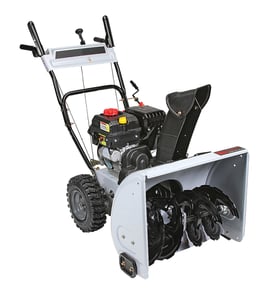


Is a 2 stage or 3 stage snowblower better?
A 2-stage snowblower is the better choice for most homeowners because it clears typical driveway snow efficiently with fewer moving parts. A 3-stage snowblower is better when you regularly face deep, heavy, wet snow or plow-packed end-of-driveway berms and want faster intake and throwing.
Quick comparison: 2-stage vs 3-stage
| Feature | 2-stage snowblower | 3-stage snowblower |
|---|---|---|
| Snow intake | Auger feeds snow to impeller | Accelerator pulls snow in faster, then auger and impeller |
| Best for | Most driveways, normal storms | Deep, heavy, wet snow; plow-packed snow |
| Speed | Fast | Typically faster in extreme conditions |
| Complexity | Lower | Higher |
| Cost | Lower | Higher |
How to choose for your driveway
Pick a 2-stage if most of these are true:
- You clear a standard driveway and sidewalks
- Snow is usually powdery to moderately wet
- You want simpler maintenance and fewer wear items
- You rarely deal with tall end-of-driveway piles
Pick a 3-stage if most of these are true:
- You often get heavy, wet snow or frequent ice chunks
- Plows leave dense berms you must cut through
- You want maximum clearing speed in tough conditions
- You are comfortable with higher purchase cost and more moving parts
Why it matters (performance and wear)
In heavy or icy snow, the biggest difference is how quickly the machine can pull snow into the housing without clogging. Regardless of stage count, correct setup helps prevent damage and improves throwing distance. For example, the MTD 31BM62KE704 manual calls out adjusting skid shoes for surface conditions and using the chute controls properly; that setup reduces scraping, clogging, and uneven wear.
Setup tips that help either type
- Adjust skid shoes higher for hard-packed snow; lower for gravel to avoid picking up rocks
- Keep equal tire pressure for consistent traction and control
- Never clear a clogged chute by hand; use the clean-out tool
- Stop the engine and remove the ignition key before making adjustments
For model-specific operating and adjustment details, use the 31BM62KE704 owner's manual.
Last updated: January 2026
What happens if you don't drain gas from a snowblower?
If you don’t drain (or properly stabilize) gas before storing your MTD snow thrower model 31BM62KE704, the fuel can go stale and contaminate the fuel system. That often leads to hard starting, rough running, and carburetor problems the next time you try to use it.
What stale gas can do
Old gasoline breaks down and can leave varnish-like deposits that restrict fuel flow. On a snowblower, that typically shows up as starting and performance issues.
Common symptoms include:
- Engine fails to start after storage
- Engine runs erratically or surges
- Loss of power under load
- Fuel system contamination (water or dirt in fuel)
- Need to drain the tank and refill with fresh gasoline
What to do before storage (best practice)
We recommend following the off-season storage steps in the 31BM62KE704 owner’s manual. In general, you have two safe options.
| Storage approach | What you do | Best for |
|---|---|---|
| Drain fuel | Empty tank and run engine briefly to clear fuel from the system | Long storage, unknown fuel age |
| Stabilize fuel | Add fuel stabilizer, run engine to circulate treated fuel | Shorter storage, quick restart next season |
If it already won’t start after sitting
The troubleshooting guidance for this model points to stale fuel as a common cause. Use this quick checklist:
- Confirm the spark plug wire is connected
- Move choke to the correct position for starting
- Check for stale fuel; drain the tank and refill with clean, fresh gasoline
- Prime the engine as instructed for your unit
- If it runs only on choke or surges, the carburetor may need service
Why it matters
Fuel issues are one of the most common reasons a snowblower “ran fine last season” but won’t start now. Preventing stale gas protects the carburetor, fuel lines, and overall reliability.
Last updated: January 2026
What kind of oil does a MTD 31BM62KE704 snowblower take?
The MTD 31BM62KE704 snowblower uses standard 4-cycle engine oil; for most winter conditions, SAE 5W-30 is the right choice. Use the oil viscosity and fill procedure shown in the 31BM62KE704 owner's manual, and always verify the level on a flat surface before starting.
Recommended oil type and when to use it
For this MTD snow thrower, we recommend:
- SAE 5W-30 for cold-weather starting and typical snow season operation
- A high-quality 4-cycle small-engine oil (not 2-cycle mix)
- Checking the dipstick level before every use and topping off as needed
Quick oil guidance
| Situation | What to use | Why |
|---|---|---|
| Most snow season temperatures | SAE 5W-30 | Flows better in cold, easier starts |
| After storage or first start of season | Fresh SAE 5W-30 | Reduces wear and helps prevent hard starting |
| Unsure what is in the crankcase | Drain and refill with SAE 5W-30 | Avoids mixing unknown oil types |
How to check and add oil (safe, no-mess basics)
We follow the same process outlined for this model family:
- Park the snowblower on a level surface and shut the engine off
- Remove the oil fill cap/dipstick, wipe it clean
- Reinsert the dipstick without threading it in, then remove to read
- Add oil slowly until the level is between the H and L marks
- Do not overfill; overfilling can cause smoking, hard starting, or spark plug fouling
Why it matters
Correct oil viscosity and proper fill level protect the engine from accelerated wear during cold starts, and they help the snowblower maintain steady power under load when the auger and drive system are working hard.
Last updated: January 2026