 Owner’s manual
 Error Codes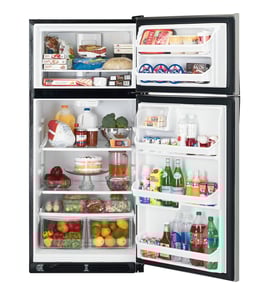




Are top mount or bottom mount fridges better?
Top-mount and bottom-mount refrigerators can both be “better”; it depends on how you use your Frigidaire FFTR1814WW1 and what matters most day to day. Top-mount models typically cost less and are often more energy-efficient, while bottom-mount models put fresh food at eye level so you bend less.
Quick comparison
| Feature | Top-mount (freezer on top) | Bottom-mount (freezer on bottom) |
|---|---|---|
| Fresh food access | Lower, more bending | Higher, less bending |
| Freezer access | Easy, at chest level | Lower, more bending |
| Typical price | Lower | Higher |
| Typical efficiency | Often higher | Often slightly lower |
| Best for | Budget, efficiency | Convenience for fridge section |
How to choose for your kitchen and habits
We recommend deciding based on these practical factors:
- How often you use the refrigerator vs. freezer: if you reach into the fridge many times a day, bottom-mount can feel easier.
- Back and knee comfort: bottom-mount reduces bending for fresh food; top-mount reduces bending for frozen food.
- Energy use goals: top-mount designs are commonly more efficient because the freezer sits above the fresh-food section.
- Space and door swing: placement near walls matters; hinge-side clearance can affect how wide the door opens.
- Installation basics: proper leveling and airflow help either style cool efficiently and keep doors sealing correctly.
What matters for performance (either style)
Even the “better” layout will disappoint if the refrigerator is not installed correctly. In our experience, these setup items make the biggest difference:
- Keep the toe grille/lower front unblocked for airflow.
- Level the cabinet and keep a slight tilt front-to-back so doors close and seal.
- Avoid hot locations and extreme room temperatures.
- Confirm door gaskets seal on all sides.
For the model-specific setup checklist and positioning clearances, use the FFTR1814WW1 owner’s manual.
Why it matters
Choosing the right mount style affects comfort, organization, and operating cost. Correct leveling and airflow also reduce temperature swings, frost issues, and door-seal problems over time.
Last updated: February 2026
How to read a Frigidaire refrigerator model number?
To read a Frigidaire refrigerator model number, we recommend locating the model and serial label first; on the FFTR1814WW1 it’s typically inside the fresh food (refrigerator) compartment on a side wall. Use the full model number exactly as shown when ordering parts or checking features in the FFTR1814WW1 owner's manual.
Where to find the model number label
Most Frigidaire top-mount refrigerators place the rating plate where it’s easy to see with the refrigerator door open.
- Open the refrigerator compartment door (not the freezer door)
- Look on the left interior wall first, then the right interior wall
- Check near the crisper drawers and the control housing area
- Write down both the model number and serial number
- Take a clear photo of the label for future reference
How to “read” the number once you find it
For parts and troubleshooting, the most important thing is using the entire model number (including any letters and numbers) exactly as printed.
| What to capture | Example for this refrigerator | Why it matters |
|---|---|---|
| Model number | FFTR1814WW1 | Ensures correct parts diagrams and fit |
| Serial number | (varies) | Helps identify production run details |
| Purchase date | (your date) | Useful for service history and records |
Why it matters
A single character difference can change the door gasket, control parts, or shelving used in a refrigerator. Using the exact model number helps us match the correct replacement parts and avoid returns.
Related help
If you’re diagnosing a display or control issue after identifying your model, use Frigidaire refrigerator error codes to narrow down the next steps.
Last updated: February 2026
Is the Frigidaire FFTR1814WW1 garage ready?
Yes. The Frigidaire FFTR1814WW1 is garage ready and is designed to operate in ambient temperatures from 45°F to 110°F, so it can be placed in a garage as long as the space stays within that range. For setup and operating guidance, follow the FFTR1814WW1 owner's manual.
What “garage ready” means for this refrigerator
A garage-ready top-mount refrigerator is built to keep cooling properly across a wider range of room temperatures than many standard models.
- Keep the garage temperature between 45°F and 110°F
- Allow airflow around the cabinet (do not block vents or the machine compartment area)
- Set controls to the recommended starting settings, then fine-tune after 24 hours
- Keep doors closed as much as possible to stabilize temperatures
- Confirm the unit is level so doors seal correctly
Quick temperature guidance
Use this as a practical target after the refrigerator has run for a full day.
| Location | Recommended target | What to do if off-target |
|---|---|---|
| Fresh food section | 37°F to 40°F | Adjust the refrigerator control slightly colder/warmer |
| Freezer section | 0°F to 5°F | Adjust the freezer control slightly colder/warmer |
Common garage setup checks (to prevent cooling complaints)
If cooling seems inconsistent in a garage, these checks solve most issues.
- Verify the outlet has steady power and the cord is fully plugged in
- Make sure the doors close fully and the gaskets seal all the way around
- Do not overload shelves; leave space for air circulation
- Keep the condenser area clean and unobstructed
- If you see frost buildup or warm temps, a defrost issue can be involved; the refrigerator defrost timer 5304526183 is one component used in the defrost system on this model
Why it matters
Garages can swing hot and cold; staying within the 45°F to 110°F operating range helps the FFTR1814WW1 maintain safe food temperatures, reduce frost problems, and avoid excessive run time.
Last updated: February 2026
What are the disadvantages of a top mount fridge?
A top-mount refrigerator like the Frigidaire FFTR1814WW1 is usually affordable and reliable, but its main disadvantages are less convenient fresh-food access (you bend more), fewer premium storage features, and fewer dispenser options compared with many bottom-freezer designs. For model-specific features and setup details, use the FFTR1814WW1 owner's manual.
Common disadvantages (what you will notice day to day)
- Fresh food sits lower: you reach down more often for produce, drinks, and leftovers.
- Freezer is at eye level: great for frozen items, but it pushes the refrigerator section down.
- Organization can be simpler: many top-mounts have fewer adjustable bins, drawers, and dividers.
- Fewer built-in dispenser options: many top-mount models do not include an external water or ice dispenser.
- Door seal and leveling sensitivity: if the cabinet is not level or doors do not seal, you can get temperature swings or moisture issues.
Quick comparison: top-mount vs bottom-freezer
| Feature | Top-mount (FFTR1814WW1 style) | Bottom-freezer (typical) |
|---|---|---|
| Fresh-food access | Lower, more bending | Higher, easier access |
| Freezer access | Higher, easier access | Lower, more bending |
| Storage features | Often simpler | Often more flexible |
| Dispensers | Less common | More common |
| Cost and complexity | Often lower | Often higher |
How to reduce the downsides
- Set the cabinet correctly: keep the refrigerator level side-to-side and slightly tilted back so doors close fully (the manual calls out about a 1/4 inch tilt).
- Do not block airflow: keep the lower front toe grille clear for proper circulation.
- Use the right clearances: allow typical installation space around the cabinet (sides/top and back) to help cooling performance.
- Fix warm spots early: if temperatures drift, a control issue can be involved; the refrigerator temperature control thermostat 5304522330 is one common control component on this model.
Why it matters
Top-mount disadvantages are mostly about ergonomics and features, but installation and door sealing affect performance. A poor seal or blocked airflow can increase run time, cause frost, and reduce food life.
Last updated: February 2026
What is the average lifespan of a Frigidaire refrigerator?
A Frigidaire refrigerator like model FFTR1814WW1 typically lasts 13 years on average. With steady care (good airflow, correct temperature settings, clean seals), many units reach 15 years, while heavy use, poor ventilation, or cooling issues can shorten service life.
Typical lifespan ranges (what to expect)
- Average: about 13 years
- Common range: 10 to 15 years
- Often achievable with good maintenance: 15+ years
| Lifespan range | What it usually means | What to do next |
|---|---|---|
| 0 to 5 years | Early failure is uncommon | Check airflow, power, and temperature settings first |
| 6 to 10 years | Wear items start showing up | Watch for fan noise, warm temps, frost buildup |
| 11 to 15 years | Typical end-of-life window | Compare repair cost vs. age and condition |
| 16+ years | Above-average longevity | Keep coils clean and door seals tight |
What most affects refrigerator life
- Condenser airflow and cleanliness (dust and pet hair make the compressor work harder)
- Door gasket condition (air leaks cause longer run times and frost)
- Stable temperatures (avoid frequent wide swings)
- Defrost performance (excess frost can reduce cooling and strain the system)
- Fan operation (good circulation prevents warm spots)
If you are seeing temperature swings or the unit runs constantly, use the temperature adjustment guidance in the FFTR1814WW1 owner's manual.
Quick maintenance checklist (high impact)
- Keep food from blocking interior air vents
- Set temperatures gradually and allow 24 hours to stabilize after changes
- Clean the door gaskets and confirm the doors close squarely
- Vacuum dust from the lower rear area to improve airflow
- Address unusual noises early (fan rubbing, clicking, or buzzing)
Why it matters
A refrigerator that runs longer than necessary uses more electricity and wears out key components sooner. Simple upkeep helps the sealed system, evaporator fan, and temperature control parts operate under less stress.
Last updated: February 2026
What is the most common problem with Frigidaire refrigerators?
The most common Frigidaire refrigerator problem is a cooling complaint, especially when the freezer seems OK but the fresh food section runs warm. On the Frigidaire FFTR1814WW1, the most frequent root causes are restricted airflow, dirty condenser coils, evaporator fan issues, or defrost-related frost buildup.
Most common symptoms we see
- Refrigerator section warm, freezer cold
- Frost or ice buildup on the freezer back wall
- Weak airflow from the refrigerator vents
- Temperatures swing after you change the control
- Unusual fan noise (rattling, squealing, or intermittent)
Quick checks that solve many “not cooling” calls
Start with the basics before replacing parts; many issues are airflow or settings related.
- Set temperatures gradually; make small changes and allow about 24 hours to stabilize (per the FFTR1814WW1 owner's manual).
- Make sure food packages are not blocking cold air vents; blocked vents reduce circulation.
- Clean condenser coils and confirm the condenser area has good airflow.
- Listen for the evaporator fan; if it is not running or is noisy, cooling to the refrigerator section often suffers.
- If you see heavy frost, suspect a defrost system problem (ice can choke airflow across the evaporator).
Parts commonly involved (when a repair is needed)
These are frequent “cooling system” suspects for this model when symptoms match.
| Symptom | Common cause | Example part for FFTR1814WW1 |
|---|---|---|
| Freezer cold, fridge warm | Evaporator fan not moving air | Refrigerator evaporator fan motor 242219206 |
| Frost buildup, airflow weak | Defrost system not cycling | Refrigerator defrost timer 5304526183 |
| Temps too warm or too cold | Control not regulating properly | Refrigerator temperature control thermostat 5304522330 |
Why it matters
A top-mount refrigerator like the FFTR1814WW1 relies on steady airflow and stable controls to keep both compartments at safe temperatures. When airflow is blocked or the fan or defrost system fails, the refrigerator section is usually the first place you notice warming.
Related DIY help
Last updated: February 2026





