Owner’s manual





What is the typical lifespan of a gas snowblower?
A gas snowblower like the Husqvarna ST224-96193009603 typically lasts 10 to 15 years with normal residential use and consistent maintenance. Units that get regular oil service, belt inspections, and proper off-season storage often reach 15 to 20 years.
What most affects lifespan
- Fuel care and storage: stale fuel and poor storage shorten engine life.
- Oil change schedule: the manual calls for oil changes about every 25 hours or at least once per year.
- Belt condition: belts should be checked about every 50 hours and replaced when worn or slipping.
- Cleaning habits: keeping the housing clean helps prevent corrosion and packed snow issues.
- Operating load: clearing snow too fast and overloading the machine increases wear.
Maintenance checklist we recommend
Use this as a simple annual plan (details and intervals are in the owner's manual).
- Change engine oil every 25 hours or yearly
- Replace the spark plug at the start of each season or every 100 hours
- Inspect belts every 50 hours; replace if slipping
- Check shear bolts and other fasteners for tightness
- Clean the unit after each use; avoid spraying water into engine components
- Store in a clean, dry area; prep for storage if it will sit 30+ days
Quick interval guide
| Item | Typical interval | Why it matters |
|---|---|---|
| Engine oil | 25 hours or yearly | Prevents accelerated engine wear |
| Belts | Inspect every 50 hours | Avoids loss of drive/auger performance |
| Spark plug | Each season or 100 hours | Helps reliable starting and smooth running |
| Storage prep | End of season or 30+ days | Reduces fuel and corrosion problems |
Why it matters
Most “snowblower lifespan” problems are really maintenance and storage problems. Following the manual’s maintenance and storage guidance helps the engine, auger drive system, and controls stay reliable for many winters.
Last updated: January 2026
How to find snowblower model number?
On the Husqvarna ST224-96193009603 gas snowthrower, the model and serial numbers are printed on a decal attached to the rear of the snow thrower housing (typically at the back of the unit, between the wheels). Record both numbers and your purchase date for future parts matching and service.
Where to look on the machine
Check these common label locations first:
- Rear of the snow thrower housing (most common on this model)
- Back panel area between the wheels
- Frame near the engine mounting area
- Handle support area (near the lower handle)
What to write down (and why)
We recommend recording the information exactly as shown on the decal:
- Model number (used to match diagrams and parts lists)
- Serial number (used to identify production run details)
- Date of purchase (helpful for maintenance history and service)
Quick reference table
| Item on decal | What it’s used for | Example format |
|---|---|---|
| Model number | Correct parts lookup | ST224-96193009603 |
| Serial number | Unit identification | Letters and numbers |
| Purchase date | Records and maintenance | Month/day/year |
Tips if the decal is hard to read
If the label is dirty, faded, or covered:
- Wipe it with a damp cloth and mild soap; dry fully
- Use a flashlight at an angle to make faint printing easier to see
- Take a close-up photo and zoom in
- Copy the characters carefully (watch for 0 vs O, 1 vs I)
Why it matters
Using the exact model number helps ensure you get the right Husqvarna snowblower parts (for example, the correct belts, chute components, or hardware) and avoids ordering look-alike parts that do not fit.
For additional identification details and record-keeping guidance, use the ST224-96193009603 owner’s manual.
Last updated: January 2026
What engine is on a Husqvarna ST224-96193009603?
The Husqvarna ST224-96193009603 gas snowthrower is commonly equipped with an LCT (Liquid Combustion Technologies) engine, typically in the 208cc class. For the exact engine identification (model and spec code) used on your unit, match the engine label to the listings in the ST224-96193009603 owner's manual.
How to confirm the exact engine on your machine
Use the engine’s ID label, not just the snowblower model number. On most LCT snowblower engines, the label is on the blower housing, valve cover area, or near the recoil starter.
- Look for the engine manufacturer name (often LCT) and the engine model/spec code
- Record the full code exactly as printed (letters and numbers)
- Compare that code to the engine information section in the manual
- If you are ordering engine-related service parts, use the engine model/spec code first
- Keep the code with your maintenance records for oil, spark plug, and belt service
Why the engine brand matters (warranty and service)
Husqvarna snowthrowers can use engines from different manufacturers. The documentation for this model notes that engines may be covered by the engine maker’s warranty, and Husqvarna typically handles warranty issues specifically for LCT engines.
Fuel and oil notes that help protect the engine
The manual guidance for Husqvarna equipment is clear on fuel type and common causes of engine damage.
- Use fresh gasoline; avoid stale fuel from last season
- Do not use E15 or E85 fuel
- Use oil that meets the engine manufacturer’s specifications
- Avoid starting fluids (ether)
- Store fuel properly and use a stabilizer for off-season storage
Quick reference: what you will see on the engine label
| What you need | Where to find it | What it’s used for |
|---|---|---|
| Engine manufacturer (example: LCT) | Engine ID label | Confirms engine family |
| Engine model/spec code | Engine ID label | Correct engine service parts |
| Displacement (often around 208cc) | Engine ID label or manual | General performance class |
Why it matters
The ST224-96193009603 model number identifies the snowblower chassis and assemblies (auger, drive, chute), but the engine label is what ensures you get the correct tune-up and engine service information.
Last updated: January 2026
What kind of snow is the Husqvarna ST224-96193009603 best for?
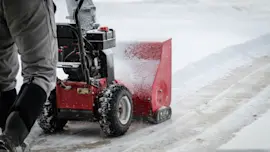
The Husqvarna ST224-96193009603 performs best across typical winter conditions by matching your ground clearance and drive speed to the snow type. For deep, freezing, or heavy wet snow, we recommend slower travel speeds and overlapping passes; for light, dry snow, you can use faster speeds.
Best snow conditions and how to run it
Use these operating choices to get the best throwing distance and reduce clogging:
- Heavy wet snow: go slow, take narrower bites (overlap more), and keep the engine area clear of snow
- Deep or freezing snow: use a slower drive speed and avoid rushing the auger into packed drifts
- Light, dry snow: faster speeds work well once you are comfortable with the controls
- Mixed conditions: adjust skid plates for the surface and throw snow downwind when possible
- Icy buildup in the chute: stop and clear the chute using the clean-out tool (never use hands)
Quick settings guide
| Snow type | Recommended drive speed | Clearing approach | Key adjustment |
|---|---|---|---|
| Light, dry | Medium to fast | Normal width passes | Aim chute downwind |
| Heavy, wet | Slow | Overlap passes, reduce intake | Keep chute clear |
| Deep, packed | Slow | Multiple shallow passes | Adjust skid plates for surface |
Skid plates and surface type
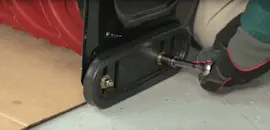
Skid plates (skid shoes) help set the scraper bar height so you can work on different surfaces. For rough or gravel surfaces, a slightly higher setting helps avoid picking up stones; for smooth paved surfaces, a lower setting improves clean scraping. The exact adjustment procedure and hardware locations are shown in the ST224-96193009603 owner's manual.
Why it matters
Snow type changes how much load the auger and impeller see. Using a slower speed in heavy snow helps prevent chute clogging, reduces belt strain, and improves control, especially when traction and visibility are limited.
Last updated: January 2026