Installation guide
 Owner’s manual
 Error Codes




What is the most common problem with GE washers?
The most common GE washer problem is a no-spin or no-agitate condition. On the GE GCWN2800D1WW, this is often tied to a lid safety issue, a drive system problem, or an out-of-balance situation that prevents a normal spin. Use the GCWN2800D1WW owner's manual to match symptoms to the correct checks.
Most common symptoms we see
- Washer fills but will not spin at the end of the cycle
- Washer will not agitate (clothes stay in a wet pile)
- Lid closes but the cycle pauses or stops unexpectedly
- Loud banging during spin (out-of-balance or suspension issue)
- Water left in the tub (drain or control issue)
Quick checks before replacing parts
- Confirm the lid is fully closed and nothing is preventing it from latching.
- Redistribute the load (single heavy items can stop or slow spin).
- Verify installation basics that affect spin performance:
- Firm, level flooring (concrete is best)
- Drain standpipe height at least 30 inches
- No extension cord; use a properly grounded outlet (These requirements are outlined in the GCWN2800D1WW installation guide.)
- If the washer will not run/spin with the lid shut, test the lid switch circuit.
Parts that commonly relate to no-spin/no-agitate on this model
If your symptoms match, these model-listed parts are common suspects:
| Symptom | Likely area | Example model part |
|---|---|---|
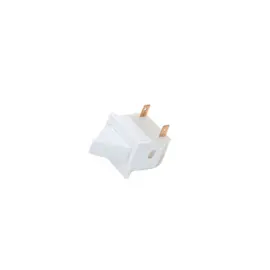
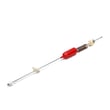
| Won’t spin with lid closed | Lid safety circuit | Washer lid switch assembly WH12X10334 |
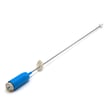
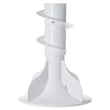
| Agitates weakly or not at all | Agitator/drive connection | Washer agitator WH43X10034 |
| Grinding, roaring, or heavy drag in spin | Bearing/seal area | Tub bearing WH2X1198 |
Why it matters
A washer that cannot spin leaves clothes soaking wet and can trigger repeated out-of-balance events. Fixing the root cause early also helps prevent secondary damage to the drive shaft, tub seal, and outer tub.
Last updated: January 2026
What is the life expectancy of a GE washing machine?
Most GE washers, including the GE GCWN2800D1WW, typically last 10 to 14 years with normal household use and basic maintenance. Consistent overloading, poor leveling, and skipped cleaning can shorten lifespan; correct installation and care help the washer reach the upper end of that range.
What affects washer lifespan the most
- Load size and balance: frequent overloading strains the drive system and suspension.
- Leveling and vibration control: an unlevel washer vibrates harder during spin and wears parts faster.
- Water quality and temperature: very hot water and hard water can accelerate wear on seals and hoses.
- Drain setup: improper standpipe height can cause draining issues and extra pump strain.
- Routine cleaning: detergent buildup and residue can lead to odors and performance problems.
Installation specs that help the washer last longer
Your installation setup matters because vibration and poor draining are common causes of early wear. For GCWN2800D1WW, follow the clearances, leveling, and plumbing requirements in the GCWN2800D1WW installation guide.
| Item | Typical requirement for this model type | Why it matters |
|---|---|---|
| Water pressure | 10 to 150 psi | Low pressure can cause long fills; high pressure can stress valves |
| Drain height | 30 inches minimum, up to 8 feet max | Prevents siphoning and drain problems |
| Closet/alcove clearance | 0 inches sides, 2 inches front, 3 inches rear (minimums) | Reduces heat and moisture issues; improves service access |
Quick maintenance checklist (do this to reach 10 to 14 years)
- Keep the washer level and re-check if it starts walking.
- Use the right amount of HE detergent (too much causes buildup).
- Leave the lid open between loads to help the tub dry.
- Inspect fill hoses periodically and replace if bulging or cracking.
- Follow cycle and care guidance in the GCWN2800D1WW owner’s manual.
Why it matters
A washer that is level, properly drained, and kept clean runs smoother and puts less stress on high-wear components like the tub seal, drive system, and lid switch.
Last updated: January 2026
What does GCWN2800D1WW stand for?
GCWN2800D1WW is the GE model number that identifies a specific washer configuration (series, features, and finish). For this appliance, it tells us you have a GE washer model GCWN2800D1WW, which is the key identifier we use to match the correct parts, diagrams, and procedures in the GCWN2800D1WW owner's manual.
How to read the model number (practical meaning)
Manufacturers use model numbers as an internal “recipe” for the appliance. While GE does not publish a public letter-by-letter decoding for every model, the model number still helps you in very specific ways:
- Confirms the exact washer version when ordering parts (timer, lid switch, tub seal, etc.)
- Distinguishes color/finish variants (the ending letters often indicate a finish such as white)
- Helps match the correct installation requirements (electrical, drain height, hoses)
- Ensures troubleshooting steps apply to your exact platform
Where to find the model number on the washer
For GE washers like GCWN2800D1WW, the model/serial tag is typically on the cabinet area near the top opening or on the back of the control area.
- Check under the lid around the rim of the opening
- Check the back of the control panel area
- Copy the model number exactly, including all letters and numbers
Why it matters for parts and repairs
Using the full model number prevents ordering a look-alike part that will not fit or will not connect correctly.
| What you’re doing | Why the full model number matters |
|---|---|
| Replacing a safety part | Correct electrical and mounting match (example: washer lid switch assembly WH12X10334) |
| Fixing leaks | Correct seal/bearing/tub design match |
| Diagnosing a problem | Correct error code list and troubleshooting steps |
Quick tip for troubleshooting
If your washer is showing an error or acting up, start with the error code list for GE top-load platforms: GE top load washer error codes.
Last updated: January 2026