
How to get rid of an old table saw?
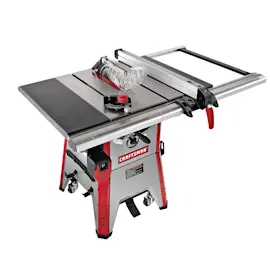
For a Craftsman table saw model 137271140, the best way to get rid of it is to reuse it first (sell, donate, or give away), and if it is not worth keeping, recycle it as scrap metal or e-waste through a local drop-off or pickup service. Always make it safe by removing the blade and securing the cord before transport.
Best disposal options (in order)
- Sell it if it runs and the fence, miter gauge, and guard are present.
- Donate it to a local charity, school shop program, or community workshop if it is safe and complete.
- Give it away for parts if the motor, arbor, or height/tilt adjustment is failing.
- Recycle it at a scrap metal yard or a municipal recycling/transfer station.
- Schedule a bulk pickup (junk removal) if you cannot transport it.
Make the saw safe before you move it
- Unplug the saw and remove the blade.
- Lower the blade fully and lock the bevel (if equipped).
- Remove loose accessories (rip fence, miter gauge, throat plate) and bag hardware.
- Tape or tie the power cord to the frame so it cannot snag.
- If it has a stand, fold and pin it; if not, strap the saw to a dolly.
Blade disposal: what to do with it
Saw blades are sharp and should not go loose into trash.
| Item | Best option | Notes |
|---|---|---|
| Steel blade | Scrap metal recycling | Wrap edges in cardboard first |
| Carbide-tipped blade | Scrap yard or tool recycler | Some yards accept mixed metal |
| Rusted or damaged blade | Scrap or disposal per local rules | Keep teeth covered for safety |
Why it matters
Table saws are heavy, contain reusable steel and copper, and can injure someone if handled as curbside trash. Reuse and recycling keep the tool out of landfills and reduce the risk of blade-related cuts during handling.
Related DIY help (if you are deciding whether to keep it)
If the saw still runs but cuts poorly or will not adjust correctly, these guides help you judge whether a tune-up is worth it:
Last updated: February 2026
What size blade is a Craftsman 137271140 table saw?
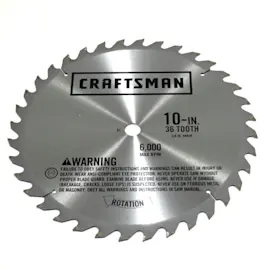
The Craftsman table saw model 137271140 typically uses a 10-inch table saw blade (the most common size for this class of saw). To be sure, confirm by measuring the blade diameter or checking the blade/arbor markings before you buy a replacement.
How to confirm the blade size on your saw
- Measure the blade diameter: unplug the saw, raise the blade fully, and measure straight across the blade (tip to tip).
- Check the blade label: most blades list diameter (for example, 10 in.), arbor size, and max RPM.
- Verify arbor size: many 10-inch blades use a 5/8-inch arbor, but confirm yours before ordering.
- Look for clearance: confirm the blade fits the throat plate opening and doesn’t contact the guard or riving knife.
- Match the blade type to the cut: ripping, crosscut, combination, plywood, or dado (only if your saw supports it).
Quick blade spec checklist (what to match)
| Spec to match | What to look for | Why it matters |
|---|---|---|
| Blade diameter | Usually 10-inch | Determines fit and cutting capacity |
| Arbor hole | Commonly 5/8-inch | Must match the arbor shaft |
| Kerf | Thin vs. full kerf | Affects power demand and cut width |
| Max RPM rating | At or above saw speed | Helps prevent unsafe blade failure |
Why it matters
Using the correct blade diameter and arbor size helps your Craftsman 137271140 run smoothly, cut accurately, and keep safety components (guard, splitter/riving knife, throat plate) aligned the way they were designed.
Related DIY help
If you’re swapping blades or troubleshooting cut quality, we recommend:
Last updated: February 2026
Are all table saw arbor nuts the same size?
No. Table saw arbor nuts are not all the same size because arbor shaft diameters and thread directions vary by saw design. On a Craftsman 137271140 table saw, you need an arbor nut that matches the saw’s arbor threads and flange setup, not a “universal” nut.
What’s usually standardized (and what isn’t)
Most 10-inch table saw blades share a common arbor hole size, but that does not mean the arbor nut is universal.
- Blade arbor hole: Commonly 5/8 inch on many 10-inch saw blades
- Arbor shaft threads: Can vary by brand and model (diameter, pitch, and length)
- Thread direction: Some saws use left-hand threads to resist loosening
- Nut shape and flange style: Hex size and washer/flange design can differ
- Stacked accessories: Dado stacks and stabilizers can require different nut engagement
Typical arbor sizes by saw class
These are common industry patterns that help you sanity-check what you have before ordering parts.
| Saw / blade class | Common blade arbor hole | What to expect for the arbor nut |
|---|---|---|
| 10-inch table saw | 5/8 in | Nut and threads vary by model; not universal |
| 12-inch table saw | 1 in (common) | Larger arbor system; nut differs |
| Benchtop/jobsite saws | 5/8 in (common) | Often compact nuts; thread direction may vary |
How we recommend confirming the correct arbor nut
Use these checks to avoid cross-threading or buying the wrong hardware.
- Unplug the saw and remove the blade guard and throat plate
- Remove the blade and inspect the arbor threads (measure diameter if possible)
- Note whether the nut loosens clockwise or counterclockwise (thread direction)
- Check that the nut fully engages the threads with the blade and outer flange installed
- If you run a dado stack, confirm you still have safe thread engagement (several full turns)
Why it matters
The arbor nut is a safety-critical fastener. A mismatched nut can loosen during cutting, damage arbor threads, or prevent the blade from clamping flat, which leads to vibration, burning, and inaccurate cuts.
For related setup and cut-quality help, use our DIY guidance on table saw bad angle cuts.
Last updated: February 2026
Can you use an 8 inch blade on a 10 inch table saw?
Yes, you can use an 8-inch blade on a 10-inch table saw like the Craftsman 137271140 as long as the blade fits the arbor and the saw can clamp it securely; you will get less maximum cut depth. For dado work, 8-inch dado sets are commonly used on 10-inch saws.
What must match (so the blade is safe to run)
- Arbor size: The blade’s center hole must match your saw’s arbor diameter.
- Kerf and plate thickness: The blade must be thin enough that the arbor nut fully tightens.
- RPM rating: The blade’s max RPM rating must meet or exceed the saw’s no-load RPM.
- Guard and riving knife clearance: The smaller blade changes where the guard and riving knife sit.
- Flange contact: The blade must sit flat against the arbor flanges with no wobble.
What changes when you drop from 10-inch to 8-inch
Using an 8-inch blade reduces cutting capacity and can affect cut quality if the fence and blade alignment are already slightly off.
| Item | 10-inch blade | 8-inch blade |
|---|---|---|
| Max cut depth | Higher | Lower |
| Guard/riving knife alignment | Normal | May need adjustment or removal for some operations |
| Typical use | Through-cuts, general ripping/crosscutting | Specialty cuts, some dado setups |
Dado note (common reason people use 8-inch blades)
Many 8-inch dado sets are designed for 10-inch table saws because dadoes are non-through cuts. Before installing a dado stack, confirm your saw is designed to accept dado blades and use the correct throat plate.
- Use a dado-rated throat plate (wide opening)
- Keep the workpiece flat to the table to prevent kickback
- Make test cuts in scrap and sneak up on width
Why it matters
Blade diameter affects cut depth, and fitment details (arbor size, flange contact, RPM rating) affect safety and vibration. A blade that “sort of fits” can wobble, burn wood, or increase kickback risk.
For more setup and technique help, use our DIY resources like how to replace a table saw blade and how to use a table saw safely.
Last updated: February 2026
Are table saw miter gauges universal?
No, table saw miter gauges are not universal. For your Craftsman 137271140 table saw, the key is matching the miter bar to your saw’s miter slot size and shape (and confirming the gauge can be calibrated square to the blade) so it slides smoothly without play.
What “universal” really means for miter gauges
Most aftermarket miter gauges are designed to fit common miter slots, but table saws can vary in slot width, depth, and profile. Before you buy, verify these fit points:
- Miter slot width and depth (measure with calipers for best accuracy)
- Slot profile (straight slot vs. T-slot style)
- Bar adjustability (expansion discs, set screws, or nylon runners to remove side-to-side wiggle)
- Fence length and head stops (0°, 45°, and common detents should lock consistently)
- Clearance at full blade height (gauge head and fence should not contact the blade guard area)
Quick compatibility checklist for Craftsman 137271140
Use this checklist to avoid a gauge that binds, rattles, or won’t hold angle.
| What to check | What you want | Why it matters |
|---|---|---|
| Bar fit in slot | Slides freely with minimal side play | Prevents wandering cuts and burning |
| Adjusters | Built-in expansion or set screws | Lets you tune out slop over time |
| Head accuracy | Positive stops that can be calibrated | Keeps 90° and 45° repeatable |
| Fence support | Rigid fence with a flat face | Improves crosscut quality |
Why it matters
A miter gauge that does not match the slot or cannot be adjusted tight will cause inaccurate crosscuts, bad miters, and inconsistent angles, even with a sharp blade and a properly aligned rip fence.
If your cuts are still off after swapping gauges
These are the most common non-gauge causes of angle problems:
- Blade not square to the table at 0° bevel
- Blade not parallel to the miter slot
- Warped blade, dirty flange, or debris on the arbor
- Fence or miter slot wear causing drift
For step-by-step troubleshooting, use table saw bad angle cuts.
Last updated: February 2026