Error Codes


Is WRS325SDHZ energy star certified?
Yes. The Whirlpool WRS325SDHZ12 side-by-side refrigerator is ENERGY STAR certified, which means it meets U.S. EPA energy-efficiency requirements and is designed to use less electricity than non-certified models while delivering the same cooling performance.
Even within a model family, certification can vary by revision; the most reliable check is the model and serial tag inside the fresh food compartment.
- Verify the model number reads WRS325SDHZ12 (not a close variant).
- Look for an ENERGY STAR mark on the product label or documentation that came with the refrigerator.
- If you are comparing listings, match the full model number including the suffix.
ENERGY STAR certification typically translates to lower operating costs over time and can be helpful if you are comparing similar Whirlpool side-by-side refrigerators for efficiency.
A restricted water filter or air flow issues will not change certification status, but they can affect day-to-day performance.
| What you maintain | What it helps with | Example for WRS325SDHZ12 |
|---|---|---|
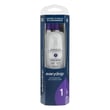
| Water filtration | Water flow and taste | Refrigerator cartridge EDR1RXD1 |
| Door sealing | Prevents warm air leaks | Check door gaskets for gaps |
| Air circulation | Even temperatures | Keep vents unblocked |
For filter-related upkeep on Whirlpool refrigerators, see how to replace the water filter in a Whirlpool refrigerator.
Last updated: January 2026
What's better, a side-by-side or a French door refrigerator?
For the Whirlpool WRS325SDHZ12 (a side-by-side), “better” depends on your kitchen space and how you use the refrigerator: side-by-sides fit tighter aisles and keep frozen foods at eye level, while French door models usually give you wider fresh-food shelves and a larger bottom freezer.
- Side-by-side (like WRS325SDHZ12)
- Narrow door swing, good for tight kitchens
- Freezer items are easier to reach without bending
- Typically narrower shelves; wide platters can be harder to fit
- In-door ice can reduce usable freezer bin space
- French door
- Wide refrigerator shelves for trays, pizza boxes, and party platters
- Fresh-food section is at eye level (most-used area)
- Bottom freezer can hold bulky items, but you bend more
- Usually needs more clearance to open both doors fully
| If you care most about... | Usually better choice | Why |
|---|---|---|
| Tight aisle clearance | Side-by-side | Narrower door swing per door |
| Wide fresh-food storage | French door | Wider shelves and compartments |
| Easy freezer access | Side-by-side | Freezer is vertical and at mid-height |
| Organizing frozen foods | Tie | Side-by-side has more shelves; French door has deeper bins |
A side-by-side like the Whirlpool WRS325SDHZ12 is often chosen for door-clearance and freezer convenience. If your day-to-day frustration is shelf width or fitting large trays, that is the main reason shoppers prefer French door designs.
Even if you stick with a side-by-side, performance and convenience come down to key systems:
- Replace the water filter on schedule to protect water flow and taste; see how to change the water filter in a Whirlpool refrigerator
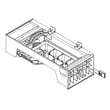
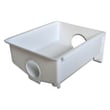
- If ice production is the priority, the ice maker and bin condition matter; check ice maker as W11700250 and refrigerator ice container WPW10670845
- Keep door seals clean and sealing evenly to reduce temperature swings
- Avoid overpacking the freezer side so air can circulate
- Use stable temperature settings and give the unit time to recover after loading groceries
Last updated: January 2026
What is the most common problem with a Whirlpool refrigerator?
The most common Whirlpool refrigerator problem we see is a cooling complaint: the fresh food section is warm, the freezer is warm, or temperatures swing. On a Whirlpool WRS325SDHZ12 side-by-side, this often traces back to airflow, frost buildup, or a fan or control issue.
Cooling problems typically show up in one of these patterns:
- Freezer is cold but refrigerator side is warm (airflow or diffuser issue)
- Both sections are warm (sealed system, condenser airflow, or control issue)
- Temperatures are OK but food freezes in the refrigerator (airflow or sensor/control issue)
- Unit runs a lot or seems louder than normal (dirty coils, fan, or airflow restriction)
A good starting point is our troubleshooting a refrigerator not cooling video.
These steps solve a lot of “common problems” without parts:
- Confirm temperature settings; aim for 37°F in the refrigerator and 0°F in the freezer
- Make sure vents are not blocked by food packages
- Check door closing and gasket seal all the way around
- Clean condenser area and make sure the unit has airflow around it
- Listen for the evaporator fan running when the doors are closed
If the quick checks point to a specific failure, these model-compatible parts are often involved:
- Motor, fan W11559968 (evaporator fan motor; moves cold air through the compartments)
- Motor, condenser fan W11578915 (moves air across the condenser to remove heat)
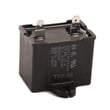
- Refrigerator capacitor WPW10662129 (run capacitor; can affect compressor starting/running)
- Elec control W11742382 (electronic control; manages cooling cycles and fan operation)
| Symptom | Most likely area to check first | Why |
|---|---|---|
| Freezer OK, fridge warm | Airflow path and evaporator fan | Cold air is made in the freezer and must be pushed to the fridge |
| Frost buildup, weak airflow | Defrost system and evaporator area | Ice blocks airflow and reduces cooling |
| Both sections warm | Condenser airflow, compressor start components, controls | Heat cannot be rejected or cooling system is not running |
A refrigerator that is even 5 to 10 degrees too warm can shorten food life quickly. Catching airflow restrictions early can also prevent heavier frost buildup and longer run times.
Last updated: January 2026