



Is 1000 watts good for a food processor?
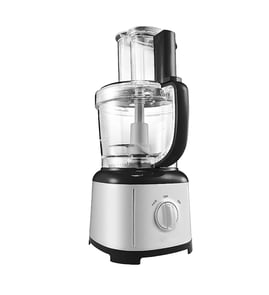
Yes. A 1000-watt food processor is considered powerful and is a good choice for tougher jobs like kneading dough, shredding firm cheese, and chopping dense vegetables. For KitchenAid model KFP1356GC0, wattage matters less than using the correct attachments and keeping blades sharp.
- Kneading and mixing heavier doughs (in short runs so the motor does not overheat)
- Shredding and slicing firm ingredients (carrots, potatoes, hard cheeses)
- Chopping nuts and dense vegetables quickly
- Pureeing thicker mixtures (hummus, pesto) with fewer stalls
- Processing larger batches with more consistent results
| Motor power | Best for | What you may notice |
|---|---|---|
| 300 to 500 watts | Light chopping, soft foods | Slower on dense foods; more stopping to scrape |
| 600 to 800 watts | Most everyday prep | Good balance of speed and control |
| 900 to 1200 watts | Heavy-duty prep and dough | Faster processing; better torque under load |
- Use the right cutting tool for the job; a dull or wrong blade makes any motor feel weak.
- Do not overfill the bowl; dense loads increase drag and can trip internal protection.
- Cut hard foods into smaller chunks before processing.
- For chopping and pureeing, keep the bowl and lid seated correctly to avoid safety-lock issues.
- Replace worn cutting parts when performance drops; the food processor multi-purpose blade WPW10451463 is the primary chopping and pureeing blade for this model.
Higher wattage generally means better torque, which helps the processor keep speed when ingredients fight back. That reduces stalling, uneven chopping, and overheating, especially during shredding, slicing, and dough work.
Last updated: January 2026
What should you not put in a food processor?
For KitchenAid food processor model KFP1356GC0, avoid processing very hot liquids, extremely hard or frozen-solid foods, and items that are better crushed or ground with other tools. These can crack the bowl, dull the blade, overload the motor, or create unsafe splashing.
- Hot liquids or hot soups: heat and steam can force liquid up through the lid and cause burns.
- Large hard items (bones, fruit pits, hard candy): can chip or bend cutting edges.
- Fully frozen blocks (solid frozen meat, rock-hard frozen fruit): can stall the motor and stress the drive.
- Whole spices in large quantities: a food processor chops; it does not grind as evenly as a spice grinder.
- Excessive liquid for smoothies: a blender is designed for high-liquid mixing; a processor can leak or turn it foamy.
- Very sticky doughs beyond “mixing”: can wrap around the blade and strain the motor.
| If you want to… | Better tool than a food processor | Why |
|---|---|---|
| Make smoothies, pureed soups | Blender | Handles high liquid volume and vortex mixing |
| Grind spices or coffee | Spice/coffee grinder | Produces a finer, more even grind |
| Crush ice or frozen blocks | Blender (ice-capable) | Built for hard, frozen loads |
| Chop bones/pits | Do not process | Risk of damage and unsafe fragments |
If the processor struggles with normal foods, the problem is usually a worn cutting edge, a bowl/lid sealing issue, or an overloaded batch.
- Cut food into 1 to 2 inch pieces before processing
- Work in smaller batches and pulse instead of running continuously
- Check that the bowl and lid are seated and locked
- Replace a dull cutter with the correct part, such as the food processor multi-purpose blade WPW10451463
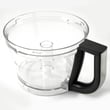
- If you see leaks at the lid, inspect the food processor bowl lid seal W10480168
Using the right tool and load size protects the motor drive, keeps the food processor bowl from cracking, and helps your KitchenAid KFP1356GC0 deliver consistent chopping, slicing, and shredding results.
Last updated: January 2026
How to connect a food processor?
To connect and use your KitchenAid KFP1356GC0 food processor, set the bowl on the base, lock it in place, install the correct blade or disc on the drive/adapter, then align and lock the lid so the safety interlock can allow the motor to run.
- Unplug the food processor before assembling.
- Place the bowl on the base and rotate until it locks.
- Install the correct accessory:
- For chopping or mixing, use the food processor multi-purpose blade WPW10451463.
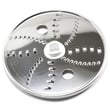
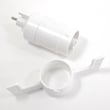
- For shredding or slicing, install the disc and the correct adapter/shaft.
- Set the lid on the bowl, align the latch/hinge, then press down and lock it.
- Insert the pusher into the feed tube (if used), plug in, then select the desired speed.
If the unit is assembled but does not run, these are the most common connection issues:
- Bowl is not fully rotated into the locked position.
- Lid is not fully latched (interlock not engaged).
- Accessory is not seated on the drive correctly (blade or disc sitting too high).
- Feed tube pusher is not inserted correctly (some lids require it to sit properly).
- Control panel is not responding (possible switch issue).
| Symptom | Most likely assembly cause | What to do |
|---|---|---|
| Motor hums but nothing turns | Blade/disc not seated | Remove and reinstall accessory so it sits flat |
| Nothing happens when you press a button | Lid or bowl not locked | Re-lock bowl, then re-lock lid until it clicks |
| Leaks at lid/bowl | Seal not seated or damaged | Inspect and reseat the lid seal |
This KitchenAid food processor uses a safety interlock; the bowl and lid must be locked correctly or the motor will not run. Correct assembly also prevents leaks, reduces vibration, and helps protect the drive coupler and accessories.
Last updated: January 2026