



How many sq ft will an 80,000 BTU furnace heat?
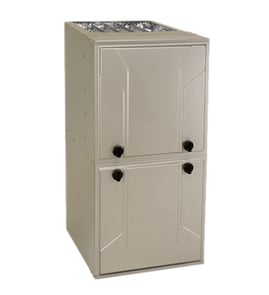
An 80,000 BTU furnace like the Coleman MG9S080C16MP11A typically heats about 1,600 to 2,400 sq ft, depending mostly on climate zone, insulation quality, air sealing, and ceiling height. For accurate sizing, we base the decision on a load calculation, not square footage alone.
Typical coverage ranges (real-world)
Use these as planning numbers for an 80,000 BTU input furnace; actual results vary by efficiency (AFUE) and duct losses.
- Warm climates, tight home: ~2,200 to 2,800 sq ft
- Mixed climates, average insulation: ~1,800 to 2,400 sq ft
- Cold climates, older or drafty home: ~1,400 to 2,000 sq ft
- High ceilings (9 to 12 ft): reduce coverage by ~10% to 25%
- Leaky ducts in attic/crawlspace: reduce comfort and effective capacity
Quick sizing rule of thumb (BTU per sq ft)
A common field rule is 30 to 50 BTU per sq ft (higher in colder climates and for less efficient homes). Here is what that looks like for 80,000 BTU:
| Assumed heat load | Approx. area heated by 80,000 BTU |
|---|---|
| 30 BTU/sq ft (mild, efficient) | ~2,667 sq ft |
| 40 BTU/sq ft (average) | ~2,000 sq ft |
| 50 BTU/sq ft (cold, drafty) | ~1,600 sq ft |
What changes the number the most
These factors often matter more than the furnace nameplate BTU rating:
- Climate zone and design temperature (how cold it gets where you live)
- Insulation levels (attic, walls, rim joists)
- Window type and air leakage (drafts around doors and windows)
- Duct sizing and duct leakage (especially outside conditioned space)
- Furnace efficiency (AFUE) and how well the system is set up (gas pressure, airflow)
Why it matters
Oversizing can cause short cycling, temperature swings, and noisier operation; undersizing can mean long run times and cold rooms during the coldest weather. For the MG9S080C16MP11A, the best match comes from a proper heat-loss calculation and verifying duct airflow.
Helpful next step
If you are confirming your model number before ordering parts or looking up specs, use how to find your appliance model number (and what it means for parts).
Last updated: February 2026
How can I tell what model furnace I have?
You can identify your furnace model by finding the rating plate or data label on the furnace cabinet. On a Coleman multi-position gas furnace like model MG9S080C16MP11A, the label is usually on the inside of the access panel or on an exterior cabinet wall.
Where to look for the model number
Turn off power to the furnace at the switch or breaker before opening any panels. Then check these common label locations:
- Inside the blower compartment door (behind the lower access panel)
- Inside the burner compartment door (behind the upper access panel)
- On an outside cabinet side wall near the front edge
- Near the gas valve area or burner box (label may be on the partition)
- On the inside lip of the door panel itself
What to write down (so you get the right parts)
Furnace parts are matched to the exact model and sometimes a specific series code. We recommend recording everything exactly as printed.
- Full model number (example format: MG9S080C16MP11A)
- Serial number
- Product number or unit number (if shown)
- Any revision, series, or “MFG No.” style identifier
Quick checklist
| Item | Why it matters |
|---|---|
| Model number | Drives the correct parts list and diagrams |
| Serial number | Helps confirm production run and compatible replacements |
| Extra identifiers (product/MFG/revision) | Prevents ordering a look-alike part that will not fit |
Why it matters
Coleman furnaces often share similar cabinet designs across multiple models. Using the complete model number from the data label helps ensure you match the correct ignition parts, flame sensor, pressure switch, control board, and blower components for your exact unit.
For help confirming you have the right number format before you shop, use how to find your appliance model number (and what it means for parts).
Last updated: February 2026
How to tell the age of a furnace by serial number?
For a Coleman multi-position gas furnace model MG9S080C16MP11A, the serial number on the rating plate is the fastest way to determine the unit’s manufacture date. Once you find the serial number, match its date code format (letters or digits) to the correct Coleman decoding pattern to identify the month and year.
Where to find the serial number (rating plate)
On most furnaces, the rating plate is on the cabinet near the burner compartment or blower compartment.
- Turn the thermostat OFF
- Shut off electrical power at the furnace switch or breaker
- Remove the access panel(s) and look for a sticker or metal plate
- Record the model number and serial number exactly as shown
- Reinstall panels before restoring power
How serial number date codes are commonly formatted
Coleman serial formats vary by production era, so use the pattern that matches what you see.
| What you see in the serial number | What it usually means | Example of how to read it |
|---|---|---|
| Starts with 4 digits | Often MMYY or YYWW (year/week) | 0424 = April 2024 (MMYY) or 2418 = 2024 week 18 (YYWW) |
| Letters included | A letter can represent a month or plant code | Month letter + year digits (varies by series) |
| Year appears later in the string | Date code is not at the beginning | Look for a 2-digit year paired with week or month |
Quick tips to avoid misreading the age
- Use the serial number, not the model number; the model number describes capacity and configuration
- If you see a week code (01 to 52), convert it to an approximate month (week 1 to 4 is usually January)
- If the furnace has had a control board or gas valve replaced, those part dates do not change the furnace’s manufacture date
Why it matters
Knowing the manufacture date helps us choose the right furnace parts (igniter, flame sensor, pressure switch, control board) and set realistic expectations for repair versus replacement planning.
Helpful DIY reference
If you need to open the cabinet to read the rating plate or trace wiring while you are there, use are diy appliance repairs safe for basic safety guidance.
Last updated: February 2026
How long should a Coleman furnace last?
A Coleman gas furnace like model MG9S080C16MP11A typically lasts 15 to 20 years. Plan on closer to 15 years if maintenance has been inconsistent, and closer to 20 years when the furnace gets regular tune-ups, clean filtration, and correct airflow.
Typical lifespan for a gas furnace
Most multi-position gas furnaces fall into a predictable service-life range when installed correctly and kept clean.
| Furnace age | What to expect | What we recommend |
|---|---|---|
| 0 to 10 years | Mostly routine upkeep | Stay on top of filters and venting checks |
| 10 to 15 years | More repairs, efficiency can slip | Start tracking repair frequency and costs |
| 15 to 20 years | Higher chance of major component failures | Budget for replacement planning |
| 20+ years | Reliability drops sharply | Replace rather than chase repeated repairs |
What makes a Coleman furnace last longer
These factors have the biggest impact on how long your MG9S080C16MP11A runs reliably:
- Replace or clean the air filter on schedule to protect the blower and heat exchanger airflow
- Keep supply and return vents open and unobstructed to prevent overheating
- Maintain a clean burner area (dust and debris can affect ignition and flame quality)
- Have a yearly inspection to catch weak igniters, flame-sensing issues, and venting problems early
- Address unusual noises quickly (squeals, rattles, or booming can signal wear or combustion issues)
Signs you are nearing end-of-life
If your furnace is in the 15 to 20 year range, these symptoms usually mean it is time to plan a replacement instead of stacking repairs:
- Frequent service calls in a single heating season
- Rising heating bills without a thermostat or usage change
- Short cycling (starts and stops repeatedly)
- Delayed ignition, repeated ignition attempts, or burner shutdowns
- Blower runs but heat output feels inconsistent room to room
Why it matters
A furnace near the end of its lifespan tends to lose efficiency and become less predictable. Planning ahead helps you avoid a no-heat situation during cold weather and reduces the chance of paying for multiple repairs that do not restore long-term reliability.
For help confirming you have the correct model number before ordering parts or researching diagrams, use how to find your appliance model number (and what it means for parts).
Last updated: February 2026
What is the most common part to fail on a furnace?
On a Coleman multi-position gas furnace like model MG9S080C16MP11A, the most common “failure point” we see is the air filter becoming clogged (it is a maintenance item, not a defect). For actual parts, flame sensors and hot surface igniters are among the most frequent no-heat causes.
Most common culprits (in order)
- Dirty air filter: restricts airflow, overheats the furnace, and triggers a safety shutdown.
- Flame sensor: gets coated with oxidation and the burners shut off shortly after lighting.
- Hot surface igniter (HSI): cracks or burns out, so the burners never light.
- Thermostat or low-voltage wiring: loose connections, weak batteries, or misconfiguration.
- Limit switch or rollout switch: opens due to overheating or venting/combustion issues.
- Blower components: motor or capacitor problems can prevent proper airflow.
Quick checks you can do safely
- Set the thermostat to HEAT and raise the setpoint 3 to 5 degrees.
- Replace the filter and make sure all supply registers are open.
- Check the furnace power switch and the circuit breaker.
- Look for a blinking diagnostic light through the blower door sight glass (if equipped).
- If you smell gas, stop and have the system checked immediately.
What the symptoms usually mean
| Symptom | Most likely cause | What happens next |
|---|---|---|
| Blower runs, no heat | Ignition or flame-sensing issue | Check igniter and flame sensor |
| Burners light then shut off in 2 to 10 seconds | Dirty flame sensor | Clean or replace flame sensor |
| Furnace starts then shuts down repeatedly | Airflow restriction or limit opening | Replace filter, check vents |
| Nothing happens at all | Power, door switch, thermostat, or control issue | Verify power and call for service if needed |
Why it matters
These “common failures” often trace back to airflow and safe ignition. Keeping the filter clean and the burner area free of dust reduces nuisance shutdowns, protects the heat exchanger, and helps the furnace run efficiently.
Helpful DIY resource
For electrical troubleshooting steps and safe testing basics, use our guide: how to use a multimeter to test electrical parts video.
Last updated: February 2026