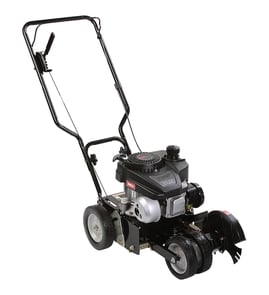

How often should you change your edger blade?
For the Craftsman 536796525 9" edger/trimmer, we replace the edger blade whenever it is worn down, bent, or no longer cuts a clean edge; in heavy use, that can be as often as every 1 to 2 weeks. In lighter, occasional use, it is typically a seasonal replacement.
- The edge looks rounded or “mushroomed” instead of sharp
- You have to push harder to maintain the same cut
- The edger leaves a ragged trench or skips along the edge
- Cutting depth is noticeably reduced (the blade has worn smaller)
- The blade is chipped, cracked, or visibly bent
Blade wear depends more on conditions than on calendar time. These factors shorten blade life the most:
- Sandy soil and gravel along sidewalks or driveways
- Hitting concrete edges, pavers, sprinkler heads, or roots
- Edging when the ground is very dry and hard
- Running the blade at an aggressive depth all the time
- A loose blade or hardware that lets the blade wobble
| Usage pattern | What we see most often | What to do |
|---|---|---|
| Heavy, frequent edging (weekly or more) | Blade wear shows quickly | Inspect weekly; replace as needed (often 1 to 2 weeks) |
| Average homeowner use | Gradual wear | Inspect monthly; replace when performance drops |
| Occasional touch-ups | Slow wear | Inspect at season start and mid-season |
A worn blade reduces cutting depth and makes the edger work harder, which can increase vibration and strain the drive system. Keeping the blade and mounting hardware tight helps you get cleaner edges and steadier operation.
When you service the blade area, we also recommend checking these common fasteners for damage or loosening:
Last updated: February 2026
How to replace an edger blade?
To replace the edger blade on your Craftsman model 536796525 9-inch edger/trimmer, disconnect the spark plug wire, lock the blade from turning, then remove the blade fastener and hardware. Many edgers use a reverse-thread blade nut, so loosening can require turning the wrench clockwise.
- Disconnect the spark plug wire and keep it away from the plug
- Work on a flat surface and block the wheels so the edger cannot roll
- Wear heavy gloves; the blade edge can cut even when dull
- Let the engine and muffler cool completely before you reach underneath
- Tip the edger safely so you can access the blade area.
- Hold the blade from rotating (a block of wood against the blade works well).
- Remove the blade nut and washer(s). If the nut is reverse-threaded, loosen by turning clockwise.
- Slide off the old blade and note the order of washers/spacers.
- Install the new blade in the same orientation.
- Reinstall the hardware and tighten securely.
- Reconnect the spark plug wire and test run.
| Part | What it does | When to replace it |
|---|---|---|
| Nut 46023MA | Secures the blade hardware | Threads are damaged, nut will not tighten |
| Washer blade 22265MA | Helps clamp and space the blade correctly | Bent, cracked, or worn thin |
| Lock nut 703251 | Helps resist loosening from vibration | Nut backs off or no longer holds torque |
A correctly installed blade and hardware keeps the blade centered and tight. That reduces vibration, improves edging quality, and helps protect the shaft and bearings from premature wear.
Last updated: February 2026
Does Craftsman make a battery-powered edger?
Yes. Craftsman makes battery-powered (cordless) edgers, including 20V MAX models. Your Craftsman 536796525 is a gas 9-inch edger/trimmer, so a cordless Craftsman edger would be a separate tool purchase rather than a conversion of this model.
- Battery platform: Most cordless Craftsman edgers run on the V20 (20V MAX) battery system.
- Runtime expectations: Battery edgers are best for routine edging; heavy overgrowth can drain batteries faster.
- Cutting depth and power: Gas edgers like model 536796525 typically handle tougher soil and deeper trenching more easily.
- Consumables: You will still replace the edger blade periodically, just like on a gas unit.
- Parts support: Keep your current edger running with maintenance parts such as a v-belt 32668MA when needed.
| Feature | Craftsman 536796525 (gas) | Cordless Craftsman edger (battery) |
|---|---|---|
| Power source | Gas engine | Rechargeable battery |
| Best for | Thick edges, tougher soil, longer sessions | Light to moderate edging, quick touch-ups |
| Maintenance | Fuel, spark plug, belt/blade wear | Battery charging, blade wear |
| Noise and fumes | Higher | Lower |
Choosing between gas and battery comes down to how much edging you do and how tough your soil is. If you want lighter weight and simpler startup, cordless is a great fit. If you need maximum cutting power and longer continuous run time, your gas edger style is usually the better match.
Last updated: February 2026
Is an edger blade reverse thread?
Most Craftsman edgers, including model 536796525, use a standard right-hand thread on the blade nut: you loosen it by turning counterclockwise and tighten it clockwise. If the nut seems “backwards,” the blade may be jammed on the arbor or the nut may be seized.
Use this as a practical rule when you are facing the blade nut:
- Loosen: turn the nut left (counterclockwise)
- Tighten: turn the nut right (clockwise)
- If the nut will not budge, stop and secure the blade so you are not just spinning the shaft
- Apply penetrating oil and let it soak; then try again with a properly fitting wrench
- Replace distorted hardware after removal (a damaged lock nut can bind and feel like reverse thread)
These are the most common reasons the nut feels like it tightens when you try to loosen it:
- Blade is wedged on the arbor, so the nut and blade rotate together
- Rust or debris on the threads increases resistance
- Overtightened nut from a prior repair
- Locking hardware (lock nut or blade washer) biting into the blade hub
- Wrong tool angle rounding the nut and reducing turning force
If the blade hardware is worn, replacing it prevents repeat loosening issues and vibration.
| What to check | What “bad” looks like | Example part for this model |
|---|---|---|
| Blade washer | cupped, cracked, grooved | Washer blade 22265MA |
| Locking nut | threads galled, won’t spin freely by hand | Lock nut 703251 |
| Drive belt (if blade speed is inconsistent) | glazed, cracked, stretched | V-belt 32668MA |
Correct thread direction prevents stripped threads on the shaft and helps you torque the blade nut properly. A loose blade can cause vibration, poor edging, and damage to the arbor and pulley system.
Last updated: February 2026
What size blade is a Craftsman 536796525 edger?
The Craftsman model 536796525 9-inch edger/trimmer uses a 9-inch edger blade. When you replace the blade, match the diameter (9 in.) and the center mounting pattern so the blade seats flat and tight on the spindle.
Even with the correct diameter, the mounting details must match your edger’s blade hub.
- Measure the blade diameter across the widest point: 9 inches
- Check the center hole and any slots match your current blade
- Inspect the blade for bending, cracks, or heavy rounding at the tips
- Replace any worn fastening hardware so the blade stays secure
- Tighten hardware firmly and recheck after the first few minutes of edging
If the blade loosens, wobbles, or will not stay aligned, the issue is often the blade washer or lock nut, not just the blade.
| What you notice | Common related part to inspect | Why it matters |
|---|---|---|
| Blade loosens repeatedly | Lock nut 703251 | Locking feature can wear and stop holding torque |
| Blade does not clamp flat | Washer blade 22265MA | Correct washer spacing keeps the blade centered |
| Vibration during edging | V-belt 32668MA | A worn belt can cause inconsistent load and vibration |
A 9-inch blade gives the correct cutting path and depth control for the Craftsman 536796525. Using the wrong diameter or mismatched mounting pattern can cause vibration, poor edging performance, and accelerated wear on the shaft and bearings.
Last updated: February 2026
How do you start a Craftsman edger?
To start a Craftsman 536796525 9" edger/trimmer, set the controls for a cold start (choke on, throttle engaged if equipped), then pull the starter rope in smooth, fast strokes until it fires; move the choke toward RUN as the engine warms up.
- Move the unit to a flat, clear area; keep the blade away from concrete and debris.
- Turn the ignition switch to ON (if your handle has a switch).
- Set the choke to FULL CHOKE.
- Prime the engine (if your model has a primer bulb); press it several times until you see fuel moving.
- Hold the throttle control (if equipped) and pull the starter rope 5 to 10 times, using short, brisk pulls.
- As soon as the engine starts or sputters, move the choke toward HALF, then to RUN after it stays running.
- Choke to RUN (or HALF if it is stubborn)
- No priming (usually)
- Pull the starter rope 1 to 3 times
- Old fuel: Drain and refill with fresh fuel; most small engines run best on fuel less than 30 days old.
- Flooded engine (fuel smell, wet plug): Choke to RUN, hold throttle open, pull 5 to 10 times.
- Loose drive or blade drag: Inspect the belt and pulleys; a worn belt can slip and make starting feel inconsistent (see v-belt 32668MA and half pulley 305634MA).
- Hardware vibration: Check blade and guard fasteners; replace missing hardware such as lock nut 703251 or nut 46023MA.
| Situation | Choke | Prime | Throttle |
|---|---|---|---|
| Cold start | FULL | Yes (if equipped) | Hold/fast |
| Warm start | RUN | No | Hold/fast |
| Flooded | RUN | No | Wide open |
Correct choke and priming prevent flooding and reduce pull-start effort; checking the belt, pulley, and fasteners also helps the engine spin freely and keeps the edger safe and stable once it starts.
Last updated: February 2026
What engine is on a Craftsman edger?
Craftsman lawn edger model 536796525 uses a small 4-cycle gasoline engine, and the exact engine brand and model are identified on the engine’s own ID label (not the edger frame). Use that engine ID to match tune-up parts and any engine-specific replacements.
Find the engine identification label or stamping on the engine assembly itself, then record every field exactly.
- Check the recoil starter housing (pull-start cover) for a printed label
- Look near the muffler/heat shield area for a metal tag or stamped numbers
- Check the valve cover area for a model or family code
- Write down the engine brand plus the model/type/code (or serial)
- Use the engine ID when ordering maintenance parts like spark plug, air filter, and carburetor parts
Even when the engine has been serviced or replaced, the edger’s drive components determine how power gets to the blade.
| Drive item | What it affects | Example part for this model |
|---|---|---|
| Belt | Transfers engine power to the cutting system | V-belt 32668MA |
| Pulley | Keeps belt tracking and speed consistent | Half pulley 305634MA |
| Locking fastener | Helps hardware stay tight under vibration | Lock nut 703251 |
The engine ID tells you which engine-specific parts fit (tune-up and fuel system). The edger model number 536796525 tells you which chassis and drive parts fit (belt, pulley, hardware), which directly affects cutting performance.
Last updated: February 2026